WHO Declares Ebola Outbreak in DR Congo a Public Health Emergency
The health agency warned of significant risks of regional spread as the Bundibugyo strain reaches urban centers and neighboring Uganda.
Primary source: BBC World News. Full source links and update notes are below.
Fast summary
Start here
- The World Health Organization designated the outbreak in Ituri province a public health emergency of international concern.
- The current strain is the Bundibugyo virus, which currently has no approved drugs or vaccines.
- Confirmed cases have spread to the capital Kinshasa, the rebel-controlled city of Goma, and into neighboring Uganda.
What happened
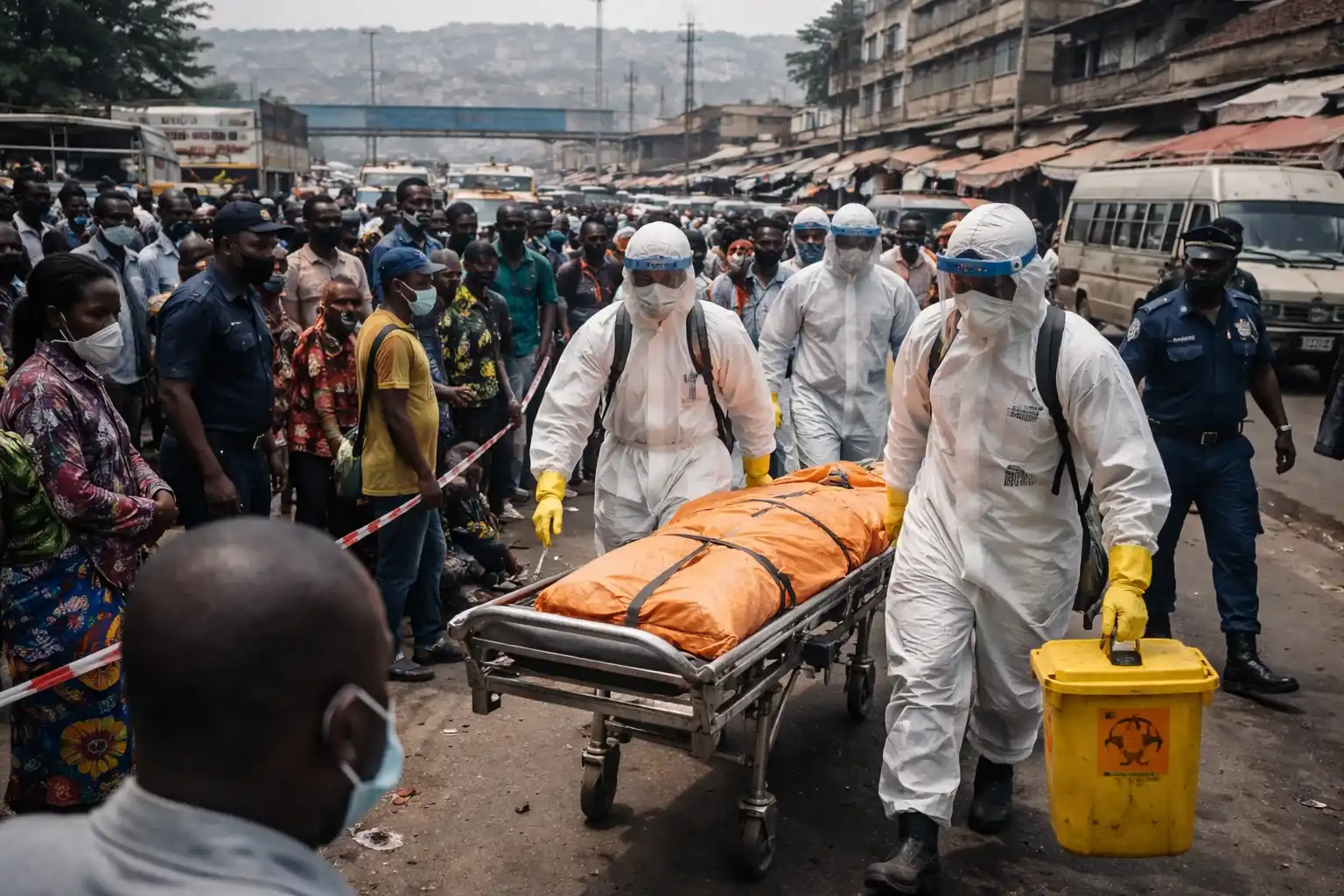
The World Health Organization (WHO) has officially declared the Ebola outbreak in the Democratic Republic of Congo (DRC) a public health emergency of international concern. The outbreak, centered in the eastern Ituri province, has recorded approximately 246 suspected cases and 80 deaths. While the agency stopped short of calling it a pandemic emergency, officials warned that the current detection figures likely underrepresent the true scale of the infection.
What's new in this update
The virus has now crossed international borders and moved into high-density urban areas. Uganda has confirmed two cases, including one death involving a 59-year-old man. Within the DRC, the virus has reached the capital city of Kinshasa and the eastern city of Goma, the latter of which is currently controlled by M23 rebels. These developments have escalated the risk level for the entire region due to high population mobility and trade.
Key details
The current outbreak involves the Bundibugyo virus strain. Unlike the more common Zaire strain, there are no approved vaccines or treatments for Bundibugyo. The WHO noted that the security situation in eastern DRC, combined with a large number of informal healthcare facilities and mining activities in towns like Mongwalu, has created a complex environment for tracing and isolating cases.
Background and context
This marks the 17th Ebola outbreak in the DRC since the virus was first discovered in 1976. The disease, which is believed to spread from bats to humans, is transmitted through direct contact with bodily fluids and can cause severe internal bleeding and organ failure. The DRC's deadliest outbreak occurred between 2018 and 2020, resulting in nearly 2,300 deaths.
What to watch next
The WHO has advised the DRC and Uganda to establish emergency operation centers to monitor and trace the virus. Bordering countries are being urged to enhance surveillance and health reporting, though the WHO explicitly cautioned against closing borders or restricting trade, stating such measures are often rooted in fear rather than scientific necessity. Health officials are particularly focused on monitoring mining hubs where high worker turnover could facilitate rapid regional spread.
Why this matters
The emergency declaration highlights the risk posed by the virus's arrival in densely populated urban centers and conflict zones where containment is difficult.
Reader context
This story belongs to Northstar Herald's International Relations coverage, with related entities including Ebola, DR Congo, World Health Organization, Bundibugyo virus. The report is based on BBC World News source material.
Related coverage
Why it matters
The emergency declaration highlights the risk posed by the virus's arrival in densely populated urban centers and conflict zones where containment is difficult.
Read next
Follow this story through the topic hub, more world coverage, and the latest updates.
Weekly briefing
Get the week's key developments in one concise email.
Get a fast catch-up on the biggest stories, the context behind them, and the links worth your time.
Cadence
Weekly, for a quick catch-up
Coverage
AI, business, world, security, sports
Format
Clear takeaways and useful context
Request the briefing
Leave your email to open a prepared request and get on the list for the weekly briefing.
Author
See who assembled this story and follow more of their work.
Sources and methodology