WHO Declares Rare Ebola Outbreak in DR Congo a Global Emergency
Health officials warn of a significant threat to neighboring countries as the rare Bundibugyo species spreads undetected through conflict zones.
Primary source: BBC World News. Full source links and update notes are below.
Fast summary
Start here
- The World Health Organization has designated the current Ebola outbreak in the DR Congo as a public health emergency of international concern.
- The outbreak involves the rare Bundibugyo species, which currently lacks approved vaccines, treatments, or highly effective rapid diagnostic tests.
- Detection occurred several weeks after transmission began, with nearly 250 suspected cases reported and confirmed spread to Uganda.
What happened
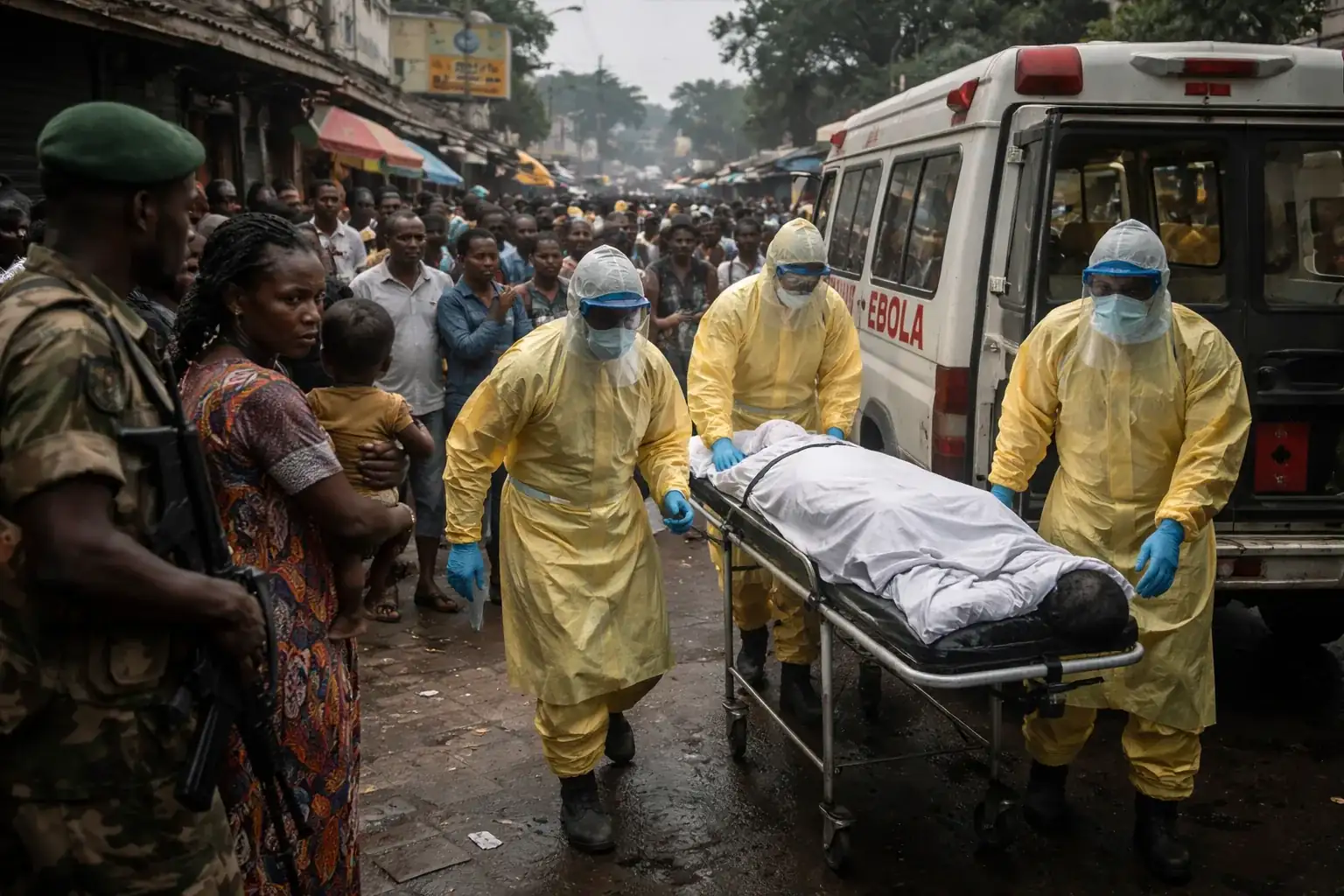
The World Health Organization (WHO) has officially declared the Ebola outbreak in the Democratic Republic of Congo (DRC) a public health emergency of international concern. The virus has been spreading undetected for several weeks, primarily in regions destabilized by civil war, which has significantly hindered the ability of health workers to monitor and contain the pathogen. There are currently nearly 250 suspected cases and 80 recorded deaths.
What's new in this update
The emergency declaration follows confirmation that the virus has crossed international borders. Two cases have been identified in Uganda, one of which resulted in a fatality. Health officials from Imperial College London and the WHO warn that the outbreak was detected very late—the first known case appeared in late April—suggesting the actual scale of transmission is likely much larger than current figures indicate.
Key details
This specific outbreak is caused by the Bundibugyo species of Ebola, one of the rarest forms of the virus. Bundibugyo has only caused two previous outbreaks, in 2007 and 2012, and has a mortality rate of approximately 30%. Unlike more common strains, there are no approved vaccines or pharmaceutical treatments for Bundibugyo. Additionally, initial diagnostic tests in this outbreak returned false negatives, requiring more sophisticated laboratory equipment to identify the species.
Background and context
While the WHO's declaration reflects a need for international coordination, specialists clarify that this is not the start of a global pandemic similar to Covid-19. The risk to the wider world remains low; however, the threat to regional neighbors like Uganda, South Sudan, and Rwanda is high due to trade and travel links. Containment is further complicated by the ongoing civil war in the DRC, which limits access to affected populations.
What to watch next
Health organizations are pivoting to 'optimised supportive care' to manage symptoms and improve survival rates in the absence of approved drugs. International coordination will focus on rapid identification and isolation of new cases. Experts will also be watching to see if experimental vaccines can be fast-tracked or if the conflict in the DRC will continue to prevent a full-scale medical response.
Why it matters
The combination of a rare viral strain and a conflict-heavy environment limits the effectiveness of standard containment tools, posing a high risk for a regional crisis.
Read next
Follow this story through the topic hub, more world coverage, and the latest updates.
Weekly briefing
Get the week's key developments in one concise email.
Get a fast catch-up on the biggest stories, the context behind them, and the links worth your time.
Cadence
Weekly, for a quick catch-up
Coverage
AI, business, world, security, sports
Format
Clear takeaways and useful context
Request the briefing
Leave your email to open a prepared request and get on the list for the weekly briefing.
Author
See who assembled this story and follow more of their work.
Sources and methodology