WHO Declares Global Emergency Over Rare Ebola Strain in DR Congo
Health officials struggle to contain an outbreak of the Bundibugyo species, a rare strain lacking an approved vaccine, as it reaches conflict-prone regions.
Primary source: BBC World News. Full source links and update notes are below.
Fast summary
Start here
- The WHO designated the current Ebola outbreak in the Democratic Republic of Congo a public health emergency of international concern.
- The outbreak is caused by the rare Bundibugyo strain, for which there are currently no approved vaccines or targeted drug treatments.
- Containment efforts are hindered by the outbreak's presence in conflict zones and major urban centers like Goma.
What happened
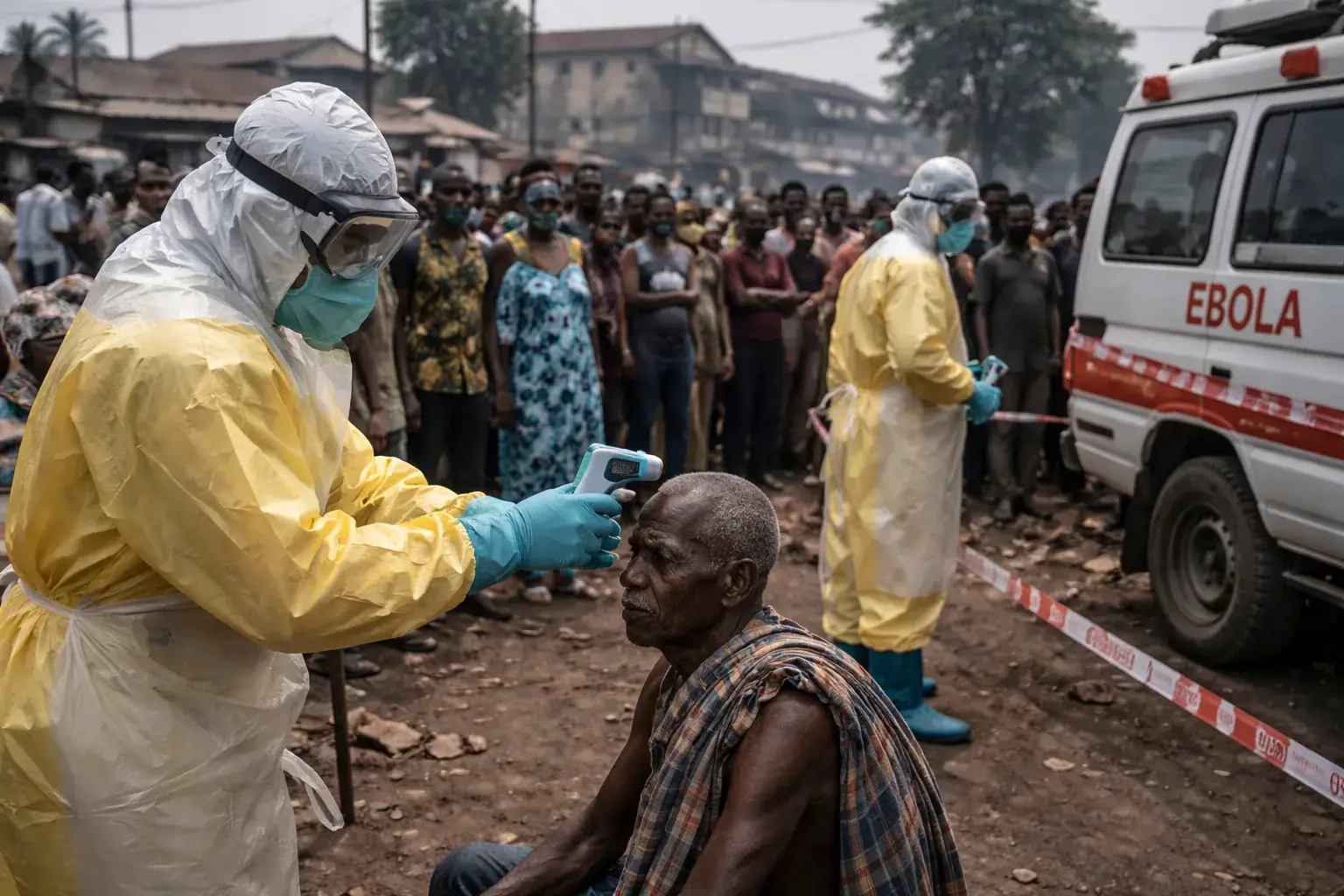
The World Health Organization (WHO) has declared the ongoing Ebola outbreak in the Democratic Republic of Congo (DRC) a public health emergency of international concern. The decision follows the spread of the virus to major urban centers and the identification of a rare strain that complicates standard medical and diagnostic responses.
What's new in this update
Health officials have identified the Bundibugyo species of Ebola as the cause, a strain that has not been observed in over a decade. Unlike the more common Zaire species, there is no approved vaccine or specific drug treatment for Bundibugyo. Additionally, a case has been reported in Goma, a city of 850,000 people currently under rebel control, significantly increasing the risk of wider transmission.
Key details
The outbreak's origin is traced to a nurse who developed symptoms in late April, suggesting the virus spread undetected for several weeks. Transmission was exacerbated by traditional funeral ceremonies in gold-mining towns like Mongwalu, where mourners were exposed to the deceased. Congolese Health Minister Samuel Roger Kamba noted that the initial response was slowed by communities seeking treatment from prayer centers and traditional healers due to beliefs that the illness was mystical.
Background and context
The DRC has a long history of Ebola outbreaks, but current efforts are severely hampered by local conflict. Approximately a quarter of a million people have been displaced in the affected Ituri province, and porous borders allow for frequent movement into neighboring countries. This specific strain of Ebola has only caused two previous outbreaks, killing approximately one-third of those it infected.
What to watch next
The Africa CDC is prioritizing public health campaigns focused on safe funeral practices and basic sanitation to curb the spread. While no approved vaccine exists for the Bundibugyo strain, researchers are investigating if vaccines for the Zaire species provide any cross-protection. The WHO maintains that the risk of the virus spreading outside of East Africa currently remains minimal.
Why it matters
This outbreak involves a rare strain that evades common tests and lacks a vaccine, complicated by its presence in an active conflict zone with high population displacement.
Read next
Follow this story through the topic hub, more world coverage, and the latest updates.
Weekly briefing
Get the week's key developments in one concise email.
Get a fast catch-up on the biggest stories, the context behind them, and the links worth your time.
Cadence
Weekly, for a quick catch-up
Coverage
AI, business, world, security, sports
Format
Clear takeaways and useful context
Request the briefing
Leave your email to open a prepared request and get on the list for the weekly briefing.
Author
See who assembled this story and follow more of their work.
Sources and methodology