Africa CDC Reports 65 Deaths in New Ebola Outbreak in Eastern DR
Health officials have identified nearly 250 cases in the Ituri province, primarily centered in gold-mining regions near the borders of Uganda and South

World correspondent
Reports on international affairs, diplomacy, and humanitarian developments with an emphasis on official statements, multilateral institutions, and regional context.
Editorial responsibility: Lead reviewer for geopolitics, international institutions, and crisis coverage
Primary source: BBC World News. Full source links and update notes are below.
Fast summary
Start here
- Africa CDC confirmed 246 cases and 65 deaths primarily in the towns of Mongwalu and Rwampara.
- Preliminary laboratory tests in Kinshasa detected the virus in 13 out of 20 analyzed samples.
- The outbreak occurs in a region under military rule due to ongoing conflict with armed groups like the ADF.
What happened
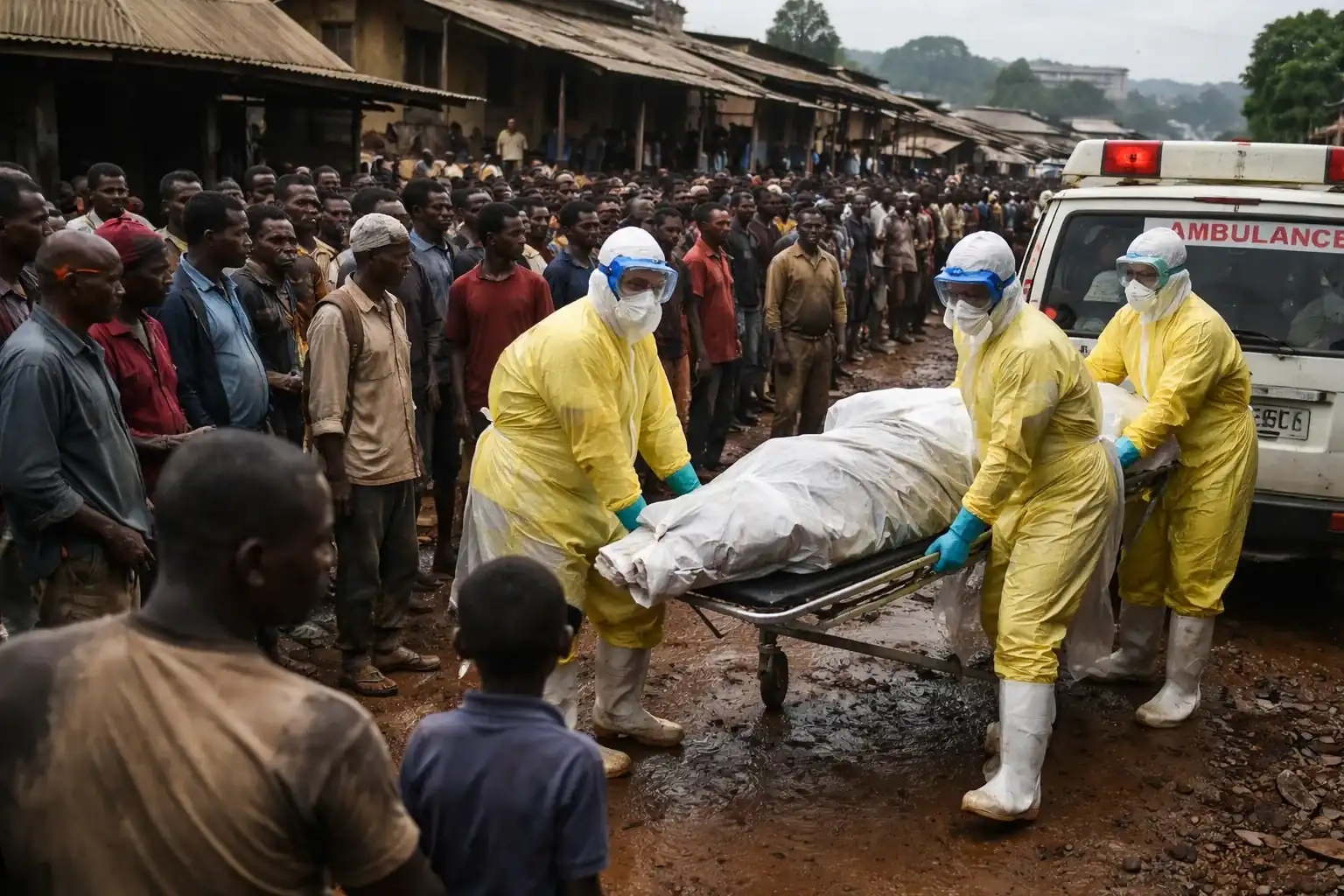
Health authorities say a new Ebola outbreak in eastern DR Congo has killed at least 65 people and infected nearly 250, with cases concentrated in Ituri province, especially around gold-mining areas. The outbreak is alarming not only because of the numbers, but because it is unfolding in a region where insecurity, population movement, and weak health infrastructure make containment far harder than it would be in more stable conditions.
This is a country with long and painful experience of Ebola. Even so, each new outbreak presents a fresh emergency because the virus exploits exactly the conditions that conflict zones struggle to control.
Why Ituri is such a difficult location for containment
The DR Congo Ebola outbreak is centered in an eastern region that has been shaped by armed violence, weak state presence, and volatile movement between towns, mining sites, and border areas. That creates several challenges at once:
- Contact tracing becomes harder when people move frequently or avoid authorities.
- Medical teams face access and security constraints.
- Rumors and mistrust can spread faster than verified health information.
- Cross-border mobility raises the risk of regional transmission.
These conditions matter because Ebola control relies on rapid identification, isolation, community cooperation, and safe handling of the sick and the dead. When any of those systems weaken, the outbreak becomes harder to slow.
Why the mining context matters
The concentration of cases around gold-mining towns is significant. Mining regions often involve crowded living conditions, informal labor patterns, and high levels of movement in and out of local communities. That mobility can carry disease beyond the initial outbreak zone, especially when workers travel across districts or borders in search of income.
In a public-health emergency, mining economies can become transmission networks as much as commercial ones. That is part of what makes the Ituri outbreak particularly dangerous.
The regional risk beyond Congo
The location of the outbreak also raises concern for neighboring Uganda and South Sudan. Ebola does not need massive international air traffic to become a cross-border threat. Local road networks, trade routes, and family connections are enough to create vulnerability if border surveillance and community screening are not strong.
That is why Africa CDC is reportedly moving toward regional coordination rather than treating the crisis as a purely national issue. In outbreaks like this, time lost at the local level often becomes risk exported at the regional level.
Why prior Ebola experience helps but does not solve the problem
The Democratic Republic of Congo has faced Ebola repeatedly since the virus was first identified there in 1976. That means the country has more operational experience than many others in outbreak response. But prior experience does not cancel current danger. In some cases, repeated crisis exposure can even deepen fatigue, mistrust, or logistical strain.
The memory of the devastating 2018-2020 outbreak, which killed thousands, still hangs over any new alert. That history sharpens the urgency, but it also reminds responders how difficult containment can become once transmission expands under insecure conditions.
What to watch next
The most important near-term developments are laboratory confirmation, geographic spread, and the speed of coordinated response by Congolese authorities, Africa CDC, and neighboring governments. Watch too for whether health teams gain safe access to the hardest-hit communities and whether cases begin appearing more consistently outside the initial cluster.
Why this matters
The Ebola outbreak in eastern DR Congo matters because it combines a lethal virus with one of the hardest possible containment environments. Public health crises are always dangerous, but outbreaks in conflict-prone, mobile, under-resourced regions can escalate quickly and threaten far more than the communities where they begin.
Related coverage
Why it matters
The outbreak in a conflict-prone mining region complicates containment efforts and poses a cross-border risk to neighboring Uganda and South Sudan.
Read next
Follow this story through the topic hub, more world coverage, and the latest updates.
Weekly briefing
Get the week's key developments in one concise email.
Get a fast catch-up on the biggest stories, the context behind them, and the links worth your time.
Cadence
Weekly, for a quick catch-up
Coverage
AI, business, world, security, sports
Format
Clear takeaways and useful context
Request the briefing
Leave your email to open a prepared request and get on the list for the weekly briefing.
About the byline
World correspondent
Leila Haddad covers world affairs, diplomacy, and humanitarian crises, with a focus on how fast-moving international developments affect public policy, conflict response, and cross-border institutions.
Sources and methodology