Cuba Exhausts Fuel Supplies as Energy Crisis Hits Critical Threshold
The island nation's energy minister reported a total depletion of diesel and fuel oil stocks, triggering widespread blackouts and the largest protests in

World correspondent
Reports on international affairs, diplomacy, and humanitarian developments with an emphasis on official statements, multilateral institutions, and regional context.
Editorial responsibility: Lead reviewer for geopolitics, international institutions, and crisis coverage
Primary source: BBC World News. Full source links and update notes are below.
Fast summary
Start here
- Energy Minister Vicente de la O Levy confirmed that Cuba has absolutely no remaining stocks of crude oil, fuel oil, or diesel.
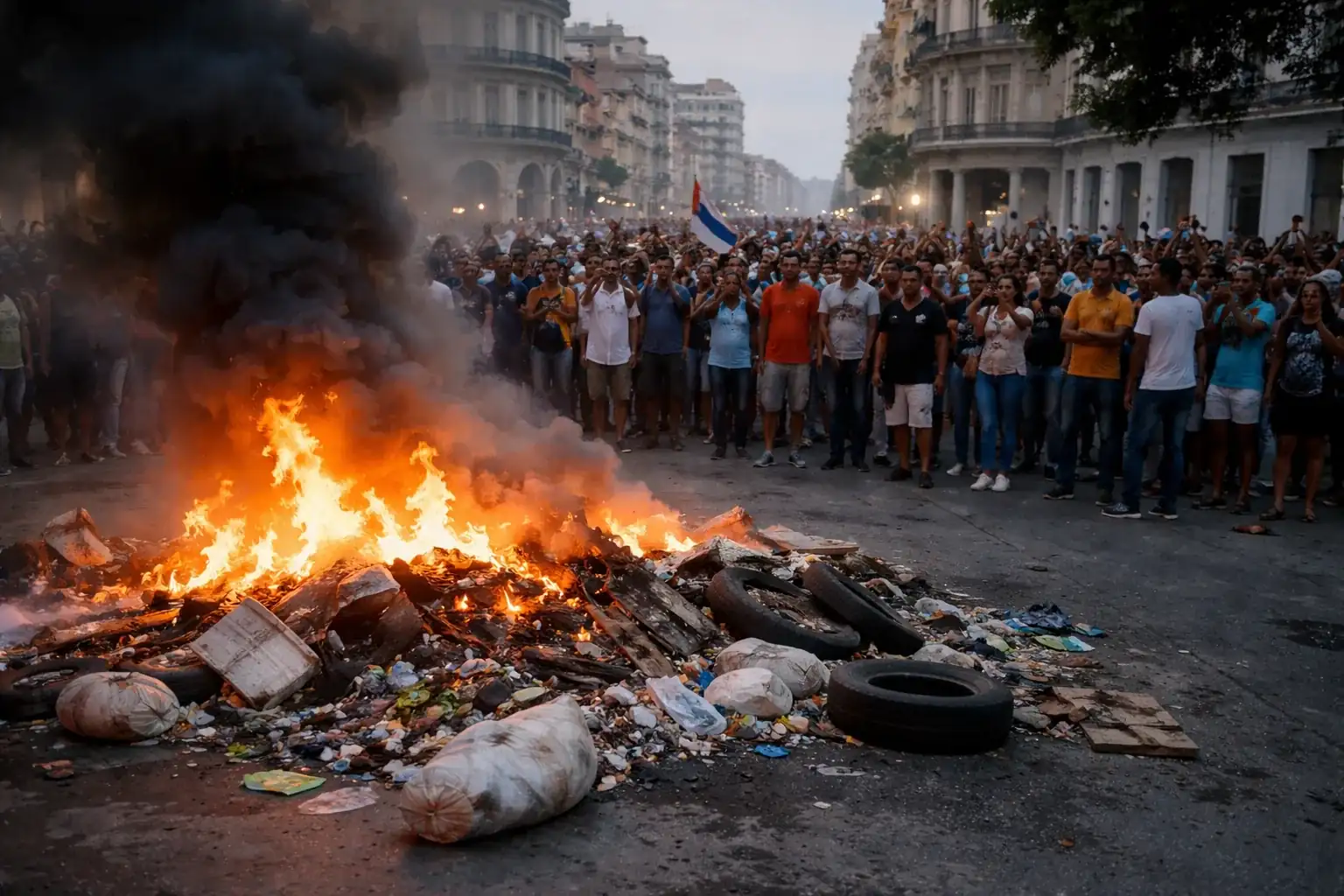
- Hundreds of protesters took to the streets of Havana on Wednesday, blocking roads with burning rubbish to demand electricity.
- The U.S. has reiterated an offer of $100 million in humanitarian aid in exchange for political reforms to the communist system.
What happened
Cuba's energy crisis has reached a new and alarming threshold after Energy Minister Vicente de la O Levy said the country has effectively run out of diesel and fuel oil. With only limited domestic gas resources still available, the island's power system is struggling to sustain even minimal continuity. The result has been extreme blackouts, service disruption, and a visible rise in anger among residents who are already living through a prolonged economic collapse marked by shortages of food, medicine, transport, and basic household necessities.
When a government publicly acknowledges that core fuel reserves are exhausted, the crisis is no longer a question of temporary scarcity. It becomes a systemic breakdown with consequences for every sector of daily life, from hospitals and schools to water systems and public order.
What's new in this update
The political temperature has risen along with the power cuts. Hundreds of protesters reportedly took to the streets of Havana, blocking roads and burning rubbish as they demanded electricity and relief. That is notable because public demonstrations in Cuba remain relatively rare and are often interpreted as evidence that hardship has moved beyond routine coping capacity into open social strain.
The fuel collapse has also renewed confrontation between Havana and Washington. Cuban officials blame U.S. pressure and sanctions for worsening the crisis, while the United States has pointed to a humanitarian-aid offer tied to distribution outside direct state control. Even where the facts of those offers are contested, the diplomatic backdrop is clear: Cuba's energy emergency is inseparable from its geopolitical isolation and fragile external supply relationships.
Key details
Cuba relies heavily on imported fuel, and disruptions in those flows have an outsized effect because the country lacks strong buffers. Diesel and fuel oil are essential not only for electricity generation, but for transport, logistics, agriculture, and backup systems. Once supplies collapse, nearly every other shortage becomes harder to manage.
Several effects are already visible:
- Blackouts in parts of Havana reportedly stretch close to an entire day.
- Schools, offices, and public services are being curtailed or shut down.
- Hospitals and other essential services face pressure from unreliable electricity.
- Street protests show that energy failure is now feeding overt political unrest.
This is why the crisis has become more dangerous than a normal power shortage. Energy scarcity is magnifying every other weakness in the Cuban economy at once.
Background and context
Cuba's economic distress has been building for years through a combination of weak domestic production, limited foreign exchange, declining tourism resilience, infrastructure decay, and tightening access to external support. Fuel imports from partners such as Venezuela and Mexico have become less dependable, while U.S. sanctions and broader financial restrictions complicate procurement, shipping, and payment channels. The government describes this as a blockade-driven emergency, while critics argue that state mismanagement and structural rigidity are equally central to the collapse.
Both explanations matter because the crisis is clearly not caused by one variable alone. Cuba is confronting an interaction between external pressure and internal fragility. When that combination hits the energy system, the effects reach the population almost immediately.
What to watch next
The immediate question is whether new tankers or emergency supply arrangements arrive quickly enough to restore at least partial stability. Without fresh fuel, the government may struggle to calm public anger, maintain hospital reliability, or preserve key state functions. If protests spread or intensify, authorities could respond with a heavier security posture, which would turn an energy emergency into a deeper political confrontation.
Another issue to watch is whether humanitarian arrangements become more realistic. Outside assistance remains politically sensitive, especially if distribution terms imply reduced state control or symbolic concession to U.S. demands.
Why this matters
This matters because Cuba, Havana, sanctions, protests, fuel shortage, and the broader energy crisis are converging into a national emergency. Running out of diesel and fuel oil is not only a technical or economic problem. It is a human-rights and governance issue that affects health, mobility, safety, and social stability. If the current depletion persists, Cuba's long economic crisis may enter an even more volatile phase shaped by deeper blackouts and harder confrontation between citizens and the state.
Reader context
This story belongs to Northstar Herald's International Relations and Diplomacy coverage, with related entities including Cuba, Energy Crisis, Fuel Shortage, Sanctions. The report is based on BBC World News source material.
Related coverage
Why it matters
The total exhaustion of fuel reserves has paralyzed essential services and sparked rare civil unrest, signaling a dangerous escalation in Cuba's multi-year economic crisis.
Read next
Follow this story through the topic hub, more world coverage, and the latest updates.
Weekly briefing
Get the week's key developments in one concise email.
Get a fast catch-up on the biggest stories, the context behind them, and the links worth your time.
Cadence
Weekly, for a quick catch-up
Coverage
AI, business, world, security, sports
Format
Clear takeaways and useful context
Request the briefing
Leave your email to open a prepared request and get on the list for the weekly briefing.
About the byline
World correspondent
Leila Haddad covers world affairs, diplomacy, and humanitarian crises, with a focus on how fast-moving international developments affect public policy, conflict response, and cross-border institutions.
Sources and methodology