CIA Director Visits Havana as Cuba Grapples With Energy Grid Collapse
The high-level meeting coincides with a renewed US offer of $100 million in aid as fuel shortages force widespread blackouts and government closures.
Primary source: BBC World News. Full source links and update notes are below.
Fast summary
Start here
- CIA Director John Ratcliffe met with Cuban interior ministry officials in Havana to discuss bilateral security and dialogue.
- The US has renewed an offer of $100 million in humanitarian aid, though it insists on distribution through independent organizations like the Catholic Church.
- Cuba’s energy system is in a "critical" state, with the energy minister warning that diesel and fuel oil supplies have been completely exhausted.
What happened
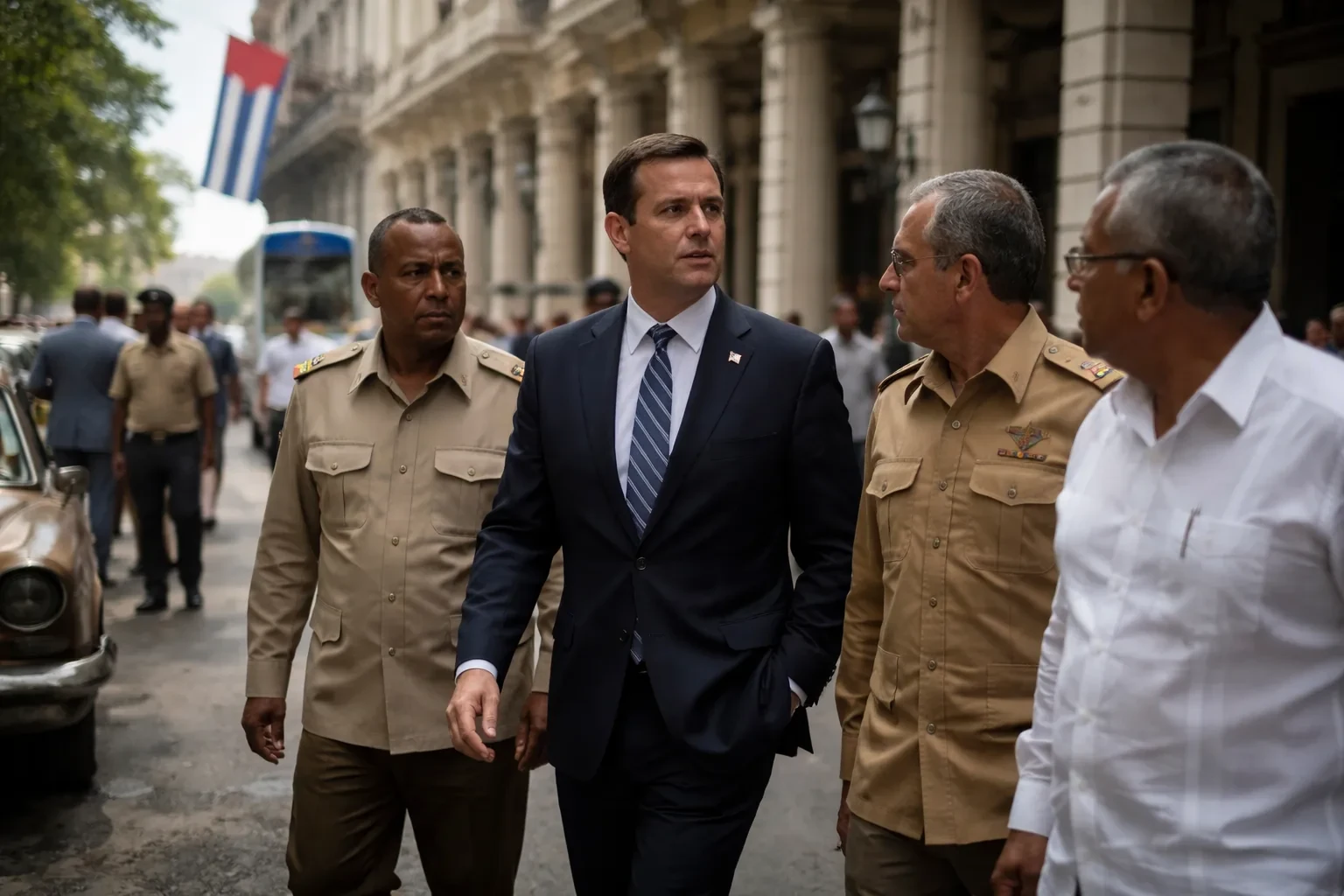
CIA Director John Ratcliffe visited Havana for a meeting with his counterpart at the Cuban interior ministry. The meeting, confirmed by the Cuban government, aimed to improve dialogue and address security concerns. Cuban officials reportedly assured their American counterparts that Havana does not pose a threat to US national security while emphasizing an interest in law enforcement cooperation.
What's new in this update
The confirmation of Ratcliffe's visit follows sightings of a US government plane at Havana's international airport. This diplomatic contact occurs as the US State Department renews a $100 million aid offer to the Cuban people. However, the proposal includes a condition that the assistance must be distributed via the Catholic Church and other independent humanitarian groups rather than through the Cuban government.
Key details
Cuba is currently experiencing a total depletion of diesel and fuel oil, leading to the closure of schools and government offices and leaving hospitals struggling to function. Foreign Minister Bruno Rodríguez indicated that Cuba is willing to hear details of the US aid proposal but suggested that lifting the economic blockade would be a more effective way to resolve the energy crisis.
Background and context
The energy crisis has been worsened by US sanctions that target shipments of fuel oil and diesel. Historically, Cuba relied on Venezuela and Mexico for oil, but these supplies have decreased following US threats of tariffs on countries assisting Havana. Earlier this year, both nations acknowledged they were in talks, though progress appeared to stall as the oil blockade intensified.
What to watch next
The focus shifts to whether Havana will accept the $100 million aid package under the US-mandated distribution terms. Additionally, the outcome of the security discussions between Ratcliffe and Cuban officials may determine if there is a shift in the broader US-Cuba diplomatic landscape or if the stalemate over sanctions and the energy blockade continues.
Why it matters
The visit represents a rare high-level diplomatic engagement between the US and Cuba during a period of acute humanitarian distress and strained energy infrastructure.
Read next
Follow this story through the topic hub, more world coverage, and the latest updates.
Weekly briefing
Get the week's key developments in one concise email.
Get a fast catch-up on the biggest stories, the context behind them, and the links worth your time.
Cadence
Weekly, for a quick catch-up
Coverage
AI, business, world, security, sports
Format
Clear takeaways and useful context
Request the briefing
Leave your email to open a prepared request and get on the list for the weekly briefing.
Author
See who assembled this story and follow more of their work.
Sources and methodology