Xi Jinping Grants Trump Rare Access to China's Seat of Power
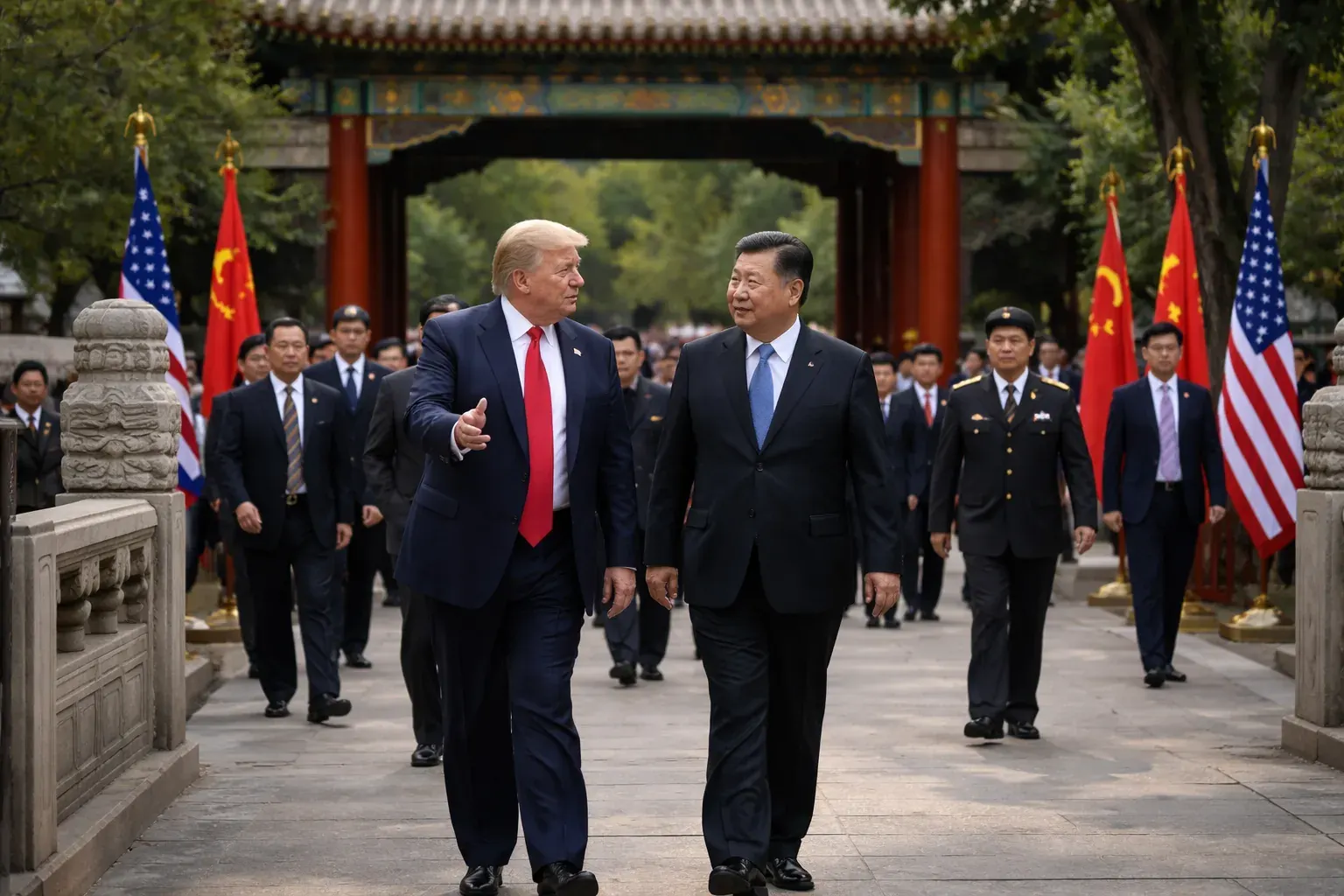
The US President concluded his visit to Beijing with a tour of the exclusive Zhongnanhai compound, signaling a diplomatic thaw amid trade and geopolitical

World correspondent
Reports on international affairs, diplomacy, and humanitarian developments with an emphasis on official statements, multilateral institutions, and regional context.
Editorial responsibility: Lead reviewer for geopolitics, international institutions, and crisis coverage
Primary source: BBC World News. Full source links and update notes are below.
Fast summary
Start here
- Donald Trump received a rare tour of Zhongnanhai, the heavily guarded 14th-century compound where China's top leaders live and work.
- While the visit focused on pageantry, Trump claimed progress on trade deals involving Boeing jets and US agricultural products.
- The leaders discussed the Iran conflict, with Xi pledging not to provide military weapons to Tehran while maintaining oil imports.
What happened
US President Donald Trump concluded his two-day visit to Beijing with a personal tour of Zhongnanhai, the tightly controlled compound where China's top leaders live and work. That made the final act of the visit more than ceremonial theater. Zhongnanhai is one of the most symbolically sensitive sites in Chinese politics, so opening it to a foreign leader carries a message about status, trust, and diplomatic intent. The visit unfolded after months of friction over tariffs, trade pressure, and broader geopolitical competition, which is why the visual tone of warmth between Trump and Xi Jinping immediately became part of the story rather than mere background.
What's new in this update
The new element in this update is the level of access Xi granted and the language both leaders used around it. Xi reportedly pointed out that very few foreign dignitaries are invited into Zhongnanhai, naming Vladimir Putin and Alexander Lukashenko as recent examples. During the walk through the compound's gardens, Xi described the meeting as the beginning of a "new bilateral relationship," while Trump publicly praised him as "warm" and "very smart." Those remarks do not establish policy on their own, but they do show both governments choosing symbolism, flattery, and controlled optics to suggest a thaw even while several substantive disputes remain unresolved.
Key details
Trump said China had agreed to purchase 200 Boeing jets, US oil, and substantial agricultural products, claims that would amount to a major commercial package if they are formally confirmed. So far, however, Chinese officials have avoided matching that level of specificity, leaving a gap between the White House framing and Beijing's public record. On the security side, Trump said Xi pledged not to supply military weapons to Iran. That would matter if borne out in subsequent policy, but it sits alongside the fact that China remains the largest buyer of Iranian oil and continues to stress the importance of keeping trade routes such as the Strait of Hormuz open. In other words, the visit mixed strong headline claims with limited documentary clarity.
Background and context
Zhongnanhai, near Tiananmen Square, became the Communist government's seat of power in 1949 and is often compared to the White House because it functions as both a leadership compound and a symbol of executive authority. It has hosted major foreign leaders before, including past US presidents, but access remains unusual enough to carry diplomatic weight on its own. That is why the setting matters in the context of the broader US-China relationship, which has been defined by tariff fights, competition over industrial policy, and arguments about each side's expanding global reach. The personal warmth of the visit therefore stands in contrast to a relationship that still contains structural mistrust and unresolved economic conflict.
What to watch next
The next test is whether either side turns the language of a "new bilateral relationship" into verifiable commitments. Analysts will be watching for formal Chinese confirmation of the aircraft, energy, and farm purchases Trump described, because those details will determine whether the visit produced real commercial movement or mostly diplomatic atmosphere. A second question is whether follow-up talks deliver anything more concrete on Iran, trade, or market access. A return summit is already being discussed, but the real measure of success will be whether future statements include signed terms, implementation timelines, or other proof that the pageantry inside Zhongnanhai was matched by durable policy substance.
Why this matters
The symbolic access to Zhongnanhai signals a shift toward a more conciliatory tone between the superpowers, though concrete policy agreements remain opaque.
Reader context
This story belongs to Northstar Herald's International Relations and Diplomacy coverage, with related entities including Xi Jinping, Donald Trump, Zhongnanhai, US-China Trade. The report is based on BBC World News source material.
Related coverage
Why it matters
The symbolic access to Zhongnanhai signals a shift toward a more conciliatory tone between the superpowers, though concrete policy agreements remain opaque.
Read next
Follow this story through the topic hub, more world coverage, and the latest updates.
Weekly briefing
Get the week's key developments in one concise email.
Get a fast catch-up on the biggest stories, the context behind them, and the links worth your time.
Cadence
Weekly, for a quick catch-up
Coverage
AI, business, world, security, sports
Format
Clear takeaways and useful context
Request the briefing
Leave your email to open a prepared request and get on the list for the weekly briefing.
About the byline
World correspondent
Leila Haddad covers world affairs, diplomacy, and humanitarian crises, with a focus on how fast-moving international developments affect public policy, conflict response, and cross-border institutions.
Sources and methodology