Trump Expresses Dissatisfaction with Iran Deal Terms as Ceasefire Extension Looms
Negotiators have reportedly agreed on a framework for a 60-day extension of the current ceasefire, but President Trump warns of a return to war if his demands are not met.
Primary source: BBC World News. Full source links and update notes are below.
Fast summary
Start here
- A 60-day ceasefire extension has been reached by negotiators but remains pending approval from President Donald Trump.
- Recent military exchanges include U.S. strikes in Bandar Abbas and an Iranian ballistic missile intercepted over Kuwait.
- President Trump has warned that failure to reach a satisfactory deal could lead to a resumption of full-scale conflict.
What happened
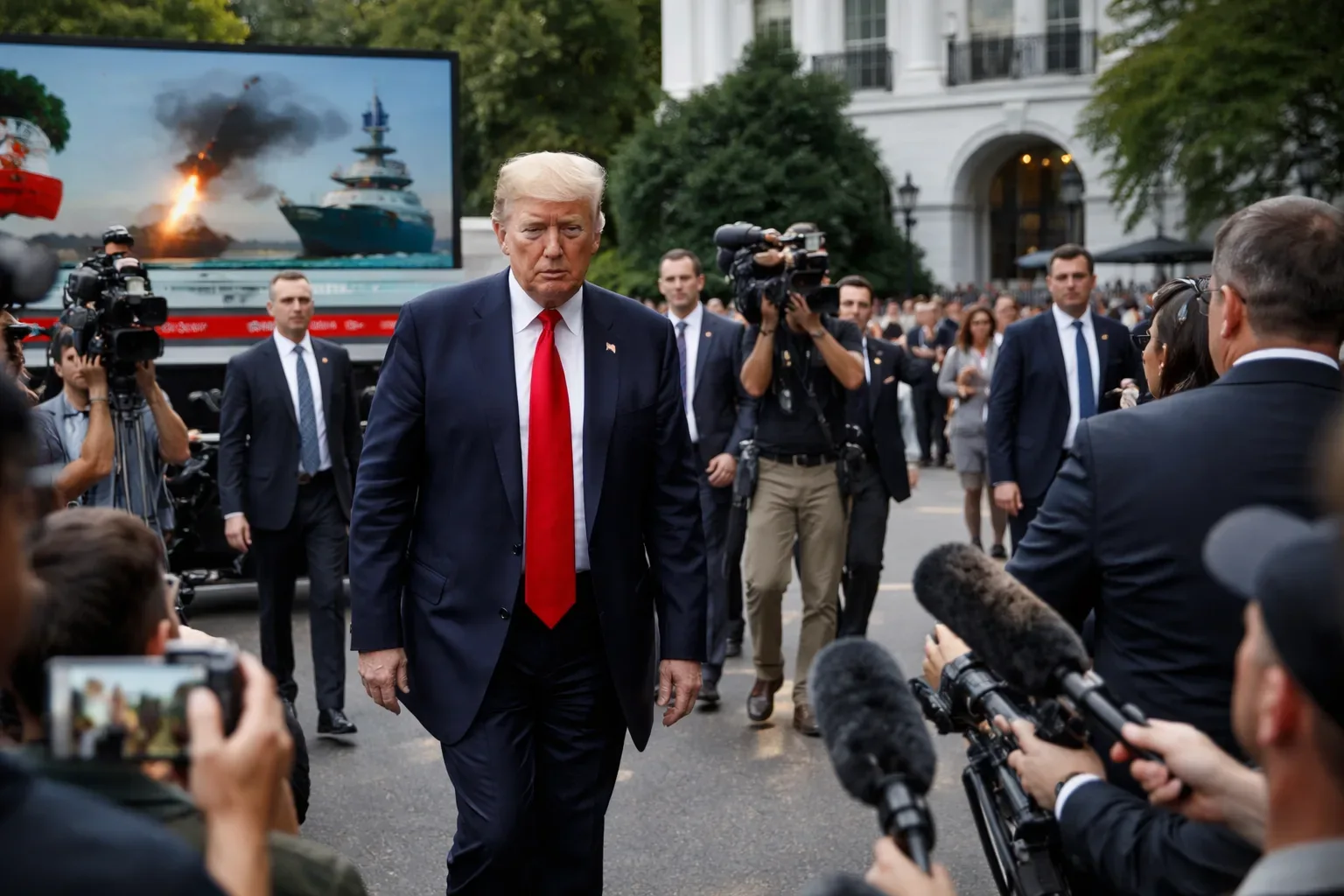
Negotiators have established a framework to extend the current U.S.-Iran ceasefire by 60 days to allow for continued diplomatic discussions. However, the agreement is currently stalled as it awaits final approval from President Donald Trump, who stated on Wednesday that he was "not satisfied" with the progress of the deal. Iran has not yet officially confirmed the extension framework.
What's new in this update
Military tensions have resurfaced despite the ceasefire, which began on April 8. U.S. Central Command recently conducted strikes on a ground control site in the Iranian port of Bandar Abbas. In response, the Islamic Revolutionary Guard Corps launched a ballistic missile toward a U.S. base, which was intercepted over Kuwait. Furthermore, the U.S. military reported shooting down five Iranian drones near the Strait of Hormuz on Thursday.
Key details
Iranian state media recently published elements of an unofficial 14-point memorandum of understanding, which included demands for lifting the U.S. naval blockade and the withdrawal of U.S. forces from the region. The White House has labeled these reports as a "complete fabrication." During a cabinet meeting, President Trump noted that Iran was starting to make some necessary concessions but emphasized that failure to comply with U.S. terms would trigger a return to war, specifically gesturing to Defence Secretary Pete Hegseth.
Background and context
The current ceasefire followed an intensive five-and-a-half-week conflict where the U.S. and Israel conducted thousands of sorties against Iranian targets, while Tehran responded with drone and missile volleys across the Gulf and toward Israel. While the current diplomatic process involves multiple actors and frequent back-channel communication, the focus has recently shifted back to maritime security and the control of shipping lanes through the Strait of Hormuz.
What to watch next
The primary indicator of progress will be whether President Trump provides formal approval for the 60-day extension. Observers are also watching for potential new sanctions from the U.S. Treasury and monitoring the Strait of Hormuz, especially following Trump's warning to regional allies like Oman regarding the management and routing of commercial and military vessels.
Why this matters
The fragile ceasefire has outlasted the initial weeks of intense combat, but unresolved diplomatic terms and renewed maritime friction threaten a return to regional war.
Reader context
This story belongs to Northstar Herald's International Relations and Middle East Conflict coverage, with related entities including Donald Trump, Iran, IRGC, Strait of Hormuz. The report is based on BBC World News source material.
Related coverage
Why it matters
The fragile ceasefire has outlasted the initial weeks of intense combat, but unresolved diplomatic terms and renewed maritime friction threaten a return to regional war.
Read next
Follow this story through the topic hub, more world coverage, and the latest updates.
Weekly briefing
Get the week's key developments in one concise email.
Get a fast catch-up on the biggest stories, the context behind them, and the links worth your time.
Cadence
Weekly, for a quick catch-up
Coverage
AI, business, world, security, sports
Format
Clear takeaways and useful context
Request the briefing
Leave your email to open a prepared request and get on the list for the weekly briefing.
Author
See who assembled this story and follow more of their work.
Sources and methodology