US Strikes Target Iranian Military Sites for Seventh Night
US Central Command reports a seventh night of airstrikes against Iranian military infrastructure following the end of a temporary ceasefire agreement.

World correspondent
Reports on international affairs, diplomacy, and humanitarian developments with an emphasis on official statements, multilateral institutions, and regional context.
Editorial responsibility: Lead reviewer for geopolitics, international institutions, and crisis coverage
Primary source: BBC World News. Full source links and update notes are below.
Fast summary
Start here
- US Central Command confirmed a seventh consecutive night of strikes aimed at degrading Iranian military logistics and infrastructure.
- Shipping traffic in the Strait of Hormuz has largely halted, threatening approximately 20% of the world's oil and liquefied natural gas supplies.
- Conflicting reports emerged regarding tanker explosions and attacks on US bases, with Washington and Tehran offering diverging accounts.
What happened
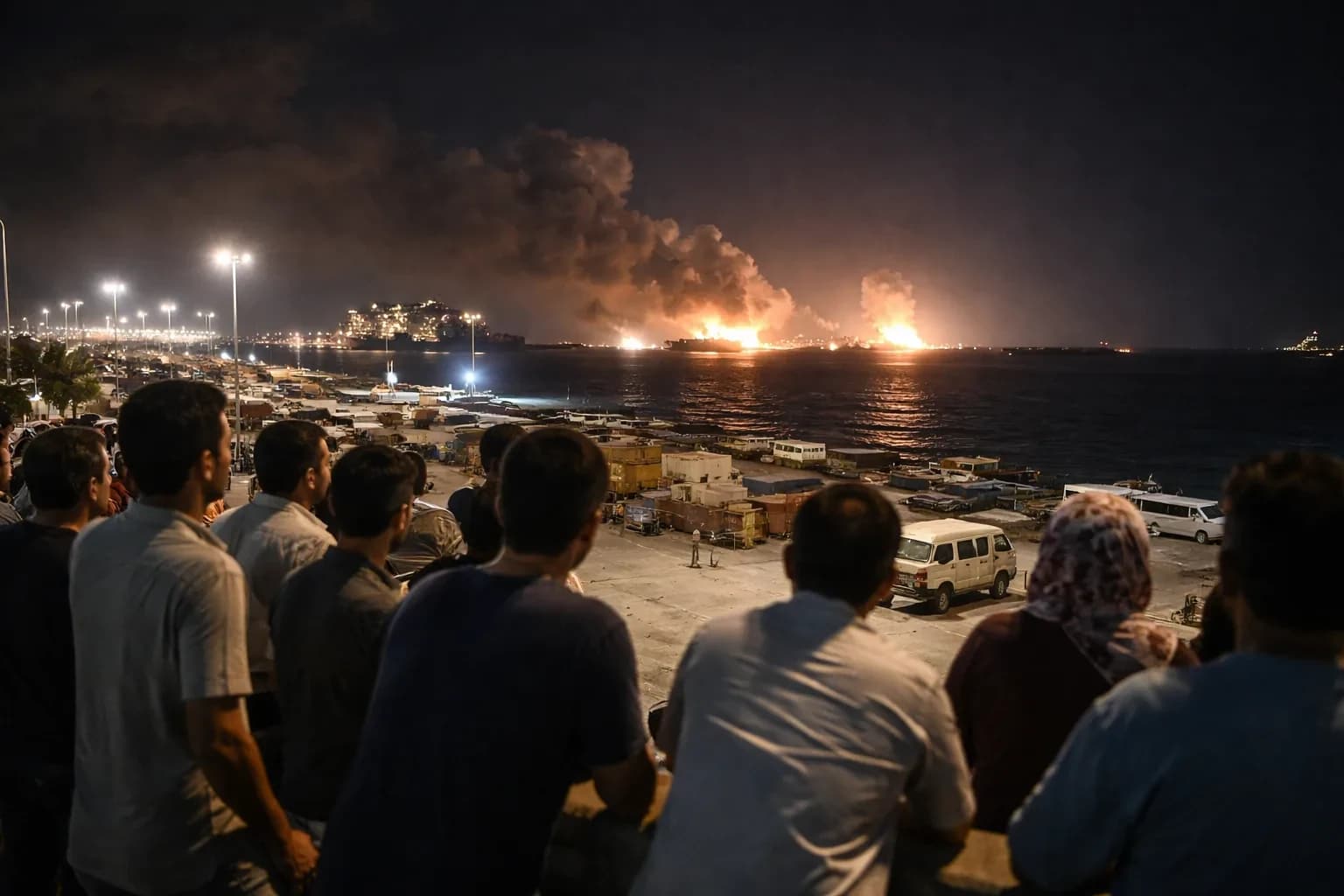
The United States military has extended its campaign of aerial operations into a seventh consecutive night, targeting Iranian military capabilities. US Central Command, or Centcom, issued a formal statement confirming that the strikes are being conducted at the direction of the Commander in Chief. This sustained military pressure follows an announcement from President Donald Trump that a previous temporary ceasefire agreement had reached its conclusion. Iranian state-run media and local reports indicated that explosions were heard across several strategically significant locations, including the central city of Yazd, the port of Bandar Abbas, and Qeshm island. While the US maintains that its operations are strictly focused on degrading military logistics, the impact has already been felt across the Hormozgan province, where local authorities reported at least seven fatalities resulting from the recent waves of bombardment.
What's new in this update
This latest phase of the conflict has been marked by a sharp increase in conflicting reports and information warfare. Iran's Revolutionary Guard Corps (IRGC) claimed that two oil tankers exploded within the Strait of Hormuz after hitting mines. However, US Centcom quickly dismissed these assertions, labeling them as false and consistent with previous misinformation campaigns. Independent verification efforts by BBC Verify and BBC Persian have confirmed significant physical damage to the Gariveh Bridge in southern Iran. Visual evidence, including nighttime footage of a fireball and subsequent daylight images of the collapsed roadway, illustrates the physical toll of the strikes. Additionally, the White House has moved to clarify its operational parameters, insisting that the US military is exclusively targeting military infrastructure and logistics hubs rather than civilian assets, despite reports from Tehran alleging damage to train stations and airports.
Key details
The geographical scope of the hostilities appears to be widening, with Iran's armed forces claiming to have launched retaliatory strikes against multiple US military facilities situated in Kuwait, Bahrain, Jordan, and Syria. While the US has denied many of these claims, Kuwaiti officials did report that Iranian drone strikes caused injuries to several soldiers and damaged critical infrastructure, including a power plant and water desalination stations. Furthermore, sources have indicated that several American service members sustained injuries during Iranian attacks on two bases located in Jordan over the past week. This marks the first time Syria has been included in Iran's list of targeted US facilities, signaling a potential expansion of the theater of war beyond the immediate borders of the Islamic Republic and into neighboring sovereign territories where US forces maintain a presence.
Background and context
The current escalation stems from the collapse of peace negotiations intended to secure a permanent ceasefire. Tensions regarding the security and future of the Strait of Hormuz have long been a flashpoint in international relations, but the current nightly exchanges represent a significant deterioration of regional stability. The Strait of Hormuz is one of the world's most vital maritime chokepoints; in periods of stability, it facilitates the transport of approximately 20% of the global supply of oil and liquefied natural gas. As a result of the ongoing tit-for-tat strikes between US and Iranian forces, commercial shipping traffic through this channel has effectively ground to a halt. The cessation of traffic through this waterway poses a substantial risk to global energy markets, as the lack of a secure passage forces tankers to seek alternative, often more costly, routes or remain stationary while waiting for hostilities to subside.
What to watch next
In the immediate term, the international community will be monitoring the Strait of Hormuz to determine if a safe corridor for commercial shipping can be re-established. The economic ramifications of a prolonged closure of the strait could lead to a spike in global energy prices and supply chain disruptions. Diplomatically, observers are looking for any signs of a return to the negotiating table, although the rhetoric from both Washington and Tehran remains combative following the expiration of the temporary ceasefire. The condition of the injured US service members in Jordan and the Kuwaiti soldiers will also be a point of focus, as casualties often dictate the intensity of subsequent retaliatory measures. Finally, the verification of damage to Iranian civilian infrastructure will remain a point of contention, as both sides attempt to control the narrative regarding the precision and intent of the ongoing military campaign.
Why it matters
The closure of the Strait of Hormuz and escalating direct military action between the US and Iran pose a severe threat to global energy security and regional stability.
Read next
Follow this story through the topic hub, more world coverage, and the latest updates.
Weekly briefing
Get the week's key developments in one concise email.
Get a fast catch-up on the biggest stories, the context behind them, and the links worth your time.
Cadence
Weekly, for a quick catch-up
Coverage
AI, business, world, security, sports
Format
Clear takeaways and useful context
Request the briefing
Leave your email to open a prepared request and get on the list for the weekly briefing.
About the byline
World correspondent
Leila Haddad covers world affairs, diplomacy, and humanitarian crises, with a focus on how fast-moving international developments affect public policy, conflict response, and cross-border institutions.
Sources and methodology