Uganda Bans School Trips After 20 Pupils Die in Fatal Bus Crash
Following a devastating crash in Kapchorwa district that killed 21 people, the Ugandan government has ordered a temporary ban on all school excursions.

World correspondent
Reports on international affairs, diplomacy, and humanitarian developments with an emphasis on official statements, multilateral institutions, and regional context.
Editorial responsibility: Lead reviewer for geopolitics, international institutions, and crisis coverage
Primary source: BBC World News. Full source links and update notes are below.
Fast summary
Start here
- At least 20 pupils and one school director died after their bus overturned on Chekwatit Hill in eastern Uganda.
- The Ugandan Ministry of Education has implemented an immediate nationwide suspension of school trips pending a safety probe.
- Preliminary investigations indicate the bus experienced a mechanical fault before the driver lost control of the vehicle.
What happened
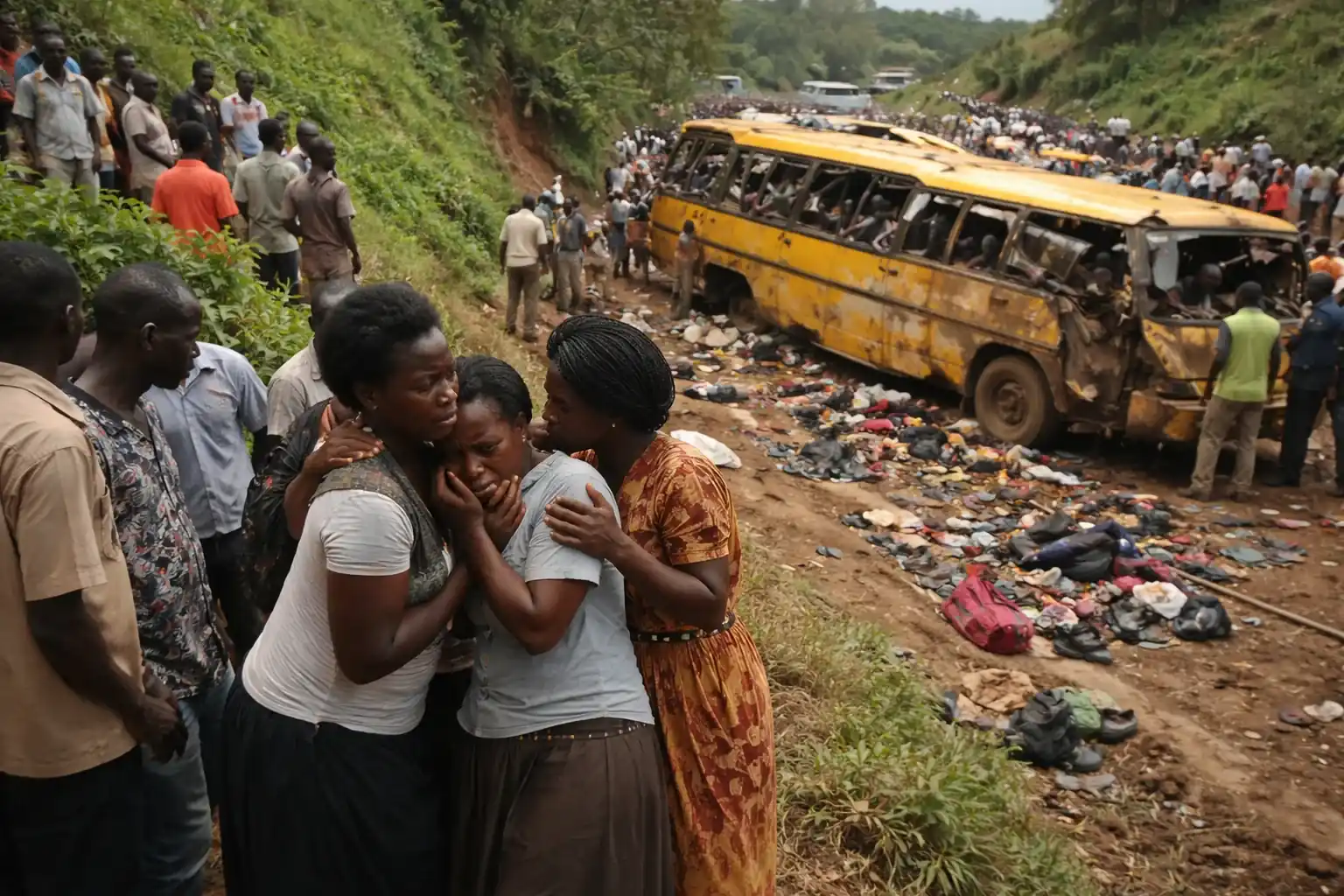
A devastating road traffic accident in the Kapchorwa district of eastern Uganda has claimed the lives of at least 20 primary school pupils and one adult director, prompting a swift response from national authorities. The incident occurred on Thursday evening when a bus transporting students from King David Junior School in Ndejje veered off the road and overturned. According to preliminary reports from the scene, the vehicle lost control while navigating the treacherous terrain of Chekwatit Hill, a location that has become infamous for high-frequency road accidents. Local residents and emergency responders worked late into the night to rescue survivors from the mangled wreckage, but the force of the impact against a large roadside stone left many with fatal injuries. The tragic loss of young lives has sent shockwaves through the local community and the nation at large as families begin the process of identifying their children and supporting those hospitalized.
What's new in this update
In a direct response to the tragedy, the Ugandan Ministry of Education has announced an immediate suspension of all educational field trips and school tours across the country. Education Minister John Chrysostom Muyingo stated that this temporary ban is a vital precautionary measure intended to protect students while a full investigation into the circumstances of the Kapchorwa crash is conducted. The minister highlighted the need for collective responsibility among school administrators, transport providers, and government regulators to ensure such a catastrophe does not happen again. The suspension is set to remain in place until new safety protocols can be established and the mechanical state of all school transport vehicles is verified. This update marks a significant shift in government policy, moving from reactive condolences to proactive enforcement of safety standards within the educational transport sector to prevent future losses of life among the nation's youth.
Key details
Further investigation into the King David Junior School bus reveals that the vehicle likely suffered from a significant mechanical fault prior to the accident. Traffic police spokesman Michael Kananura noted that the driver reportedly lost control at approximately 20:00 local time, striking a large stone before the bus overturned. Among the deceased was Mr. Tadeo Ssekade, the founder and director of the school, who was accompanying the children on their study tour to Sipi Falls. The pupils were returning from the scenic tourist area when the crash occurred at Chekwatit village. Local Government Minister Balaam Ateenyi Barugahara, who visited the crash site shortly after the event, confirmed the death toll via social media, expressing deep sorrow over the loss of students who were meant to be the future of the nation. The condition of the dozens of injured survivors remains a priority, with many being treated at nearby medical facilities for severe trauma.
Background and context
Uganda continues to face a public health crisis on its roads, with thousands of fatalities recorded each year due to preventable traffic incidents. High-speed travel, insufficient vehicle maintenance, and the aging condition of major transit routes are frequently cited by traffic authorities as the primary causes of these deaths. This latest crash at Chekwatit Hill is not an isolated event; the area has been the site of numerous serious accidents over the years, leading to calls for better road engineering and safety barriers. The safety of school-specific transport has come under intense scrutiny in recent weeks after several other buses carrying students were involved in accidents, though none as deadly as this week’s event. The structural issues within Uganda's transport regulatory framework often allow vehicles with mechanical defects to remain in operation, a loophole that safety advocates argue must be closed through stricter periodic inspections and enforcement for all public carriers.
What to watch next
As the temporary ban on school trips takes effect, the focus turns to the official investigation into the King David Junior School crash. Authorities are expected to provide a detailed report on the specific mechanical failures that led to the bus losing control. There is likely to be increased pressure on the Ministry of Works and Transport to implement stricter inspection regimes for vehicles used to transport children. Furthermore, the local government in Kapchorwa may face calls to improve infrastructure or safety signage at Chekwatit Hill to mitigate future risks. Parents and educators will be closely monitoring the government's next steps to see what new safety standards will be mandated before the suspension of educational tours is lifted. The legal implications for school directors and transport operators regarding vehicle maintenance may also come under legislative scrutiny in the coming months as the nation demands accountability for the safety of its most vulnerable citizens.
Why it matters
The tragedy underscores critical safety gaps in Uganda's transport sector and road infrastructure, forcing a nationwide pause on educational outings to prevent further loss of life.
Read next
Follow this story through the topic hub, more world coverage, and the latest updates.
Weekly briefing
Get the week's key developments in one concise email.
Get a fast catch-up on the biggest stories, the context behind them, and the links worth your time.
Cadence
Weekly, for a quick catch-up
Coverage
AI, business, world, security, sports
Format
Clear takeaways and useful context
Request the briefing
Leave your email to open a prepared request and get on the list for the weekly briefing.
About the byline
World correspondent
Leila Haddad covers world affairs, diplomacy, and humanitarian crises, with a focus on how fast-moving international developments affect public policy, conflict response, and cross-border institutions.
Sources and methodology