Trump Threatens Canada With Tariffs Over Wildfire Smoke Pollution
US President Donald Trump threatens Canada with trade levies as smoke from hundreds of wildfires triggers hazardous air alerts in northern US cities.

World correspondent
Reports on international affairs, diplomacy, and humanitarian developments with an emphasis on official statements, multilateral institutions, and regional context.
Editorial responsibility: Lead reviewer for geopolitics, international institutions, and crisis coverage
Primary source: BBC World News. Full source links and update notes are below.
Fast summary
Start here
- President Trump labels Canadian wildfire smoke an unhealthy invasion and threatens tariffs for alleged forest management negligence.
- Over 800 fires are currently active across Canada, with Ontario's premier urging the US to provide firefighting support rather than trade threats.
- Air quality in major US cities including Detroit and Chicago has reached hazardous levels, forcing the cancellation of various outdoor events.
What happened
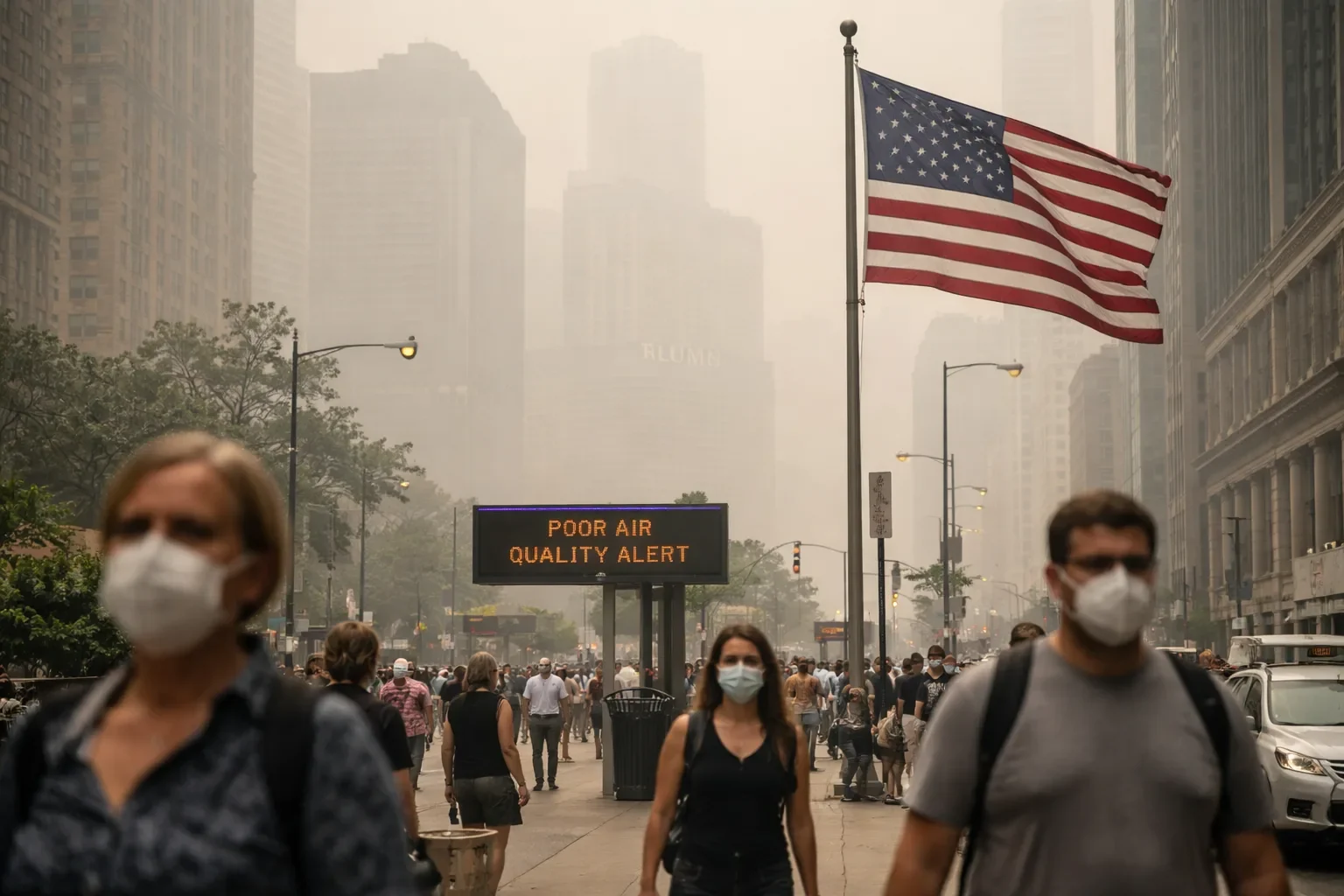
US President Donald Trump has ignited a significant diplomatic row with Canada, threatening to impose new tariffs on America’s northern neighbor in response to the persistent wildfire smoke currently blanketing northern US states. Describing the haze as an unhealthy and filthy invasion of polluted air, the President accused the Canadian government of willful negligence regarding its forest management practices. The threat comes as air quality in major metropolitan areas, including Detroit, Chicago, and New York City, plummeted to levels deemed hazardous for human health. Trump’s comments on Truth Social specifically targeted Canadian Prime Minister Mark Carney, demanding a full explanation for what he characterized as a failure to maintain forests and brush properly. This aggressive stance marks a departure from traditional environmental cooperation, shifting the discourse from mutual ecological concern to one of punitive economic measures and national security.
What's new in this update
The situation has escalated with a group of US lawmakers, including Representatives John James, John Moolenaar, Jack Bergman, and Lisa McClain, issuing an open letter to Canadian officials expressing that their patience has run out regarding the smoke. These lawmakers joined the President’s rhetorical offensive, claiming that American lungs are paying the price for years of Canadian inaction on the wildfire front. They specifically cited a chronic under-investment in forest thinning and fuel reduction as primary grievances. In response, Ontario Premier Doug Ford has pushed back against the criticism from Washington, urging the United States to send resources and firefighting support to the region rather than complaints. Prime Minister Mark Carney has also weighed in, reminding the US administration that climate change is a shared global responsibility, though Canada has yet to issue a formal diplomatic response to the specific threat of trade levies.
Key details
The scale of the ongoing environmental crisis is immense, with the Canadian Wildland Fire Information System reporting approximately 888 active fires across the country as of Friday. Of these blazes, the majority are currently burning out of control, including more than 190 in the province of Ontario. To date, nearly 3 million hectares of land have been destroyed during this season alone. The resulting smoke has crossed the border into several US states including Minnesota, Michigan, Pennsylvania, and Ohio, leading to widespread hazardous air quality alerts. Data from Swiss air quality tracker IQAir recently ranked Detroit’s air quality as the worst in the world, with other US cities like Chicago and Washington DC appearing prominently in the top rankings. The severity of the smoke has already led to the widespread cancellation of outdoor events and heightened public health warnings for millions of Americans.
Background and context
While the US administration blames management practices, scientists argue the reality of wildfire behavior is far more complex than simple forest maintenance. Experts from the University of Toronto point out that weather patterns do not care about international borders and that smoke from major US wildfires has also affected Canada in recent years. Researchers emphasize that the increasing frequency and intensity of these wildfire seasons are heavily driven by climate change, which creates the hot, dry conditions conducive to rapid fire spread across vast ecosystems. Many of the current fires originate in remote regions of Canada where detection and containment are naturally difficult before the blazes grow too large. Experts from the University of Waterloo have stated that it is inaccurate to suggest that Canada alone caused or could have prevented these wildfires, as they are part of a broader global climate issue.
What to watch next
As the smoke persists, international observers are monitoring the potential for a formal trade investigation that could lead to the actual implementation of the tariffs Trump has threatened. The upcoming phone call between President Trump and Prime Minister Mark Carney will be a pivotal moment for bilateral relations, potentially determining whether the two nations can return to a collaborative approach to disaster management or if the dispute will escalate further. Additionally, US lawmakers have warned they could explore direct involvement in cross-border wildfire protection if Canada fails to act more aggressively. The continued path of the smoke plumes will dictate public health policy in northern US cities, with local governments weighing the long-term health costs of recurring smoke events against the diplomatic pressure being applied to Ottawa. Further updates on fire containment efforts in Ontario will be critical in the coming days.
Why it matters
The escalation of environmental disaster impacts into trade threats marks a significant shift in US-Canada relations and cross-border climate cooperation.
Read next
Follow this story through the topic hub, more world coverage, and the latest updates.
Weekly briefing
Get the week's key developments in one concise email.
Get a fast catch-up on the biggest stories, the context behind them, and the links worth your time.
Cadence
Weekly, for a quick catch-up
Coverage
AI, business, world, security, sports
Format
Clear takeaways and useful context
Request the briefing
Leave your email to open a prepared request and get on the list for the weekly briefing.
About the byline
World correspondent
Leila Haddad covers world affairs, diplomacy, and humanitarian crises, with a focus on how fast-moving international developments affect public policy, conflict response, and cross-border institutions.
Sources and methodology