Hazardous Smoke Crosses Border as 800 Canadian Wildfires Rage
Wildfire smoke blankets the US Midwest and Northeast, prompting health alerts and political friction as over 800 fires burn out of control in Canada.

World correspondent
Reports on international affairs, diplomacy, and humanitarian developments with an emphasis on official statements, multilateral institutions, and regional context.
Editorial responsibility: Lead reviewer for geopolitics, international institutions, and crisis coverage
Primary source: BBC World News. Full source links and update notes are below.
Fast summary
Start here
- Over 850 wildfires are active in Canada, with 30 new blazes reported in a single day and most burning out of control.
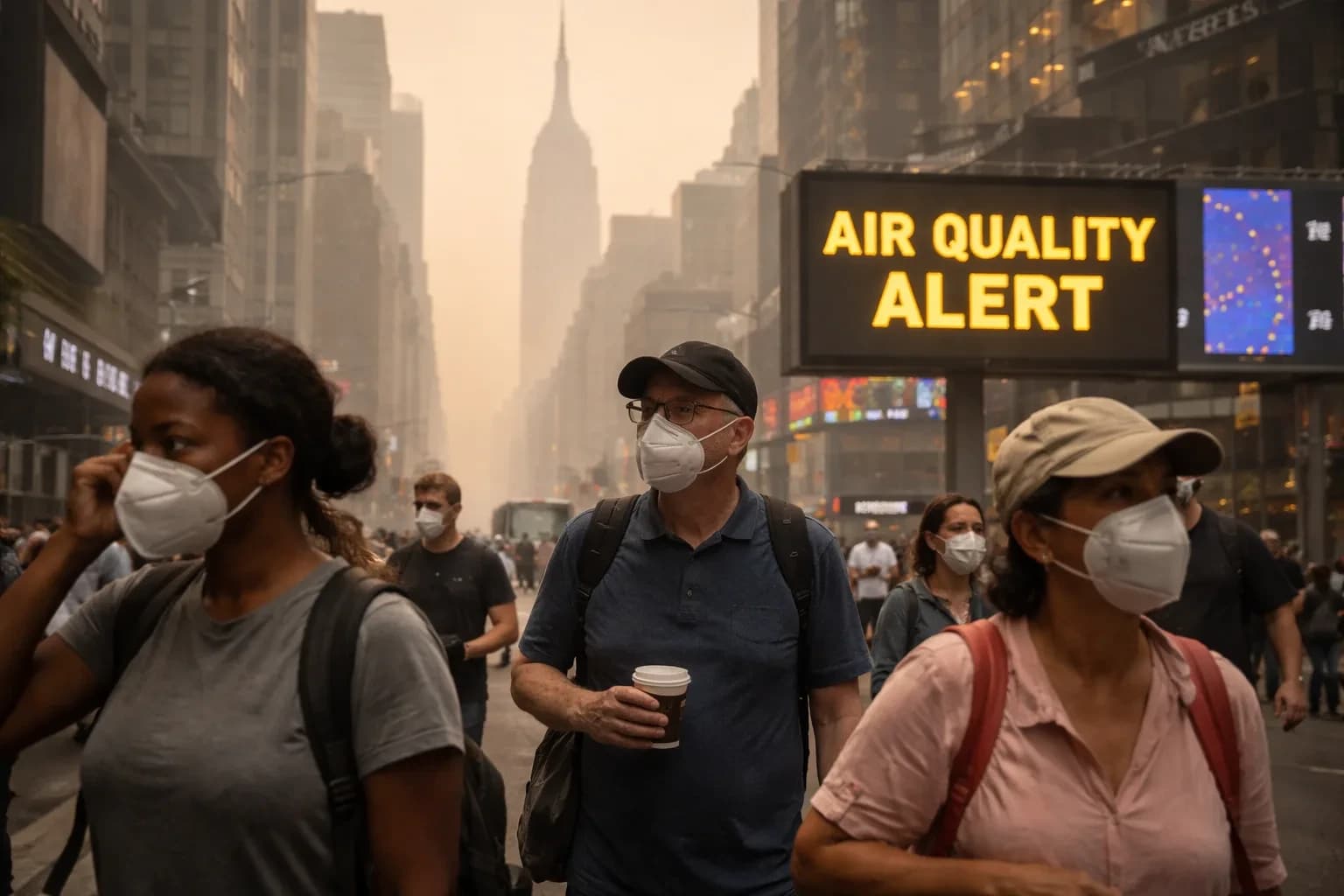
- Air quality has reached hazardous levels in Michigan and Minnesota, while New York City has activated emergency protocols and distributed masks.
- Smoke is tracking toward New Jersey, potentially threatening air quality for Sunday's scheduled World Cup final.
What happened
Over 800 wildfires are currently active across Canada, creating a massive environmental crisis that has crossed international borders. As of Thursday, the Canadian Wildland Fire Information System reported 858 active fires, with the vast majority remaining out of control. This surge in fire activity has triggered severe air quality alerts across several U.S. states, particularly in the Upper Midwest and the Northeast. Plumes of thick smoke from northwestern Ontario have drifted south, creating hazy skies and dangerous breathing conditions for millions of residents. The US Air Quality Index (AQI) has reached hazardous levels in parts of Michigan and Minnesota, prompting local authorities to issue stay-at-home recommendations to protect public health from the fine particulate matter. The far-reaching impacts of the smoke have prompted state officials to activate emergency public health protocols in several major American cities.
What's new in this update
The situation intensified on Thursday with the reporting of 30 new fires within a single 24-hour period. This escalation has led to a notable diplomatic friction between regional U.S. leaders and the Canadian federal government. Republican lawmakers from Michigan have taken the unusual step of sending an open letter to Canadian Prime Minister Mark Carney. The letter expresses deep frustration over what the representatives describe as inadequate forest management, noting that this is the third consecutive year that smoke from Canadian wildfires has compromised Michigan’s air quality and public health. While the rhetoric from state lawmakers was sharp, Pete Hoekstra, the U.S. Ambassador to Canada, maintained a more diplomatic stance in his public remarks. Hoekstra commended the joint wildfire fighting efforts and the spirit of cooperation between the two nations as they battle the widespread blazes across the boreal forest.
Key details
The air quality impacts are geographically extensive, affecting major metropolitan areas including Detroit, Chicago, and Toronto. Data from Swiss air quality tracker IQAir currently ranks Detroit as having the worst air quality in the world, followed closely by Minneapolis. In New York, state officials have moved into emergency mode, activating air quality protocols and extending heat emergency plans originally meant for rising temperatures. This response includes the distribution of KN95 masks and the opening of hundreds of cooling centers to provide relief for vulnerable populations. In Western New York, the air is classified as very unhealthy, while the New York City metro area faces unhealthy conditions. Though thunderstorms are forecasted for parts of Ontario, meteorologists warn that the rainfall may be insufficient to dampen the fires or significantly clear the air in the immediate future.
Background and context
While wildfires are a natural component of Canada's vast boreal forest life cycle, the frequency and intensity of these events have seen a marked increase over the last decade. Laura Chasmer, a professor of geography and the environment at the University of Western Ontario, notes that since 2015, fires have become more frequent due to extreme climate warming and the atmospheric drying of the land surface. Historically, these fires were primarily concentrated in Western Canada, but recent years have seen a significant shift in activity toward Ontario and Quebec. This change in geographic pattern has caught many regions off-guard, leading to persistent smoke plumes that are easily caught by northwesterly winds and funneled directly into the densely populated corridors of the United States, creating a recurring annual crisis.
What to watch next
The immediate focus remains on the weather patterns for the coming weekend. Northwesterly winds are expected to continue pushing smoke into northern U.S. states, raising specific concerns for New Jersey. The state is scheduled to host the World Cup final this Sunday, and officials are monitoring whether smoke concentrations will interfere with the high-profile sporting event or pose significant health risks to spectators and athletes. A potential reprieve is on the horizon for early next week; meteorologists predict a shift in wind direction by Monday. This change is expected to steer the smoke across Quebec and away from the U.S. border, which should lead to a gradual improvement in air quality for states currently under hazardous alerts. Until then, health officials continue to advise residents in affected areas to minimize outdoor activity.
Why it matters
The persistence of Canadian wildfire smoke as a transboundary health hazard highlights the growing environmental and diplomatic challenges posed by climate-driven disasters. It underscores the vulnerability of major metropolitan infrastructure and international sporting events to localized ecological shifts.
Read next
Follow this story through the topic hub, more world coverage, and the latest updates.
Weekly briefing
Get the week's key developments in one concise email.
Get a fast catch-up on the biggest stories, the context behind them, and the links worth your time.
Cadence
Weekly, for a quick catch-up
Coverage
AI, business, world, security, sports
Format
Clear takeaways and useful context
Request the briefing
Leave your email to open a prepared request and get on the list for the weekly briefing.
About the byline
World correspondent
Leila Haddad covers world affairs, diplomacy, and humanitarian crises, with a focus on how fast-moving international developments affect public policy, conflict response, and cross-border institutions.
Sources and methodology