Eleven Dead After Fire Breaks Out at Algerian Foster Care Home
Eleven people are confirmed dead and 19 others injured following an early morning blaze at a foster care facility in the Algerian capital of Algiers.

World correspondent
Reports on international affairs, diplomacy, and humanitarian developments with an emphasis on official statements, multilateral institutions, and regional context.
Editorial responsibility: Lead reviewer for geopolitics, international institutions, and crisis coverage
Primary source: BBC World News. Full source links and update notes are below.
Fast summary
Start here
- Emergency services were called to the scene at 03:30 local time on Thursday to battle the blaze.
- Prime Minister Sifi Ghrieb visited the injured at two hospitals in Algiers following the tragedy.
- The incident occurred during a heatwave that has triggered nearly 1,000 fires across Algeria in one week.
What happened
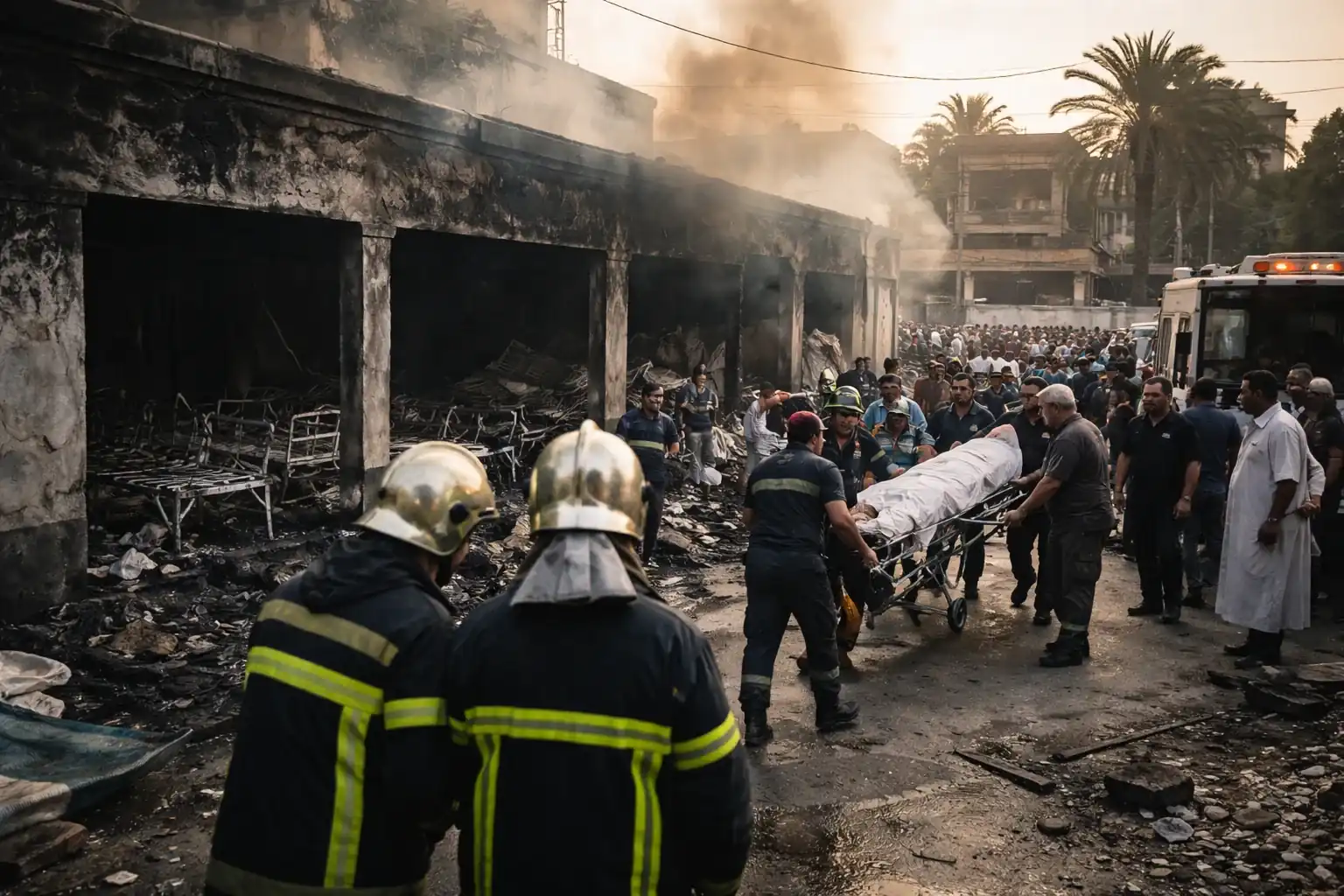
A devastating fire at a foster care facility in Algiers, the capital of Algeria, has resulted in at least eleven fatalities. The Algerian Civil Protection Department reported that the blaze began in the early hours of Thursday morning, with emergency services first arriving at the scene at approximately 03:30 local time. Despite the rapid deployment of ten fire engines and sixteen ambulances, the fire proved difficult to contain, requiring more than three hours of intensive effort before being partially brought under control by the firefighting crews. Nineteen other individuals sustained various injuries during the incident and were quickly transported to nearby medical facilities for urgent treatment. The identities and specific ages of the deceased have not yet been officially released by the authorities.
What's new in this update
In the hours following the tragedy, Algerian state media confirmed that Prime Minister Sifi Ghrieb personally visited survivors at two separate hospitals in Algiers. Images released by the state show the Prime Minister at the bedside of a young child, though official statements have remained vague regarding the specific demographics of those residing in the home at the time of the disaster. Authorities have also highlighted a small measure of success amidst the tragedy, noting that five individuals with special needs were successfully taken into care and transported to a safe location during the emergency response. The Prime Minister's visit signals the high level of government concern regarding the safety of public welfare institutions during the current environmental crisis.
Key details
The emergency response was significant, involving a large-scale deployment by the General Directorate for Civil Protection to the foster care site. At the height of the operation, sixteen ambulances were rotating between the foster care home and local emergency rooms to manage the nineteen injured survivors. While the fire was largely subdued by 06:30 local time, investigators remained on-site to assess the structural integrity of the building and search for any remaining victims. No official cause for the fire has been determined yet, but the presence of high-density housing and the time of the outbreak—while most residents were likely sleeping—contributed to the high casualty count. The facility was intended to provide a safe environment for vulnerable individuals, making the loss of life particularly impactful for the local community.
Background and context
This incident occurs as Algeria grapples with a brutal summer heatwave that has severely strained the country’s infrastructure and emergency services. According to reports from the AFP news agency, Algeria has recorded nearly 1,000 fires across the nation in just a single week. These conditions have created a tinderbox environment where even small sparks can lead to uncontrollable blazes in both urban and rural areas. The North African nation frequently deals with seasonal wildfires, but the intensity and frequency of recent outbreaks have reached alarming levels this year. The heatwave has seen temperatures soar across Algiers and the northern coastal regions, placing immense pressure on the electrical grid and increasing the risk of fire in residential and institutional buildings alike.
What to watch next
Moving forward, the Algerian government is expected to launch a formal investigation into the safety protocols at state-run and private foster care facilities. Public scrutiny will likely focus on whether the building was equipped with adequate fire suppression systems and if staffing levels were sufficient for a nighttime evacuation. Additionally, as the heatwave continues, the Civil Protection Department will likely remain on high alert, with further updates expected regarding the condition of the 19 hospitalized survivors. Observers will also look for potential policy shifts or increased funding for emergency services to manage the rising frequency of climate-related disasters in the region. The tragedy may prompt a broader discussion on urban safety standards and the protection of vulnerable populations during extreme weather events.
Why it matters
This tragedy underscores the vulnerability of institutionalized care populations during extreme weather events and severe regional heatwaves.
Read next
Follow this story through the topic hub, more world coverage, and the latest updates.
Weekly briefing
Get the week's key developments in one concise email.
Get a fast catch-up on the biggest stories, the context behind them, and the links worth your time.
Cadence
Weekly, for a quick catch-up
Coverage
AI, business, world, security, sports
Format
Clear takeaways and useful context
Request the briefing
Leave your email to open a prepared request and get on the list for the weekly briefing.
About the byline
World correspondent
Leila Haddad covers world affairs, diplomacy, and humanitarian crises, with a focus on how fast-moving international developments affect public policy, conflict response, and cross-border institutions.
Sources and methodology