Trump Pledges New Strikes on Iran as Middle East Escalation Intensifies
After a series of overnight exchanges involving helicopter downings and base attacks, the U.S. prepares for more military action while a blockade tightens.
Primary source: BBC World News. Full source links, newsroom standards, and correction details are below.
Fast summary
Start here
- President Trump announced the U.S. will hit Iran 'hard' on Wednesday following retaliatory strikes on Iranian defense systems.
- The U.S. military struck an oil tanker in the Gulf of Oman, enforcing a blockade of Iranian ports after the Strait of Hormuz was effectively closed.
- Iran's Revolutionary Guard (IRGC) targeted U.S. bases in the region, though U.S. officials report most projectiles were intercepted with no casualties.
What happened
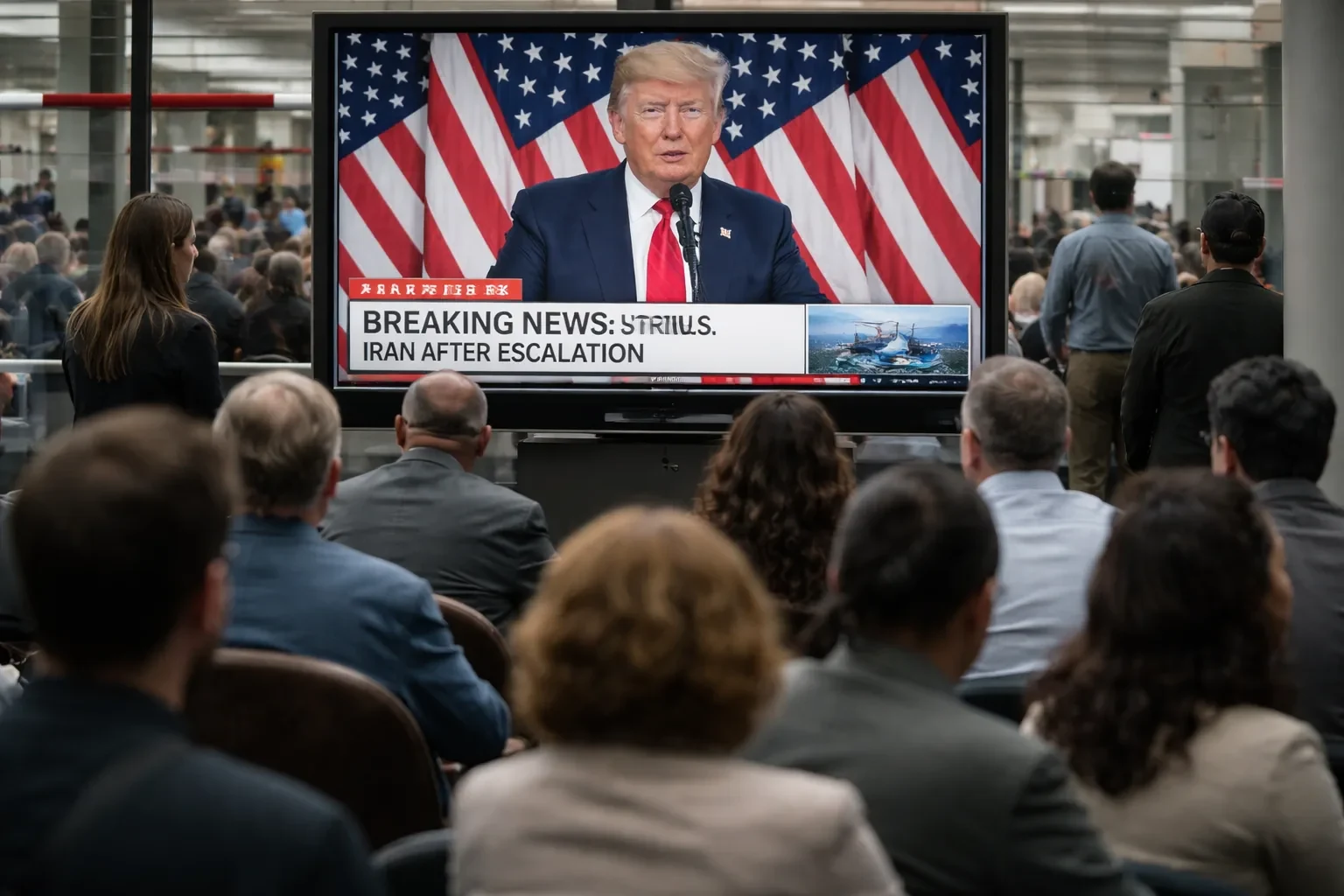
President Trump announced in an Oval Office briefing that the United States would launch further strikes against Iran on Wednesday. This follows a Tuesday operation where U.S. forces targeted Iranian radar sites and ground control stations near the Strait of Hormuz. The escalation was triggered by the downing of a U.S. Army Apache helicopter, which Trump claims was hit by an Iranian drone while patrolling the region.
What's new in this update
In his latest remarks, Trump stated that Iran has been "completely defeated" militarily and must now pay the price for failing to negotiate a deal. Simultaneously, the U.S. military confirmed it struck the oil tanker Settebello in the Gulf of Oman for violating an ongoing blockade. Indian authorities reported that three sailors are missing and 21 crew members were rescued following the attack on the vessel, which was allegedly transporting Iranian oil.
Key details
Iran's Islamic Revolutionary Guard Corps (IRGC) responded to Tuesday's U.S. strikes by launching missiles and drones at 21 targets across American bases in Bahrain and Jordan. While Kuwaiti forces also reported intercepting attacks, U.S. officials claim nearly all incoming threats were neutralized without resulting in casualties. Meanwhile, Iranian state media reported that U.S. strikes damaged local infrastructure, including two reservoirs in the port town of Sirik, leaving residents without drinking water.
Background and context
The current conflict intensified on February 28 after U.S. and Israeli strikes killed Iran's supreme leader, leading to a regional escalation that drew in Lebanon by March. Although a two-week ceasefire was brokered in April, it has been plagued by intermittent violations and what Tehran describes as "contradictory messages" during diplomatic talks in Pakistan. The U.S. is currently blockading Iranian ports in response to Iran's earlier closure of the Strait of Hormuz.
What to watch next
Iranian President Masoud Pezeshkian has vowed to "stand firm against any pressure," suggesting that Tehran may not yield to Trump's demands for a new deal despite the military pressure. The focus remains on whether the "hard" strikes promised for Wednesday will target IRGC command structures or industrial infrastructure, and if the diplomatic process in Pakistan can survive the renewed hostilities.
Why it matters
The escalating direct military exchange between the U.S. and Iran threatens to collapse a fragile April ceasefire and further destabilize global energy shipping routes.
Read next
Follow this story through the topic hub, more world coverage, and the latest updates.
Weekly briefing
Get the week's key developments in one concise email.
Get a fast catch-up on the biggest stories, the context behind them, and the links worth your time.
Cadence
Weekly, for a quick catch-up
Coverage
AI, business, world, security, sports
Format
Clear takeaways and useful context
Request the briefing
Leave your email to open a prepared request and get on the list for the weekly briefing.
Author

The Northstar Herald editorial desk assembles wire-driven and source-linked coverage, verifies core facts against published materials, and updates stories as new reporting becomes available.
Sources and methodology