From Resistance to Necessity: The Strategic Framing of Tehran’s New Deal with Washington
As Iran prepares for high-stakes negotiations in Switzerland, the government is working to sell a diplomatic compromise as a triumph over Western pressure.
Primary source: BBC World News. Full source links, newsroom standards, and correction details are below.
Fast summary
Start here
- Senior Iranian officials are framing the emerging memorandum of understanding (MoU) as a result of 'resistance' rather than a tactical retreat.
- Internal dissent persists as hard-line MPs and state-aligned media warn against 'appeasement' and claim the deal ignores the Supreme Leader's directives.
- The agreement is largely driven by economic desperation, with high inflation and restricted oil market access forcing Tehran to seek sanctions relief.
What happened
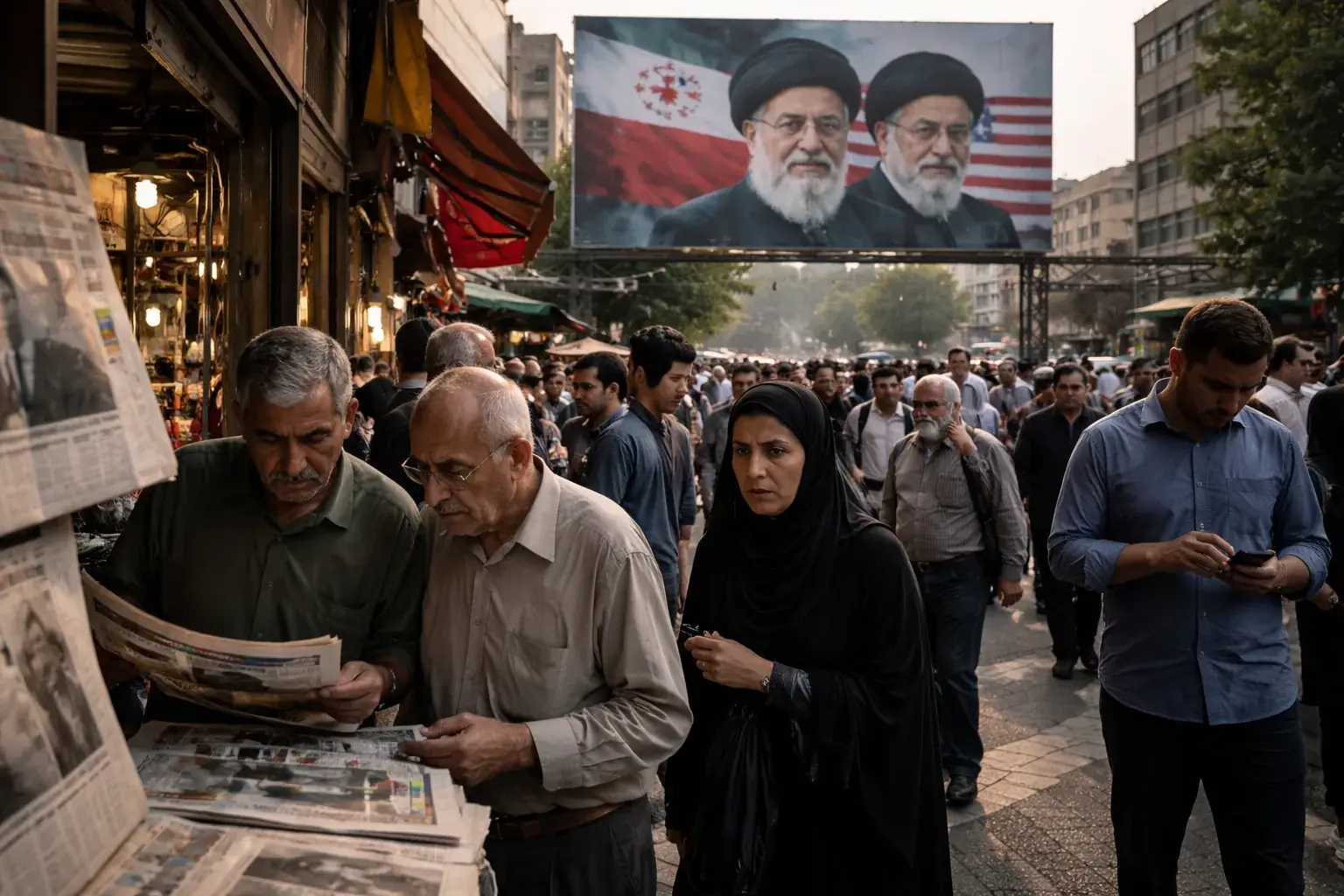
The Iranian leadership is actively marketing an emerging memorandum of understanding (MoU) with the United States as a strategic victory, rather than a concession. High-ranking officials, including Parliament Speaker Mohammad Bagher Qalibaf and President Masoud Pezeshkian, have described the framework as a transformative step toward ending Iran's economic isolation. Qalibaf, a figure often associated with the more conservative elements of the state, has framed the development as a 'long step towards final victory,' suggesting that the Iranian system has maintained its core objectives despite intense international pressure. This narrative claims that the U.S. and Israel failed to force a total surrender or dismantle Iran’s nuclear program and regional alliances.
What's new in this update
Despite the unified front presented by some leaders, significant friction remains within the Islamic Republic’s power structure. A deputy chair of the parliament’s National Security Committee recently condemned the draft deal as a document that would effectively turn Iran into an 'American colony.' This domestic opposition highlights a deep-seated distrust of Washington, particularly following accusations that the previous Trump administration used negotiations as a cover for military preparation. However, the observable silence from some typically vocal hard-line factions suggests that the decision to proceed with the MoU likely carries the authorization of the country’s highest levels of power, including the Office of the Supreme Leader.
Key details
The economic catalyst for this diplomatic shift cannot be overstated. Iran continues to struggle with severe inflation, restricted access to hard currency, and limited oil exports due to ongoing sanctions. U.S. Vice-President JD Vance has clarified that while Iran would not receive American taxpayer money, the deal could grant Tehran access to billions of dollars in frozen assets if it adheres to its commitments. Central to the upcoming discussions are several high-stakes issues: the future of Iran's enriched uranium, the specific level of enrichment permitted, international verification processes, and the reopening of the Strait of Hormuz to international shipping.
Background and context
The current diplomatic opening arrives after a period of intense military and economic strain. The framing of this deal is essential for the regime's domestic legitimacy, as a portion of its support base views any compromise as a violation of the revolutionary principle of 'resistance.' Meanwhile, a segment of the population, both within Iran and in the diaspora, remains skeptical of any deal, viewing the current crisis as an opportunity for more fundamental political change rather than a return to the negotiating table. The leadership's argument rests on the idea that they have successfully kept Lebanon and Hezbollah within the framework of discussion, preventing their complete isolation by Western and Israeli forces.
What to watch next
Formal negotiations are scheduled to begin in Switzerland this Friday, where the technical specifics of the MoU will be scrutinized. The durability of the agreement remains fragile due to external factors, most notably the actions of Israel. Prime Minister Benjamin Netanyahu has already rejected claims of an imminent withdrawal from southern Lebanon, a move that could test Tehran’s claim that Lebanon is protected under the new framework. Additionally, the evolving rhetoric from Donald Trump regarding Israel’s conduct suggests potential shifts in U.S. policy that could either provide Tehran with further diplomatic leverage or dismantle the current momentum if Israeli operations continue unabated.
Why it matters
This deal represents a critical pivot for the Iranian leadership, balancing its survival against a crippled economy while managing internal hard-line factions that view any diplomacy with the U.S. as a betrayal.
Read next
Follow this story through the topic hub, more world coverage, and the latest updates.
Weekly briefing
Get the week's key developments in one concise email.
Get a fast catch-up on the biggest stories, the context behind them, and the links worth your time.
Cadence
Weekly, for a quick catch-up
Coverage
AI, business, world, security, sports
Format
Clear takeaways and useful context
Request the briefing
Leave your email to open a prepared request and get on the list for the weekly briefing.
Author

The world desk follows geopolitics, humanitarian crises, diplomacy, and major international developments with an emphasis on fast updates and public-interest context.
Sources and methodology