Gulf Conflict Escalates with Renewed US-Iran Air Strikes
Military targets were hit near the Strait of Hormuz over the weekend as President Trump signaled a need for changes to a proposed peace deal.
Primary source: BBC World News. Full source links, newsroom standards, and correction details are below.
Fast summary
Start here
- US forces struck Iranian radar and drone command sites in Goruk and Qeshm Island in what Centcom called self-defense.
- Iran's Revolutionary Guard (IRGC) reported retaliatory strikes against an air base used by U.S. forces following a strike on Sirri Island.
- Peace negotiations are currently at an impasse after President Trump requested edits to a proposed 60-day ceasefire deal.
What happened
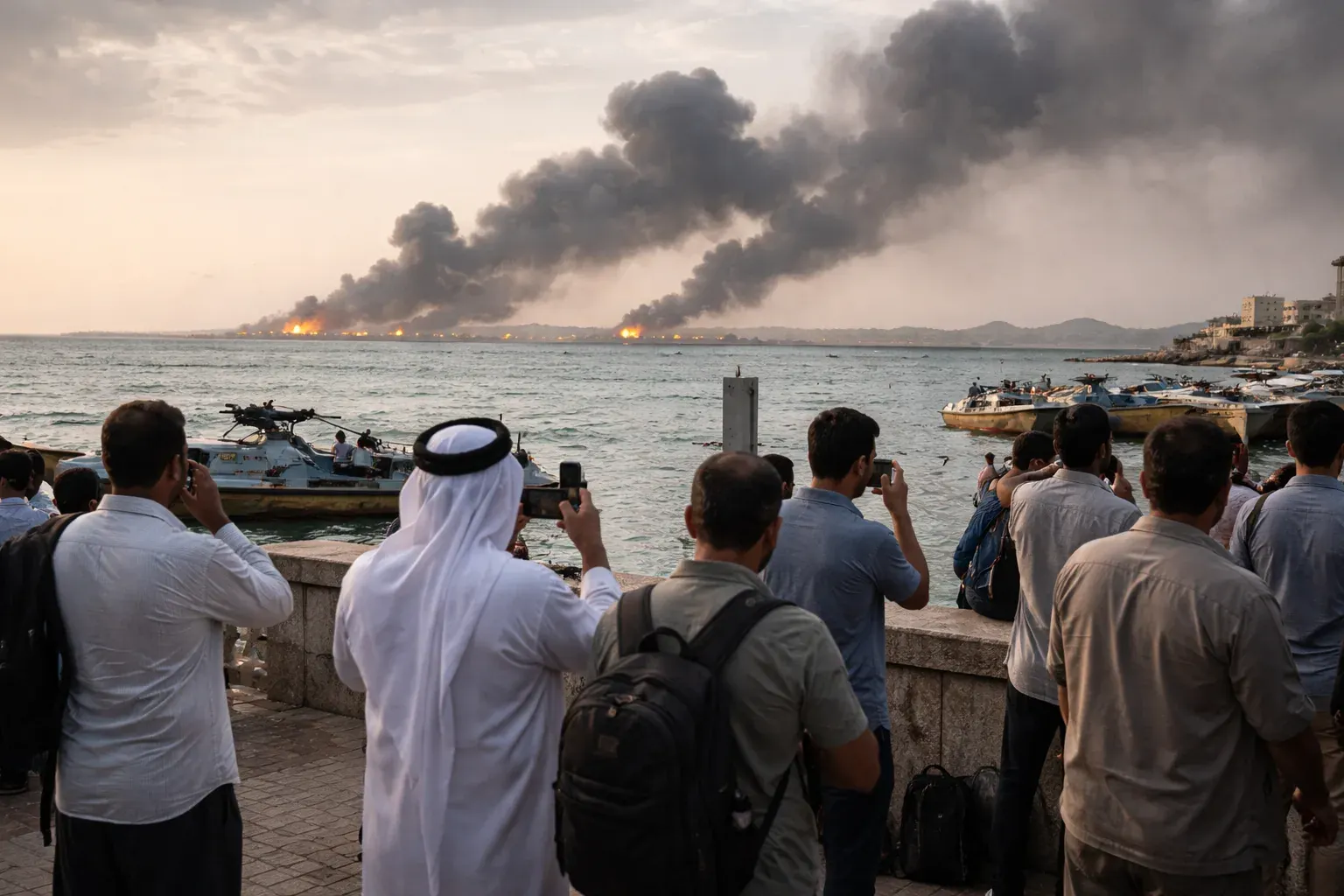
Over the weekend, the United States and Iran resumed direct military engagements near the Strait of Hormuz, each targeting the other's military infrastructure. US Central Command (Centcom) confirmed strikes on Iranian radar and drone control centers, while Iran's Islamic Revolutionary Guard Corps (IRGC) claimed to have targeted an American-used air base in retaliation for previous strikes on Sirri Island.
What's new in this update
The latest wave of violence occurs despite a nominal ceasefire established on April 8. Tensions have intensified following President Donald Trump’s request for "edits" to a proposed 60-day cessation of violence, a move that appears to have halted momentum toward a formal peace agreement.
Key details
Centcom reported that its strikes targeted facilities in Goruk and Qeshm Island, neutralizing two drones that allegedly threatened regional shipping. Kuwait's military also reported using air-defense systems to intercept "hostile" missile and drone attacks within its territory. No American casualties were reported in the recent exchanges, though the IRGC warned that its future response would be "completely different" if US actions are repeated.
Background and context
The Strait of Hormuz remains a primary flashpoint, as it handles approximately one-fifth of the world’s liquefied natural gas (LNG) and oil shipments. Previous US strikes were aimed at preventing Iranian forces from mining shipping channels. The current proposed peace framework includes a 60-day cessation of violence, the reopening of the strait, and a framework to restart negotiations regarding Iran's nuclear program.
What to watch next
Observers are monitoring the diplomatic response to the requested changes in the peace proposal, which Iran has so far dismissed as speculation. Without a breakthrough, the de facto trade embargo in the Gulf is expected to continue placing upward pressure on global fuel prices as military activity persists.
Why this matters
The Strait of Hormuz is a critical artery for 20% of global oil and gas shipments, and continued instability threatens energy prices and regional security.
Reader context
This story belongs to Northstar Herald's International Relations and Middle East Conflict coverage, with related entities including Iran, United States, Strait of Hormuz, Donald Trump. The report is based on BBC World News source material.
Related coverage
Why it matters
The Strait of Hormuz is a critical artery for 20% of global oil and gas shipments, and continued instability threatens energy prices and regional security.
Read next
Follow this story through the topic hub, more world coverage, and the latest updates.
Weekly briefing
Get the week's key developments in one concise email.
Get a fast catch-up on the biggest stories, the context behind them, and the links worth your time.
Cadence
Weekly, for a quick catch-up
Coverage
AI, business, world, security, sports
Format
Clear takeaways and useful context
Request the briefing
Leave your email to open a prepared request and get on the list for the weekly briefing.
Author

The world desk follows geopolitics, humanitarian crises, diplomacy, and major international developments with an emphasis on fast updates and public-interest context.
Sources and methodology