Trump Alleges China Meddled in 2020 Election in White House Address
During a primetime speech, Donald Trump accused Beijing of stealing 220 million voter files and warned of security risks before the upcoming midterms.

World correspondent
Reports on international affairs, diplomacy, and humanitarian developments with an emphasis on official statements, multilateral institutions, and regional context.
Editorial responsibility: Lead reviewer for geopolitics, international institutions, and crisis coverage
Primary source: BBC World News. Full source links and update notes are below.
Fast summary
Start here
- President Trump alleged China stole 220 million voter files across 18 states to influence the 2020 election.
- China’s foreign ministry denied the claims, describing the meddling allegations as fabricated and groundless.
- The White House released hundreds of redacted intelligence documents to support the President's claims.
What happened
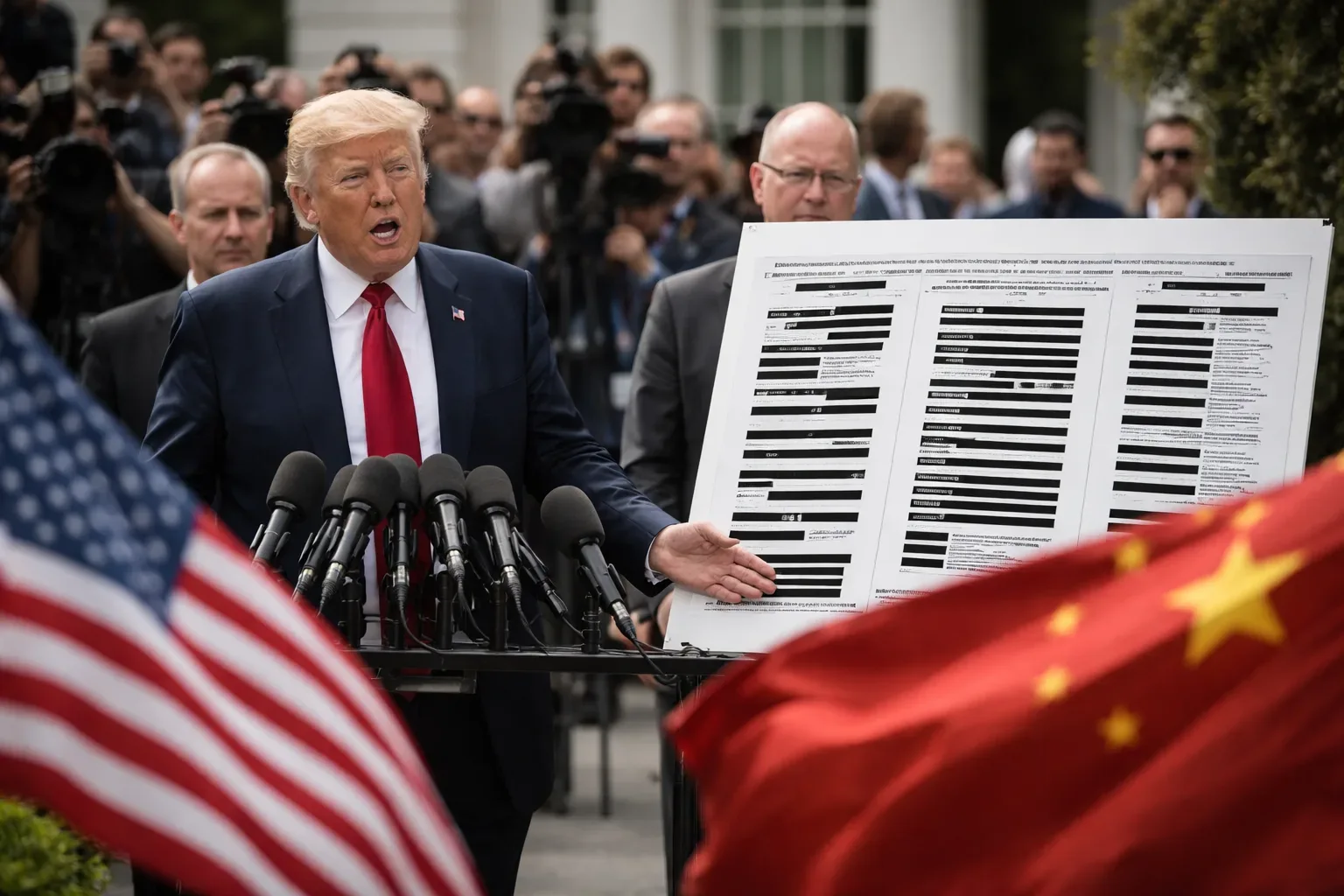
President Donald Trump delivered a significant primetime address from the White House on Thursday, centering on explosive and largely unsubstantiated allegations regarding the integrity of the 2020 presidential election. Speaking just three months before the upcoming midterm elections that will determine the legislative balance of power, the President claimed that China actively intervened to sway the 2020 outcome in favor of Joe Biden. Trump utilized the high-profile platform to assert that American voting systems currently harbor shocking vulnerabilities that pose a direct threat to the democratic process. While the President has frequently questioned past election results, this address marked a sharp escalation in rhetoric against Beijing, framing the upcoming midterms as a critical juncture for national sovereignty and election security.
What's new in this update
The hallmark of this latest disclosure is the declassification of hundreds of pages of intelligence documents which Trump claims provide empirical evidence of Chinese interference. During the half-hour speech, the President detailed allegations that Beijing orchestrated the illicit acquisition of 220 million American voter files. These files, which reportedly include sensitive personal information, were allegedly bought, stolen, or hacked across 18 different states. Trump further claimed that officials responsible for monitoring these threats failed to disclose the discovery to the appropriate government bodies or Congress. Although the White House released these documents during the address, many remain heavily redacted, leaving many of the President's most specific claims regarding the direct manipulation of voting outcomes currently unsupported by public-facing evidence.
Key details
Reaction to the President's address was swift and divided along geopolitical and partisan lines. China’s foreign ministry issued a stinging rebuke, with spokesman Lin Jian characterizing the meddling allegations as entirely fabricated and malicious smears. The Chinese government maintained that the claims are groundless and intended to deflect from domestic issues. Domestically, Senate Democrat Chuck Schumer dismissed the speech as an attempt to sow public doubt ahead of the November midterms. Schumer emphasized that voters, not foreign or domestic interference, decide American leadership and pledged that Democrats would resist any efforts to obstruct the voting process. Notably, the address was delivered before a hand-picked audience of top administration officials, and no journalists were permitted to ask questions following the remarks.
Background and context
The President's claims stand in direct opposition to the consensus previously established by the United States intelligence community. A landmark 2021 report from the National Intelligence Council concluded with high confidence that China did not engage in interference efforts during the 2020 presidential cycle. That assessment suggested Beijing likely calculated that the risks of exposure far outweighed any potential benefits of influencing the election outcome. Furthermore, the timing of Trump's address coincides with a period of significant political pressure; a recent Washington Post-Ipsos poll placed his approval rating at a low of 37%. Voters have expressed deep anxiety regarding the rising cost of living and the ongoing military conflict with Iran, suggesting that the President's focus on election security may be an attempt to galvanize his base.
What to watch next
In the immediate aftermath of the address, news organizations and legal experts are beginning the arduous task of reviewing the hundreds of pages of declassified intelligence files. The level of redaction in these documents may limit the public's ability to verify the President's claims of a massive voter data breach. Additionally, attention is turning toward Michigan, where Trump alleged a state investigation into a voter registration fraud scheme was hampered by the FBI. How federal law enforcement responds to these specific accusations of obstruction will be a key development in the coming weeks. As the November midterms approach, the rhetoric surrounding voting machine exposure to foreign adversaries like Russia and Iran is expected to intensify, potentially impacting voter turnout and public trust in the final tallies.
Why it matters
The allegations challenge previous US intelligence findings and could impact public confidence in the electoral process ahead of the November midterm elections.
Read next
Follow this story through the topic hub, more world coverage, and the latest updates.
Weekly briefing
Get the week's key developments in one concise email.
Get a fast catch-up on the biggest stories, the context behind them, and the links worth your time.
Cadence
Weekly, for a quick catch-up
Coverage
AI, business, world, security, sports
Format
Clear takeaways and useful context
Request the briefing
Leave your email to open a prepared request and get on the list for the weekly briefing.
About the byline
World correspondent
Leila Haddad covers world affairs, diplomacy, and humanitarian crises, with a focus on how fast-moving international developments affect public policy, conflict response, and cross-border institutions.
Sources and methodology