Iran Strikes US Bases as Washington Launches Wave of Air Attacks
Tehran strikes US bases in Gulf states while Washington retaliates with a six-hour bombing campaign, straining a fragile preliminary peace agreement.

World correspondent
Reports on international affairs, diplomacy, and humanitarian developments with an emphasis on official statements, multilateral institutions, and regional context.
Editorial responsibility: Lead reviewer for geopolitics, international institutions, and crisis coverage
Primary source: BBC World News. Full source links and update notes are below.
Fast summary
Start here
- Iran launched drone and missile attacks on US military facilities located in Jordan, Kuwait, and Bahrain.
- US Central Command conducted a six-hour wave of airstrikes targeting command centers and air defenses across Iran.
- The Strait of Hormuz remains closed as the US resumes a blockade on Iranian ports and disables an oil tanker.
What happened
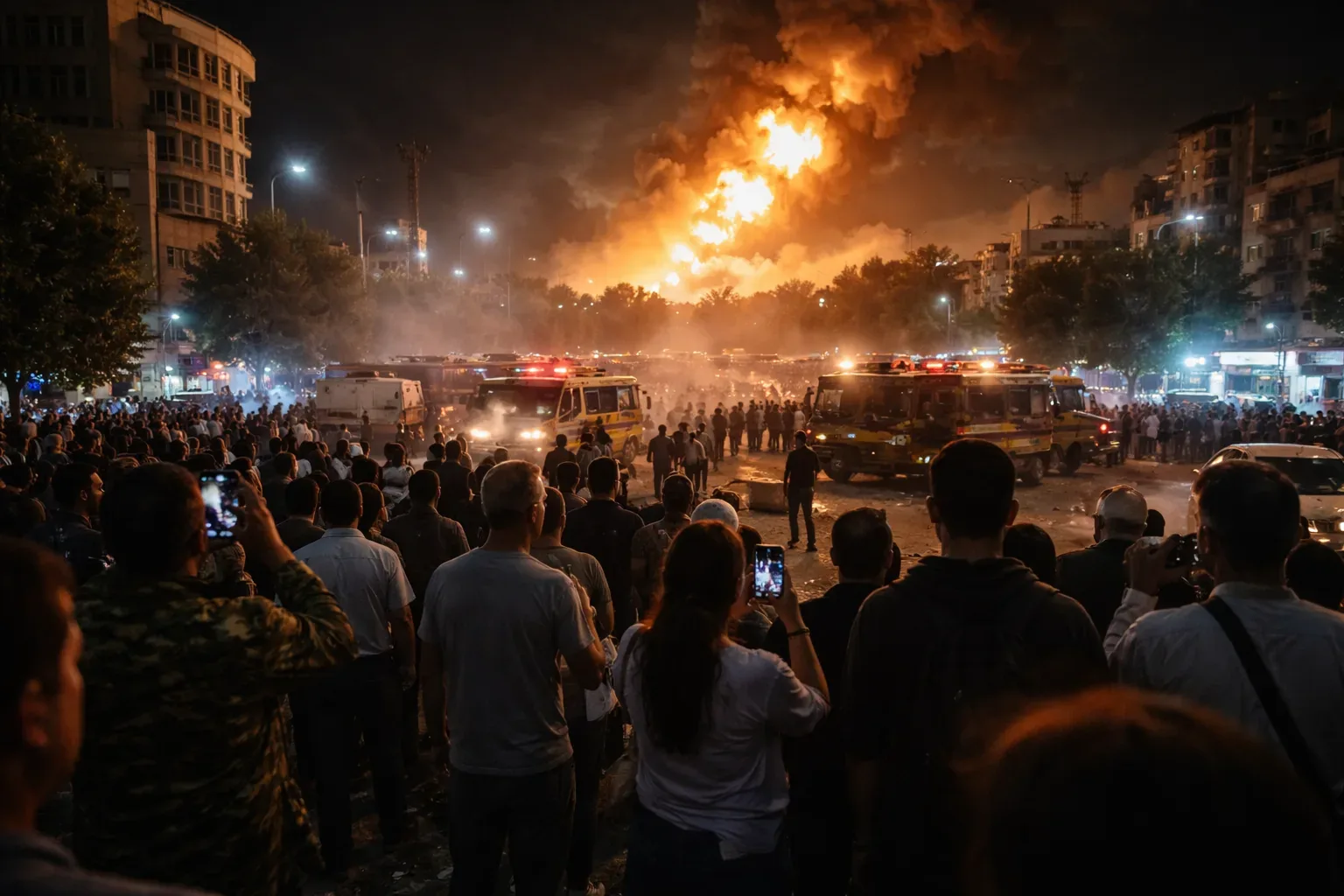
Tehran and Washington have entered a dangerous new phase of kinetic conflict, exchanging heavy fire across the Middle East. Iran’s military launched fresh attacks targeting US assets in neighboring Gulf states, including Jordan, Kuwait, and Bahrain, marking a significant expansion of the geographical scope of the current hostilities. In immediate response, the United States military executed a comprehensive, six-hour wave of airstrikes across multiple locations in Iran. These operations, coordinated by US Central Command, were specifically designed to degrade Tehran's ability to threaten maritime traffic in the Strait of Hormuz. The exchange represents the sixth consecutive day of renewed fighting, pushing both nations further away from the diplomatic resolution that seemed possible just weeks ago when a preliminary memorandum of understanding was signed.
What's new in this update
The latest escalation follows a stern warning from US President Donald Trump, who advised Iran to better behave or face catastrophic damage to its national infrastructure. Tensions spiked significantly after Trump threatened to target Iran’s energy sector if Tehran did not return to the negotiating table. In a sharp rebuttal, Iran’s top negotiator, Mohammad Bagher Ghalibaf, stated that Tehran has no reason to adhere to any agreement that does not yield immediate and tangible benefits for the country. This breakdown in communication was punctuated by the US military's most recent action: firing on and disabling an unladen, Curacao-flagged oil tanker. US officials alleged the vessel was attempting to bypass the newly reinstated blockade on Iranian ports, which was resumed only one day prior to the strikes.
Key details
Technical details from US Central Command indicate that the American strikes focused on degrading Iran's high-value military infrastructure. Specific targets included command and control centers, air defense batteries, and coastal surveillance facilities in the port city of Bandar Abbas and on Greater Tunb Island. Iranian state media confirmed that explosions were heard in several major cities, and air defense systems were activated in the capital, Tehran, during the night. On the other side, the Iranian military claimed successful strikes against US communication systems and fuel storage facilities in Jordan. Meanwhile, Kuwaiti forces reported intercepting several drone attacks, and Bahraini officials issued urgent safety warnings to their citizens, instructing them to seek shelter as the regional security situation deteriorated rapidly throughout the morning hours.
Background and context
The current wave of violence has effectively nullified the progress made during a temporary de-escalation last month. In June, the two nations signed a memorandum of understanding intended to halt hostilities and lift specific trade blockades. However, that agreement proved fragile as disagreements over the Strait of Hormuz resurfaced. Iran effectively blocked the critical waterway in response to earlier US-Israeli strikes, leading the US to resume its naval blockade of Iranian ports this week. The Strait of Hormuz is one of the world's most vital shipping lanes, and its closure has immediate global consequences. Following the renewal of the blockade and the subsequent exchange of fire, Iran’s Revolutionary Guard Corps issued a chilling warning that other regional oil and gas export routes could soon be targeted to serve the interests of Tehran.
What to watch next
Analysts are closely monitoring the global energy market, as oil prices have already begun to surge due to the virtual halt of tanker traffic through the Strait of Hormuz. The international community is watching for any signs of a diplomatic off-ramp, though the rhetoric from both Washington and Tehran suggests further escalation is more likely. President Trump’s recent threats to target Iranian bridges and power plants indicate that the US may expand its target list beyond purely military sites if negotiations do not resume immediately. Conversely, Iran’s threat to close additional energy corridors raises the stakes for US allies in the region who rely on these routes for their economic survival. The coming days will determine if the preliminary deal can be salvaged or if the region is sliding toward a broader, sustained military conflict.
Why it matters
The escalation threatens to collapse a recent preliminary peace deal and has already triggered a significant spike in global oil prices.
Read next
Follow this story through the topic hub, more world coverage, and the latest updates.
Weekly briefing
Get the week's key developments in one concise email.
Get a fast catch-up on the biggest stories, the context behind them, and the links worth your time.
Cadence
Weekly, for a quick catch-up
Coverage
AI, business, world, security, sports
Format
Clear takeaways and useful context
Request the briefing
Leave your email to open a prepared request and get on the list for the weekly briefing.
About the byline
World correspondent
Leila Haddad covers world affairs, diplomacy, and humanitarian crises, with a focus on how fast-moving international developments affect public policy, conflict response, and cross-border institutions.
Sources and methodology