T. rex Fossil 'Gus' Could Shatter Records at Sotheby's Auction
A prehistoric predator named Gus heads to auction with a $30 million valuation, pitting wealthy private collectors against cash-strapped museums.

World correspondent
Reports on international affairs, diplomacy, and humanitarian developments with an emphasis on official statements, multilateral institutions, and regional context.
Editorial responsibility: Lead reviewer for geopolitics, international institutions, and crisis coverage
Primary source: BBC World News. Full source links and update notes are below.
Fast summary
Start here
- The T. rex specimen known as Gus is valued at $30 million, though market trends suggest it could sell for significantly more.
- A six-year excavation and reconstruction process in South Dakota was required to prepare the fossil for its public debut.
- Rising prices for prehistoric remains are increasingly pricing museums and public research institutions out of the market.
What happened
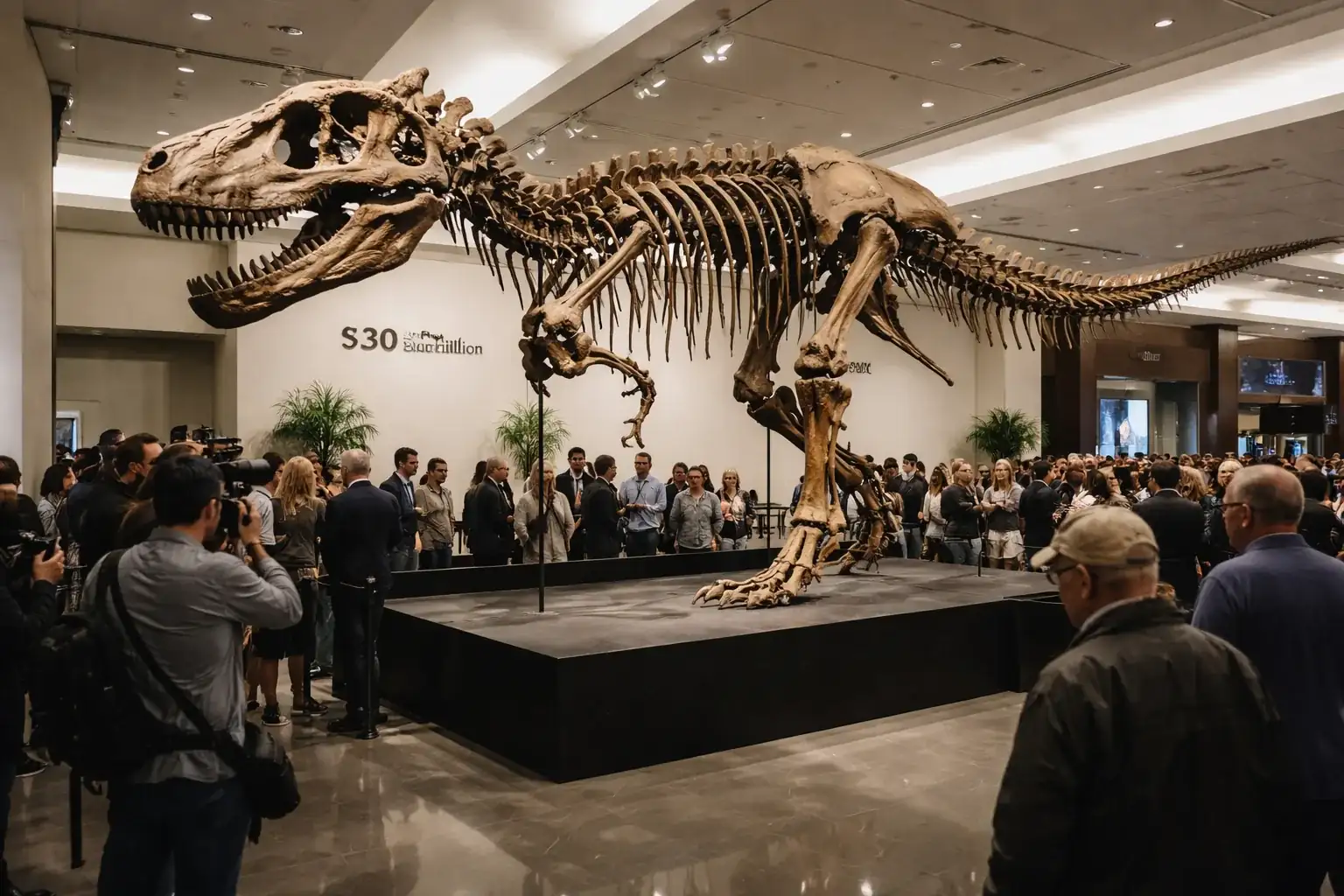
A Tyrannosaurus rex specimen nicknamed "Gus" is slated for a high-profile auction at Sotheby's on Tuesday, potentially becoming one of the most expensive fossils ever sold. This nearly complete specimen represents a pinnacle of prehistoric discovery, emerging from the fossil-rich soil of South Dakota. Valued at a staggering $30 million, Gus follows in the footsteps of "Sue," the T. rex that famously sold for $8 million in 1997 to the Field Museum in Chicago. However, the landscape of natural history auctions has shifted dramatically in the intervening three decades. What was once a niche event primarily attended by academic and public institutions has transformed into a high-stakes arena where the global elite compete for the prestige of owning Earth's ancient history, often outbidding the very scientists who study these remains.
What's new in this update
The financial threshold for acquiring significant fossils has reached unprecedented levels. Sotheby's has set the starting offer for Gus at $19 million, a figure that many public museums find prohibitive. The current market momentum is driven by a surge in demand from private collectors, a trend that accelerated significantly after 2020. In 2024, a Stegosaurus named Apex fetched $44.6 million, more than eleven times its original valuation, setting a new bar for the industry. This recent trend indicates that Gus could easily surpass its $30 million estimate, fueled by the extreme scarcity of high-quality T. rex specimens. Scientists are increasingly concerned that these "trophy" fossils are becoming inaccessible for research, as private owners are under no obligation to share their acquisitions with the global scientific community or allow peer-reviewed analysis.
Key details
The journey of Gus from the ground to the auction block was an arduous six-year endeavor. Discovered in the Badlands of South Dakota, the fossil was named after the late Gary "Gus" Licking, the cattle rancher whose land hosted the remains for 67 million years. Excavation led by Thomas Heitkamp and his team required three years of labor, limited strictly to the short window when the ground was not frozen. Following the physical removal, another three years were dedicated to the meticulous laboratory work of documenting and reconstructing the skeleton. Dr. Fiann Smithwick, an independent paleontologist involved in the process, notes that fossils begin to decay and fall apart immediately upon exposure to the air, making the preservation effort as critical as the initial discovery. The process involves camping in remote areas among rattlesnakes and mountain lions to secure these ancient prizes.
Background and context
The debate over fossil ownership centers on whether specimens of immense scientific importance should be reserved for museums or sold to the highest bidder. Professionals like Professor Susannah Maidment of London’s Natural History Museum argue that public institutions are being systematically priced out of the market. Conversely, auctioneers like Cassandra Hatton of Sotheby’s contend that commercial fossil hunters perform a vital service. Without the financial incentive provided by auctions, many fossils might remain undiscovered or succumb to natural erosion, suffering what some call a "second extinction." The T. rex itself holds a unique place in popular culture, immortalized by Hollywood and rock music, which only serves to drive up its desirability among the world's wealthiest individuals. This cultural resonance has turned paleontology into a luxury commodity market where scientific value often competes directly with aesthetic and status-based appeal.
What to watch next
The immediate focus remains on the Tuesday auction results, which will serve as a definitive barometer for the current value of paleontological specimens. If Gus sells to a private individual, the scientific community will watch to see if the buyer allows researchers access to the specimen or if it disappears into a private collection, potentially lost to science forever. There is also the question of whether this sale will spark further commercialization of fossil-rich regions in the American West, leading to more aggressive private prospecting. As more "super-rich" buyers enter the fray, the pressure on museums to find alternative funding for acquisitions will likely intensify. The outcome of this sale may dictate the strategy for future excavations and influence the legal frameworks surrounding the trade of prehistoric artifacts on a global scale as governments weigh cultural heritage against private property rights.
Why it matters
The sale of 'Gus' highlights the tension between commercial fossil hunting and scientific preservation, as rising prices lock public institutions out.
Read next
Follow this story through the topic hub, more world coverage, and the latest updates.
Weekly briefing
Get the week's key developments in one concise email.
Get a fast catch-up on the biggest stories, the context behind them, and the links worth your time.
Cadence
Weekly, for a quick catch-up
Coverage
AI, business, world, security, sports
Format
Clear takeaways and useful context
Request the briefing
Leave your email to open a prepared request and get on the list for the weekly briefing.
About the byline
World correspondent
Leila Haddad covers world affairs, diplomacy, and humanitarian crises, with a focus on how fast-moving international developments affect public policy, conflict response, and cross-border institutions.
Sources and methodology