Senator Lindsey Graham’s Death Caused by Aortic Tear, Examiner Says
Medical findings confirm the South Carolina Republican died of an aortic dissection following a diplomatic trip to meet President Zelensky in Kyiv.

World correspondent
Reports on international affairs, diplomacy, and humanitarian developments with an emphasis on official statements, multilateral institutions, and regional context.
Editorial responsibility: Lead reviewer for geopolitics, international institutions, and crisis coverage
Primary source: BBC World News. Full source links and update notes are below.
Fast summary
Start here
- The Washington DC medical examiner attributed the death to an aortic dissection and underlying cardiovascular disease.
- Senator Graham, 71, passed away Saturday evening shortly after returning from a high-level diplomatic meeting in Ukraine.
- South Carolina Governor Henry McMaster will appoint a temporary successor to fill the vacancy until the November midterm elections.
What happened
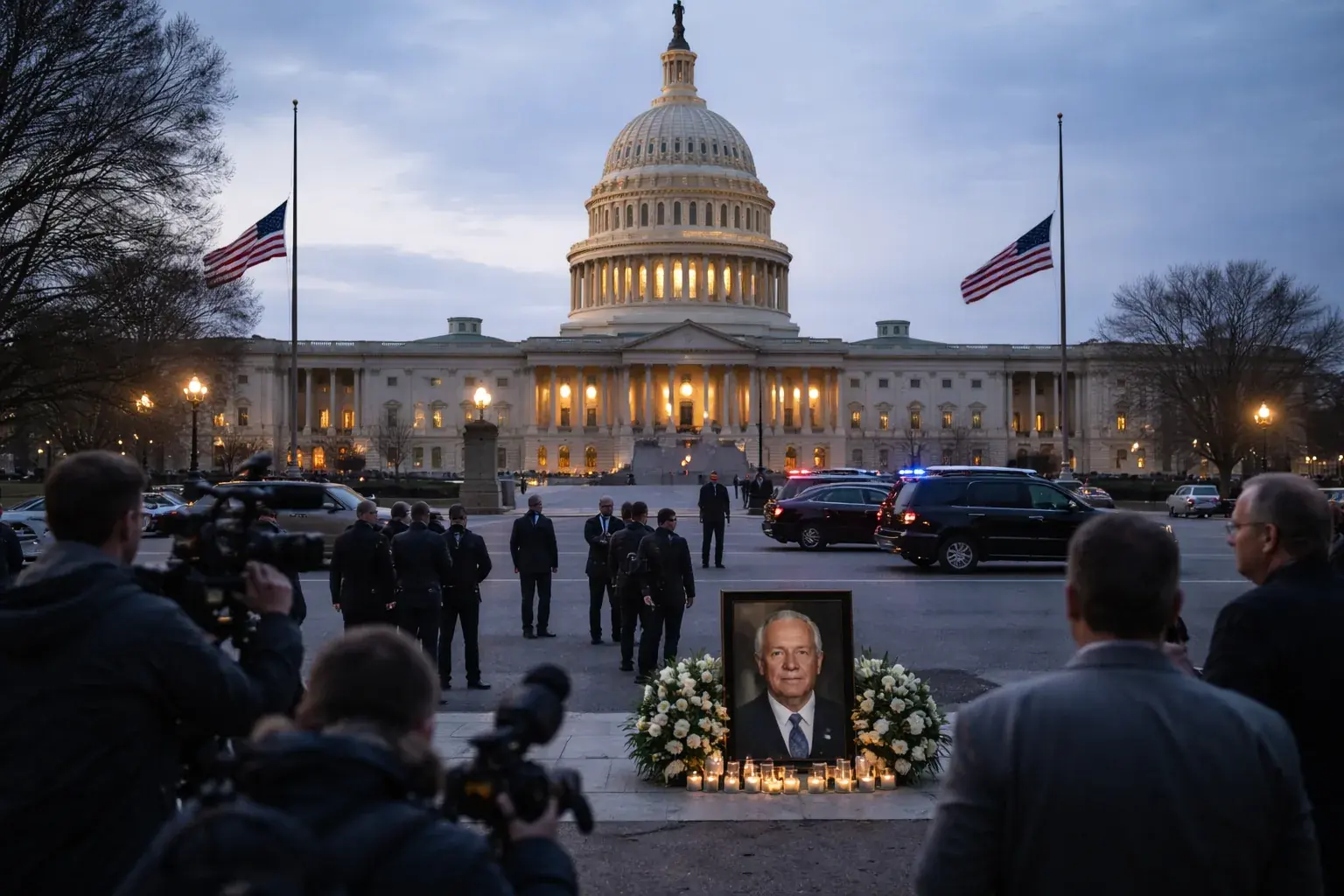
The Washington DC medical examiner’s office has released a preliminary report confirming that U.S. Senator Lindsey Graham died of an aortic dissection. This condition is characterized by a sudden tear in the inner layer of the body's main artery, which carries oxygenated blood from the heart to the rest of the circulatory system. The medical examiner noted that the condition was fundamentally caused by underlying cardiovascular disease. Graham, a veteran South Carolina Republican who had served in the Senate since 2002, passed away at the age of 71 on Saturday evening. His death followed a period of intense diplomatic activity, including a recent trip to Ukraine. While the initial cause has been established, the final death certificate remains pending as officials wait for the completion of standard toxicological and microscopic testing to provide a comprehensive picture of his health at the time of passing.
What's new in this update
The disclosure of the medical examiner’s findings provides clarity regarding the sudden nature of Graham's passing, which was initially described by his office as occurring after a brief illness. The report specifically identifies the aortic tear as the primary cause, linking it to broader cardiovascular health issues. This update comes as international leaders continue to react to the loss of one of the Senate's most vocal proponents of interventionist foreign policy. In the hours following the news, Ukrainian President Volodymyr Zelensky expressed deep sorrow, describing Graham as a "true defender of freedom" following their meeting in Kyiv just one day before the senator's death. Similarly, Israeli Prime Minister Benjamin Netanyahu lauded Graham as one of Israel's greatest friends in Washington, emphasizing the senator's belief that the security of Israel and the United States were inextricably linked.
Key details
Lindsey Graham’s political career was defined by his evolution within the Republican Party and his assertive stance on global security. A lawyer and Air Force veteran, he became a household name for his work on the Senate Judiciary Committee and his frequent appearances on national news programs to discuss military strategy. The senator was particularly known for his hawkish views on Iran, recently suggesting that the United States should take extreme military action if international shipping lanes in the Strait of Hormuz were threatened. His influence extended deep into the Pentagon and the State Department, where he often acted as an informal envoy for American interests abroad. The medical examiner’s report concludes that his death was natural, though the suddenness of an aortic dissection often leaves little room for medical intervention once the tear occurs.
Background and context
Graham’s relationship with former President Donald Trump was one of the most scrutinized alliances in modern American politics. Initially a fierce critic during the 2016 primary cycle—famously warning that the GOP would be "destroyed" if they nominated Trump—Graham eventually became one of the former president's most loyal defenders. He played a crucial role in advising the Trump administration on foreign policy and judicial appointments, including the confirmation of conservative Supreme Court justices. Despite his alignment with the MAGA movement on many domestic issues, Graham remained a traditionalist regarding NATO and support for Ukraine, often bridging the gap between the populist wing of his party and the establishment's internationalist commitments. His death leaves a void in the Senate's foreign policy leadership at a time of heightened global tension.
What to watch next
The immediate political fallout of Graham's death focuses on the composition of the U.S. Senate. South Carolina Governor Henry McMaster now holds the authority to appoint a temporary replacement to fill Graham’s seat. This appointee will serve until the results of the November midterm elections are finalized, at which point a successor will be elected to complete the remainder of the term through January. With Republicans currently holding a narrow 53-47 majority, the balance of power in the upper chamber remains a primary concern for both parties heading into the fall. Observers will also be looking for how Graham's absence impacts ongoing debates over military aid to Ukraine and the U.S. posture toward Iran, as he was a key negotiator in bipartisan efforts to secure defense spending and international security agreements.
Why it matters
As a powerful voice on foreign policy and a close ally of Donald Trump, Graham's death creates a significant leadership void in the U.S. Senate.
Read next
Follow this story through the topic hub, more world coverage, and the latest updates.
Weekly briefing
Get the week's key developments in one concise email.
Get a fast catch-up on the biggest stories, the context behind them, and the links worth your time.
Cadence
Weekly, for a quick catch-up
Coverage
AI, business, world, security, sports
Format
Clear takeaways and useful context
Request the briefing
Leave your email to open a prepared request and get on the list for the weekly briefing.
About the byline
World correspondent
Leila Haddad covers world affairs, diplomacy, and humanitarian crises, with a focus on how fast-moving international developments affect public policy, conflict response, and cross-border institutions.
Sources and methodology