Senator Lindsey Graham Dies at 71 Following Sudden Illness
The influential South Carolina Republican and foreign policy hawk died Saturday evening shortly after returning from a high-profile visit to Kyiv.

World correspondent
Reports on international affairs, diplomacy, and humanitarian developments with an emphasis on official statements, multilateral institutions, and regional context.
Editorial responsibility: Lead reviewer for geopolitics, international institutions, and crisis coverage
Primary source: BBC World News. Full source links and update notes are below.
Fast summary
Start here
- Senator Lindsey Graham died Saturday evening at age 71 following what his office described as a brief and sudden illness.
- Graham had just returned from his tenth visit to Ukraine, where he met with President Zelensky to discuss military aid and sanctions.
- A transformational figure in the GOP, he evolved from a fierce critic of Donald Trump into one of the former president's most vital allies.
What happened
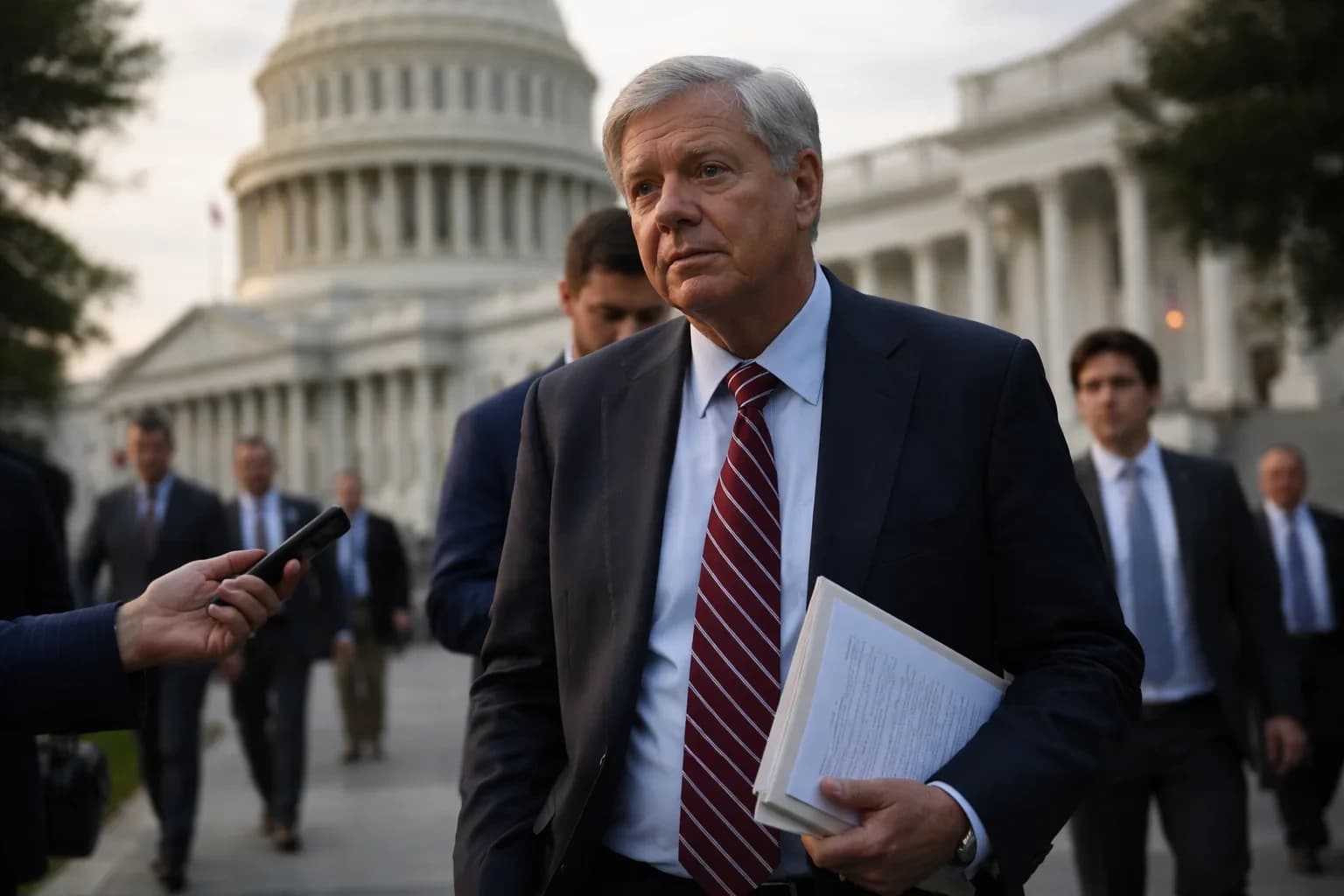
United States Senator Lindsey Graham, a cornerstone of Republican foreign policy for over two decades, has died at the age of 71. His office confirmed the news in a statement released on Sunday, noting that the South Carolina lawmaker passed away on Saturday evening following a 'brief and sudden illness.' The announcement has sent shockwaves through Washington, as Graham was actively engaged in legislative duties and international diplomacy until his final days. There were no public indications of failing health prior to his passing. Graham’s death marks the end of a storied career in the Senate that began in 2002, during which he became one of the most recognizable and influential figures in American politics, frequently appearing on national television to debate the most pressing security issues facing the country.
What's new in this update
The timing of Senator Graham's death is particularly poignant, occurring less than 48 hours after he returned from a diplomatic mission to Kyiv. While in Ukraine, Graham met with President Volodymyr Zelensky on Friday, reaffirming his commitment to securing military support for the nation's defense against Russia. Zelensky expressed deep sadness over the loss, stating that Graham had been 'with our people when it was most needed' and describing him as a determined leader for the world. Former President Donald Trump also weighed in on the news, utilizing social media to label Graham a 'true American Patriot.' Despite their historically volatile relationship, Trump acknowledged Graham’s dedicated service and their close working partnership during his administration and subsequent political campaigns.
Key details
Senator Graham was renowned for his interventionist stance, consistently advocating for a robust U.S. military presence abroad. He was a vocal supporter of the War on Terror and remained a staunch defender of military engagements in Iraq and Afghanistan long after public opinion had shifted. Most recently, Graham stood out within a Republican Party increasingly skeptical of foreign entanglements by remaining a fierce proponent of aid to Ukraine. During his final trip, he was reportedly refining a version of a Russia sanctions bill that he believed would provide 'tools to President Trump to end this war.' His ability to navigate the shifting sands of GOP ideology while maintaining his hawkish principles made him a unique force in the Senate Foreign Relations and Judiciary Committees.
Background and context
Graham’s political journey was defined by a dramatic evolution in his relationship with Donald Trump. During the 2016 primary, Graham was one of Trump's most acerbic critics, famously calling him a 'race-baiting, xenophobic, religious bigot.' However, he eventually transitioned into one of Trump's closest confidants, citing the former president's judicial appointments and aggressive stance on border security as primary reasons for his support. This shift was not without friction; following the January 6 Capitol riots, Graham briefly broke with Trump on the Senate floor, declaring 'enough is enough.' Yet, he ultimately voted against impeachment and returned to Trump's inner circle. Beyond his domestic alliances, Graham was a tireless supporter of Israel, earning praise from Prime Minister Benjamin Netanyahu as one of the Jewish state's 'greatest friends.'
What to watch next
The death of Senator Graham creates a significant leadership vacuum in the realm of Republican foreign policy. As one of the few remaining 'hawks' who could effectively lobby the populist wing of the party, his absence may shift the internal GOP debate over continued funding for Ukraine. In the immediate term, South Carolina Governor Henry McMaster will be tasked with appointing a temporary successor to fill Graham's seat until a special election can be held. This appointment will be closely watched by both parties, as it will determine the ideological balance of the Senate during a period of high-stakes international conflict. Additionally, the specific nature of the 'sudden illness' mentioned by Graham's office remains undisclosed, and further details regarding his final hours in Kyiv and the U.S. are expected to emerge.
Why it matters
Graham was the primary bridge between traditional Republican interventionism and the MAGA movement, serving as a critical advocate for Ukraine within his party.
Read next
Follow this story through the topic hub, more world coverage, and the latest updates.
Weekly briefing
Get the week's key developments in one concise email.
Get a fast catch-up on the biggest stories, the context behind them, and the links worth your time.
Cadence
Weekly, for a quick catch-up
Coverage
AI, business, world, security, sports
Format
Clear takeaways and useful context
Request the briefing
Leave your email to open a prepared request and get on the list for the weekly briefing.
About the byline
World correspondent
Leila Haddad covers world affairs, diplomacy, and humanitarian crises, with a focus on how fast-moving international developments affect public policy, conflict response, and cross-border institutions.
Sources and methodology