Trump Reinstates Naval Blockade of Iranian Ports and Cargo Fees
President Trump declares a naval blockade on Iranian ports and a 20% transit fee for the Strait of Hormuz after US and Iranian military exchanges.

World correspondent
Reports on international affairs, diplomacy, and humanitarian developments with an emphasis on official statements, multilateral institutions, and regional context.
Editorial responsibility: Lead reviewer for geopolitics, international institutions, and crisis coverage
Primary source: BBC World News. Full source links and update notes are below.
Fast summary
Start here
- President Trump announced a naval blockade of Iranian ports and a 20% cargo fee for Strait of Hormuz transit.
- The International Maritime Organization stated there is no legal basis for mandatory tolls in international straits.
- Iran responded to US strikes on its radar and missile sites by targeting US bases in Kuwait, Jordan, and Bahrain.
What happened
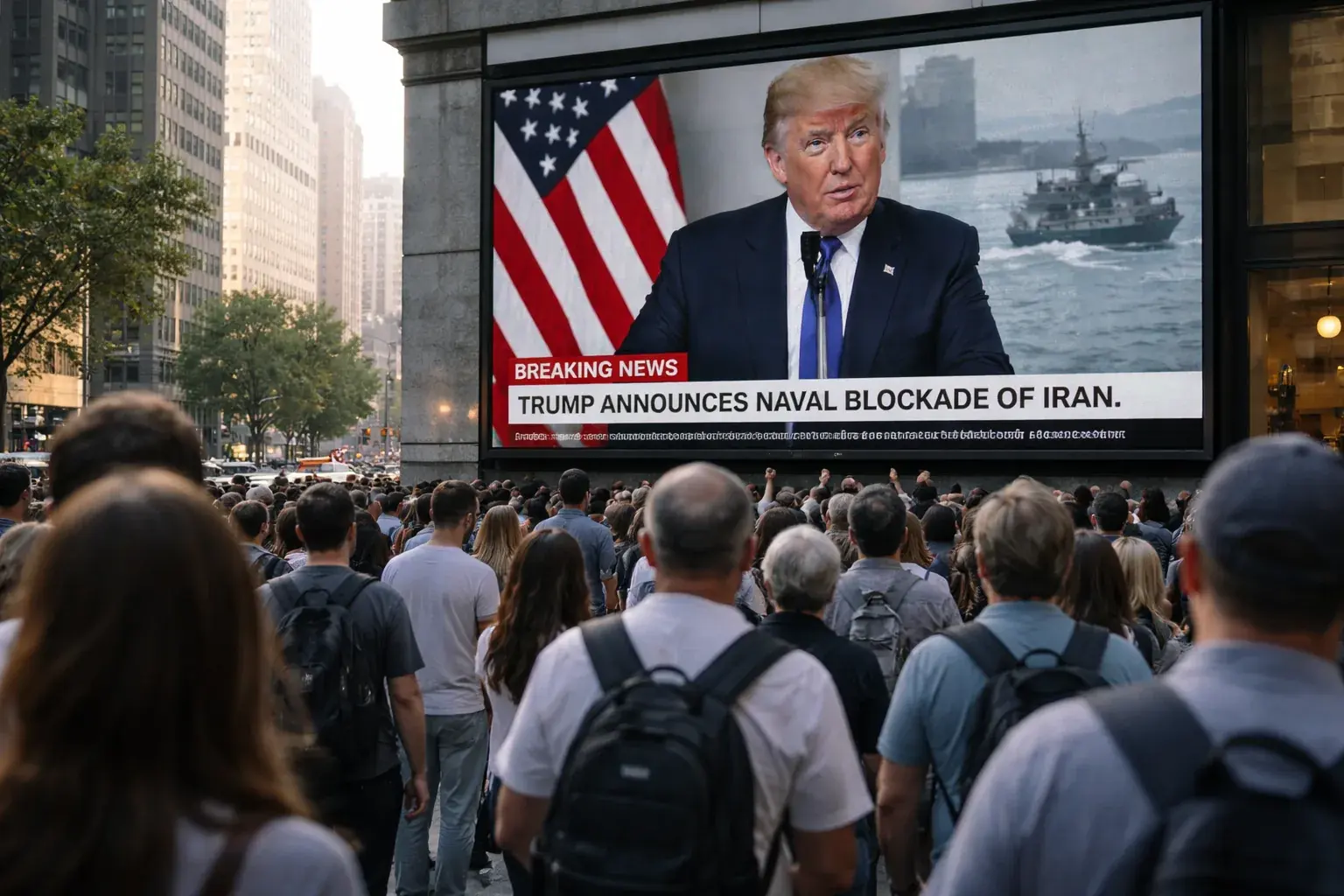
President Donald Trump has officially announced that the United States will reinstate a naval blockade against Iranian ports, marking a significant escalation in regional tensions. This move is coupled with a controversial new policy to impose a 20% "reimbursement" charge on all commercial cargo transiting through the Strait of Hormuz. In a series of statements made on Truth Social and to Fox News, the President positioned the United States as the "Guardian of the Hormuz Strait," arguing that the American military provides essential security for this volatile maritime passage. While Trump insisted that the strait would remain open for "all other countries," he clarified that Iranian vessels and their customers would be barred from entry or exit. This blockade is scheduled to take full effect starting at 16:00 Eastern Time on Tuesday.
What's new in this update
The Iranian government and international maritime regulators have quickly responded to the President's declarations. Iranian Foreign Minister Abbas Araghchi offered a sharp rhetorical counter, adopting Trump's "Guardian" terminology while asserting that Iran has always played that role and will do so "forever." Interestingly, Araghchi seemed to mockingly agree that whoever provides safe passage should be compensated, though he characterized the 20% fee as excessive and promised Iran would be "fair." Conversely, the International Maritime Organization (IMO) has already challenged the legality of the proposed cargo fees. A spokesperson for the UN agency clarified that there is no international legal framework allowing a nation to unilaterally impose mandatory tolls for the transit of international straits, setting the stage for a potential legal standoff between the US and global shipping authorities.
Key details
According to statements from US Central Command (Centcom), the blockade will specifically target maritime traffic entering and exiting Iranian ports beginning on July 14. This policy follows a night of direct military confrontation between the two nations. The United States military reported conducting precision strikes against specific Iranian military assets, including air defense systems, coastal radar installations, and various drone and missile sites. In retaliation, Tehran claimed to have launched strikes against several US military bases located in Kuwait, Bahrain, and Jordan, as well as radar facilities in Oman. The current situation on the water remains precarious; ship-tracking data indicates that while some vessels are still moving through the Strait of Hormuz, traffic flow is increasingly restricted as the commercial shipping industry assesses the risks of the new US mandate.
Background and context
The Strait of Hormuz is widely regarded as the world's most critical oil chokepoint, with a massive percentage of the global oil supply passing through its narrow waters daily. Tensions in the region have been simmering for years, but the current escalation follows what President Trump described as Iran "breaking" an unspecified deal with the United States. Iranian military leadership, specifically Ebrahim Zolfaghari of the Khatam al-Anbiya headquarters, has accused the US of "malicious actions" and "adventurism" that endanger international trade and regional security. Iran has historically viewed the US presence in the Persian Gulf as an encroachment on its sovereignty. The latest Iranian statements warn that any cooperation with the US in the strait would be viewed as an act of war, threatening to expand the conflict to include other neighboring countries if the situation continues to deteriorate.
What to watch next
Global markets and diplomatic circles are now bracing for the Tuesday 16:00 ET deadline, when the blockade and cargo fee implementation are expected to begin. The immediate focus will be on how the US Navy intends to collect the 20% fee from commercial vessels and whether international shipping companies will comply or seek alternative routes. Furthermore, the reaction of other regional powers—specifically those hosting US bases that were allegedly targeted by Iran—remains a critical variable. Analysts are watching for further clarification from the White House regarding the "process and formation" of the cargo fee system, as the legal and logistical hurdles remain substantial. If Iran follows through on its promise to remain the "guardian" of the waterway by force, the risk of a direct and prolonged naval conflict in the Persian Gulf could reach levels not seen in decades.
Why it matters
This escalation threatens the stability of the global oil supply and marks a shift toward direct US control over the world's most vital maritime chokepoint.
Read next
Follow this story through the topic hub, more world coverage, and the latest updates.
Weekly briefing
Get the week's key developments in one concise email.
Get a fast catch-up on the biggest stories, the context behind them, and the links worth your time.
Cadence
Weekly, for a quick catch-up
Coverage
AI, business, world, security, sports
Format
Clear takeaways and useful context
Request the briefing
Leave your email to open a prepared request and get on the list for the weekly briefing.
About the byline
World correspondent
Leila Haddad covers world affairs, diplomacy, and humanitarian crises, with a focus on how fast-moving international developments affect public policy, conflict response, and cross-border institutions.
Sources and methodology