Lindsey Graham, Longtime Senator and Political Survivor, Dies at 71
Republican Senator Lindsey Graham has passed away following a sudden illness, ending a career defined by political adaptation and hawkish foreign policy.

World correspondent
Reports on international affairs, diplomacy, and humanitarian developments with an emphasis on official statements, multilateral institutions, and regional context.
Editorial responsibility: Lead reviewer for geopolitics, international institutions, and crisis coverage
Primary source: BBC World News. Full source links and update notes are below.
Fast summary
Start here
- Senator Lindsey Graham died at 71 after a brief and sudden illness.
- He represented South Carolina for 23 years, becoming a leading GOP voice.
- Once a fierce critic of Donald Trump, he became one of his closest allies.
What happened
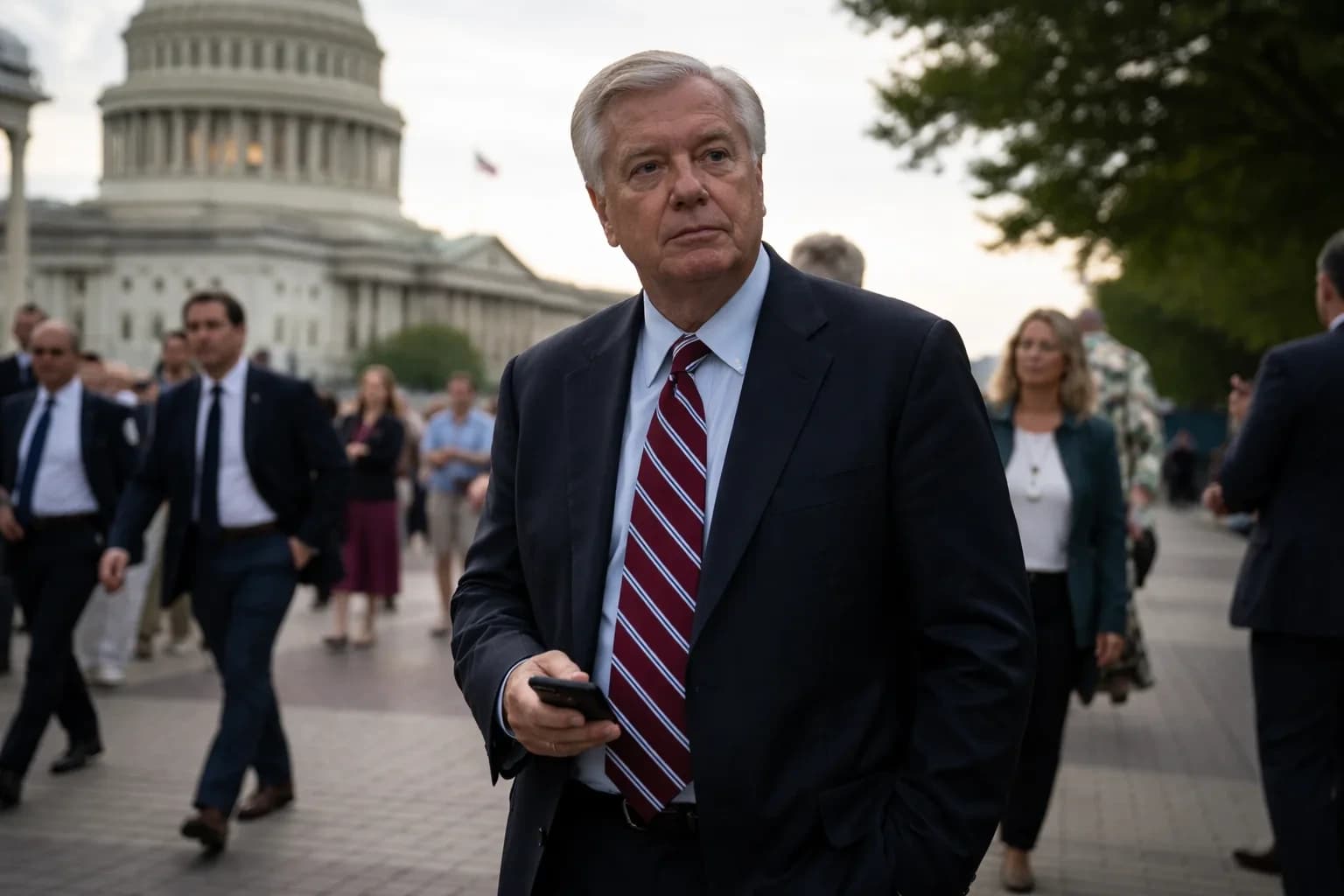
Lindsey Graham, the veteran Republican senator from South Carolina, has died at the age of 71. His passing was announced on Tuesday, following what was described by his office as a brief and sudden illness. Graham, who served more than two decades in the United States Senate, was a cornerstone of the Republican establishment and a frequent figure on national news programs. He was recognized as one of the most visible and vocal members of Congress, often taking a lead role in high-stakes judicial confirmations and foreign policy debates. His death marks the end of a political era for South Carolina and removes a key legislative strategist from the Republican caucus. Graham’s career was characterized by a rare ability to navigate the shifting sands of American politics, moving from a moderate-leaning "maverick" ally of John McCain to a staunch defender of Donald Trump’s populist movement.
What's new in this update
The announcement of Graham's death adds a final chapter to a career that served as a barometer for the Republican Party’s transformation over the last decade. Reporters and political analysts are highlighting the "sudden" nature of his passing, which came as a shock to many in Washington D.C. where he remained active in daily legislative business. In the hours following the news, tributes have begun to pour in from both sides of the aisle, emphasizing his reputation as a "deal-maker" and a skilled orator. However, the update also brings back into focus his unique trajectory from being one of Donald Trump's most vitriolic critics during the 2016 primary to becoming one of the former president’s most trusted confidants. This sudden loss creates immediate questions regarding his committee seats and his influence on the upcoming 2024 election cycle.
Key details
Graham’s political journey was famously volatile, particularly regarding his relationship with Donald Trump. In 2015, during his own bid for the presidency, Graham famously labeled Trump a "race-baiting, xenophobic, religious bigot" and predicted the Republican Party would be destroyed if it chose him as its nominee. This period included a viral moment where Graham destroyed several cell phones after Trump publicly shared the senator's private phone number at a campaign rally. Despite this public animosity, Graham underwent a profound shift after Trump’s 2016 victory. He became a regular golfing partner of the president and an ardent defender of his policies. Most notably, Graham’s fiery defense of Supreme Court Justice Brett Kavanaugh during the 2018 confirmation hearings solidified his standing as a powerhouse within the Maga-aligned Republican Party, showcasing his willingness to fight aggressively for the Trump administration's agenda.
Background and context
Before his alignment with Trump, Graham was best known as the protégé and close friend of Senator John McCain. Together, they were often called the "Senate mavericks," advocating for a hawkish foreign policy that prioritized American interventionism and support for allies like Israel. Graham was first elected to the Senate in 2002 after serving in the House of Representatives, where he gained national attention as a manager during the impeachment of Bill Clinton. Throughout his 23-year Senate career, he maintained a strict focus on national security, often pushing for regime change in Iran and a strong stance against Russian aggression. His domestic record was also marked by moments of bipartisanship, such as his 2015 suggestion that he would "open a bar in the White House" to solve partisan gridlock. Yet, his legacy will likely be defined by how he navigated the rise of the Maga movement.
What to watch next
The immediate focus will turn to the process of filling Graham’s vacated Senate seat in South Carolina. Under state law, the governor will be tasked with appointing a temporary successor until a special election can be held, a move that will be closely watched by national party leaders. Furthermore, Graham’s death creates a significant leadership gap in Republican foreign policy circles. As the party continues to debate the merits of isolationism versus interventionism, Graham’s absence leaves the "internationalist" wing of the GOP without its most prominent voice. Observers will also look to Donald Trump for a statement, as Graham had recently re-aligned with the former president’s 2024 campaign after a brief period of estrangement following the January 6th Capitol riot. The loss of such a seasoned legislative operative could impact the GOP’s strategy in the Senate for the remainder of the current session.
Why it matters
Graham’s career mirrored the Republican Party’s evolution from traditional conservatism to the Maga era, leaving a significant void in the Senate’s foreign policy leadership and legislative strategy.
Read next
Follow this story through the topic hub, more world coverage, and the latest updates.
Weekly briefing
Get the week's key developments in one concise email.
Get a fast catch-up on the biggest stories, the context behind them, and the links worth your time.
Cadence
Weekly, for a quick catch-up
Coverage
AI, business, world, security, sports
Format
Clear takeaways and useful context
Request the briefing
Leave your email to open a prepared request and get on the list for the weekly briefing.
About the byline
World correspondent
Leila Haddad covers world affairs, diplomacy, and humanitarian crises, with a focus on how fast-moving international developments affect public policy, conflict response, and cross-border institutions.
Sources and methodology