Emergency Planes Combat Exceptional Wildfire South of Paris
Record-breaking heatwaves fuel a virulent wildfire south of Paris, prompting the first-ever deployment of southern firefighting planes to the region.

World correspondent
Reports on international affairs, diplomacy, and humanitarian developments with an emphasis on official statements, multilateral institutions, and regional context.
Editorial responsibility: Lead reviewer for geopolitics, international institutions, and crisis coverage
Primary source: BBC World News. Full source links and update notes are below.
Fast summary
Start here
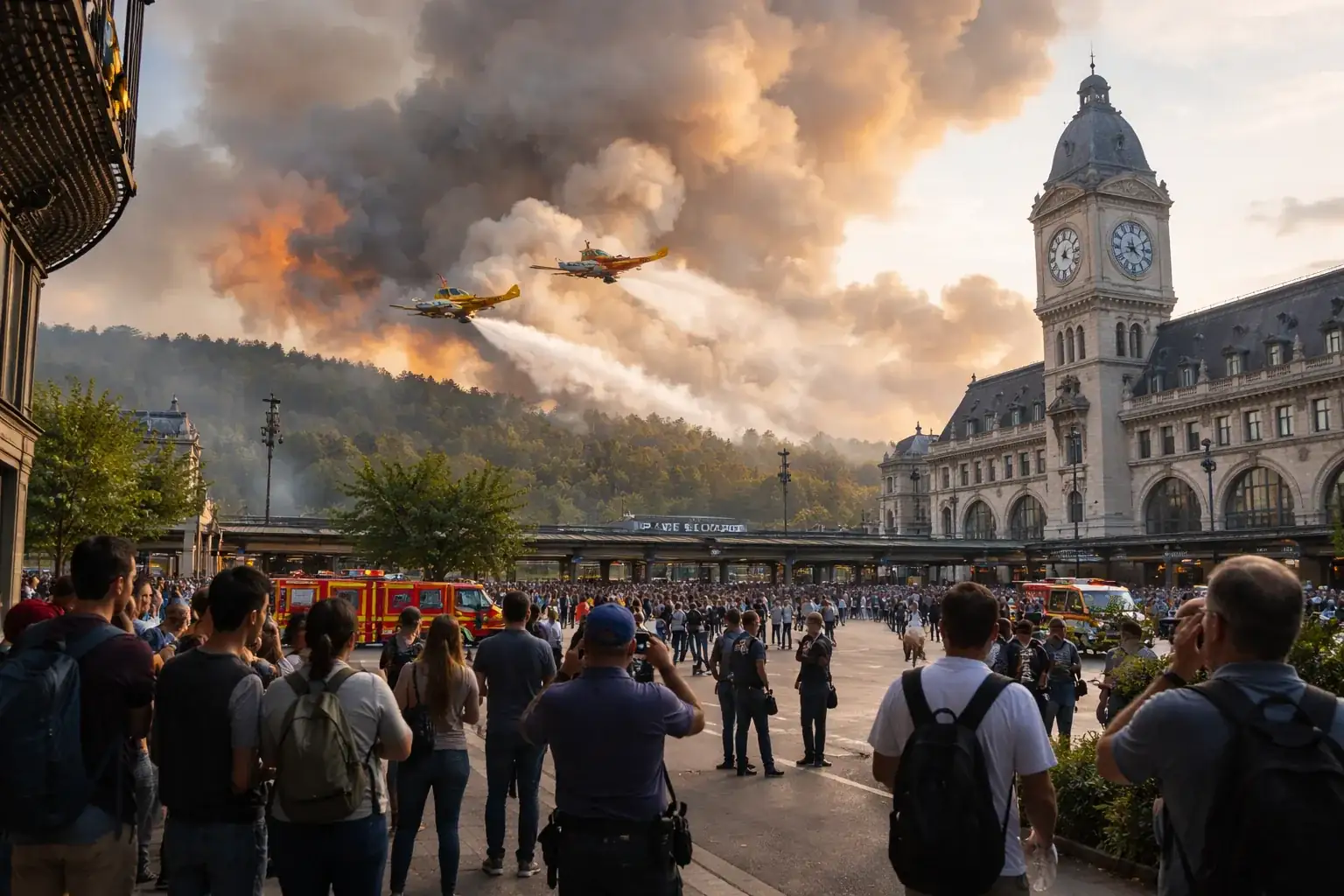
- Firefighting planes from southern France were deployed to the Paris region for the first time to combat a forest blaze of exceptional scale.
- The wildfire in Fontainebleau has burned through 800 hectares, causing severe delays at Gare de Lyon and blocking major highways.
- The extreme heatwave forced the shutdown of three nuclear power plants and the modification of a Tour de France cycling stage.
What happened
On Monday, French emergency services intensified their efforts to contain a massive wildfire that has torn through the Fontainebleau forest, located approximately 40 miles southeast of Paris. Described by officials as having an "exceptional scale," the blaze has already consumed at least 800 hectares of land and continues to spread rapidly through the dense woodland. The Seine-et-Marne fire department characterized the fire as "virulent," highlighting the difficulty of suppression efforts in the face of erratic winds and parched vegetation. This forest is a vital ecological and recreational area for the capital region, and the speed of the fire's expansion caught responders by surprise. The inferno necessitated the partial closure of France’s primary north-south highway, creating a significant logistical bottleneck during one of the busiest travel weekends of the summer season.
What's new in this update
In a move reflecting the severity of the situation, French authorities authorized the deployment of specialized firefighting planes from the southern regions of the country—territories usually more accustomed to such climate-driven disasters. Eric Brocardi, representing France's national federation of firefighters, noted that this marks the first time such aerial resources have been diverted from the drier south to assist in the Paris region. Two firefighting planes, alongside two helicopters and an observation aircraft, are currently operational over the Fontainebleau area. The primary objective is the immediate protection of human life and local property as the fire threatens to encroach further into settled communities. This tactical shift underscores a growing concern that traditional wildfire zones are expanding northward as European summers become increasingly extreme and unpredictable.
Key details
The wildfire has caused widespread disruption to France’s transportation network, coinciding with the first major summer getaway weekend. Travelers faced significant hurdles as the fire blocked a highway running east from Paris and severely impacted high-speed train services heading south. The French national rail operator, SNCF, reported that passengers arriving at or departing from Paris’s Gare de Lyon were subjected to delays reaching up to six hours on Sunday evening. The disruption of these critical arteries left thousands of vacationers stranded or diverted, emphasizing the vulnerability of modern infrastructure to extreme weather events. Authorities are currently working to manage the traffic flow, but the continued spread of the fire makes the reopening of certain transport links uncertain until the perimeter is fully contained.
Background and context
Beyond the immediate flames, the intense heatwave fueling the Fontainebleau blaze has forced a temporary shift in France's energy production strategies. Three nuclear power stations were required to shut down or reduce output to prevent the discharge of warm cooling water into rivers that are already reaching dangerously high temperatures. This operational adjustment is necessary to protect aquatic ecosystems but places additional strain on the national power grid during a period of peak electricity demand. The extreme weather also reached the world of professional sports; organizers of the Tour de France were compelled to shorten Sunday’s stage by 30 kilometers as temperatures climbed toward the 40C mark. These measures collectively illustrate how the current heatwave is impacting diverse sectors of French society, from energy security to sporting events.
What to watch next
The situation in France is part of a broader pattern across Europe this summer. Record-breaking temperatures have ignited devastating fires across the continent, with Spain suffering some of the worst consequences; at least 13 people were killed in a recent wildfire in Almeria. Similarly, the United Kingdom has seen major incidents declared, including a large wildfire in North Wales that strained emergency resources across England and Wales on Sunday. As the chance of a "very strong" El Niño grows, meteorological experts are warning that these serial heatwaves may become a recurring feature of the global climate. For the Paris region, the focus remains on containment and the prevention of further loss of life, but the broader continental crisis suggests that emergency management strategies will need to be adapted for a hotter future.
Why it matters
The northward expansion of wildfire threats into the Paris region highlights the growing volatility of European summers and the strain on national emergency infrastructure.
Read next
Follow this story through the topic hub, more world coverage, and the latest updates.
Weekly briefing
Get the week's key developments in one concise email.
Get a fast catch-up on the biggest stories, the context behind them, and the links worth your time.
Cadence
Weekly, for a quick catch-up
Coverage
AI, business, world, security, sports
Format
Clear takeaways and useful context
Request the briefing
Leave your email to open a prepared request and get on the list for the weekly briefing.
About the byline
World correspondent
Leila Haddad covers world affairs, diplomacy, and humanitarian crises, with a focus on how fast-moving international developments affect public policy, conflict response, and cross-border institutions.
Sources and methodology