Lethal Heatwave Claims Over 2,000 Lives in France Amid Historic
Public health officials in France confirmed a 29% spike in mortality during the final week of June, as a relentless heatwave forces emergency measures

World correspondent
Reports on international affairs, diplomacy, and humanitarian developments with an emphasis on official statements, multilateral institutions, and regional context.
Editorial responsibility: Lead reviewer for geopolitics, international institutions, and crisis coverage
Primary source: BBC World News. Full source links and update notes are below.
Fast summary
Start here
- France recorded 2,025 excess deaths between June 22 and June 28, representing a 29% increase in normal mortality rates during that period.
- The Paris region saw deaths surge by 62%, with the elderly and those over age 45 most severely impacted by temperatures reaching nearly 41C.
- Neighboring countries also reported high casualties, including 1,222 excess deaths in Belgium and 480 in the Netherlands during the same window.
What happened
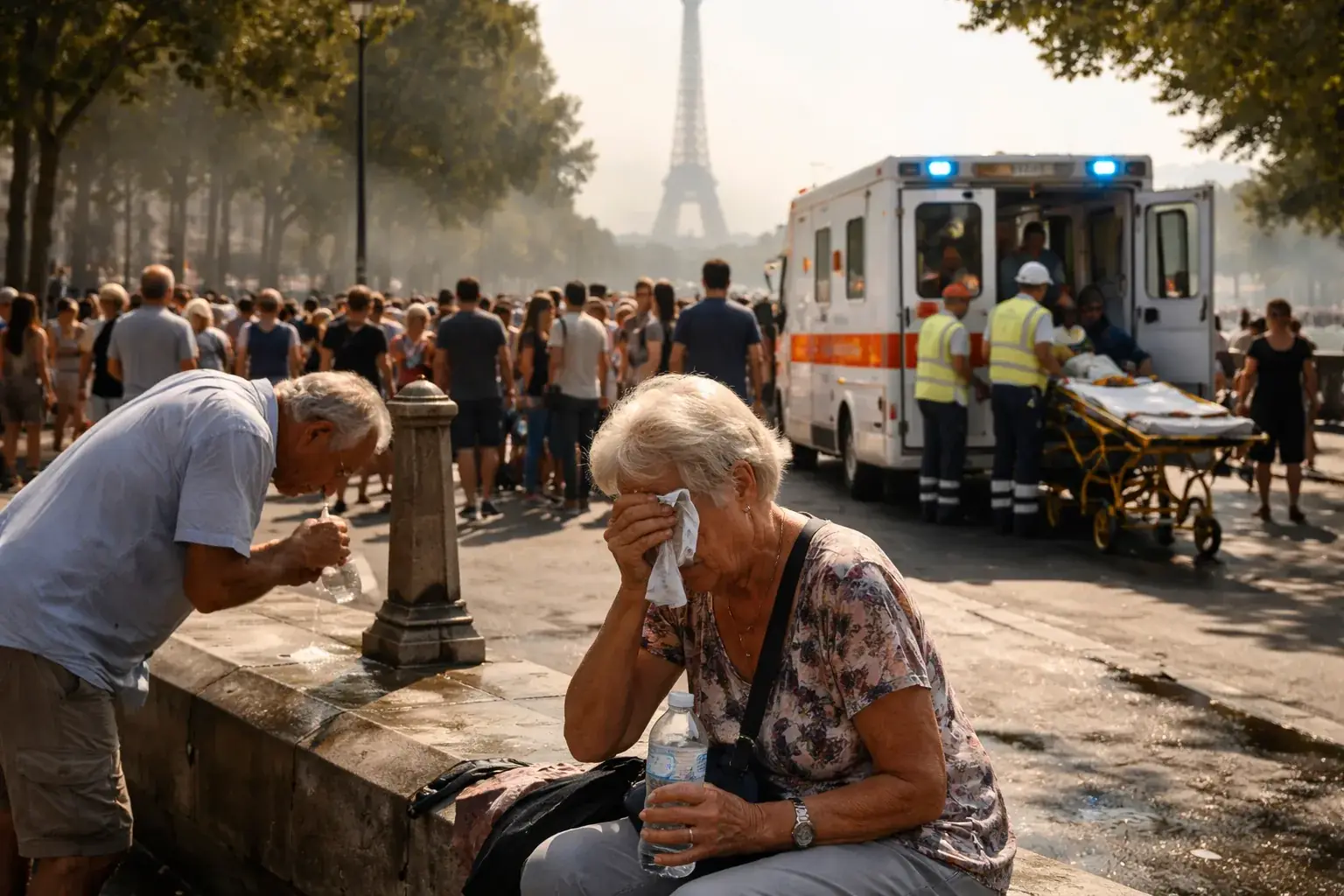
France’s national health agency, Public Health France, has reported a staggering 2,025 excess deaths during the final week of June, a period marked by a historic and record-breaking heatwave. This represents a 29% increase in mortality compared to the previous week, primarily affecting citizens over the age of 45. On June 24, the nation experienced its hottest day on average in recorded history, with temperatures in the capital city of Paris climbing to nearly 41C. The severity of the weather forced officials to place half of the country under a red heat alert, the highest level of warning available. Health Minister Stéphanie Rist noted a clear and concerning correlation between the temperature spike and the rise in fatalities, particularly among vulnerable demographics in urban centers like the Paris region, where the death rate surged by 62% during the peak heat.
What's new in this update
The latest data reveals that the human toll of this extreme weather event extends far beyond French borders, with neighboring European nations reporting unprecedented casualty figures. Belgium recorded 1,222 excess deaths during the same heatwave period, a 39% increase over typical seasonal norms, with nearly half of those victims aged 85 and older. Similarly, authorities in the Netherlands reported approximately 480 excess deaths, predominantly in the southern and eastern regions where temperatures approached 40C. French health officials have cautioned that the current figure of 2,025 deaths likely represents an underestimate. They anticipate that the final mortality count will rise as more comprehensive data becomes available from local municipalities and medical facilities that were overwhelmed during the peak of the heat, as reporting delays often occur during such mass-casualty environmental events.
Key details
Beyond the direct impact of heatstroke and cardiovascular failure, the extreme conditions have triggered secondary disasters across the region. French Interior Minister Laurent Nuñez confirmed that 72 people have died by drowning since June 18, as citizens sought relief from the heat in rivers and coastal waters. Meanwhile, the combination of high temperatures and dry conditions has ignited nearly 7,000 forest fires since the beginning of the summer season. Prime Minister Sebastien Lecornu stated that approximately 8,700 hectares have already been incinerated. A particularly aggressive wildfire in Sainte-Marie-la-Mer forced the emergency evacuation of nearly 3,000 residents on Thursday. The fire rapidly spread toward Canet-en-Roussillon, illustrating the very high risk of outbreaks that Météo-France warns is far above historical summer norms due to the current lack of soil moisture and high wind speeds.
Background and context
The current crisis is set against the backdrop of Europe’s position as the fastest-warming continent on Earth. According to the Copernicus climate service, Europe is heating up twice as fast as the global average, a trend that is directly increasing the frequency and intensity of summer heatwaves. This specific warming event is driven by a large area of high pressure building from the Azores towards the Iberian Peninsula and into France and the United Kingdom. These meteorological shifts are placing immense pressure on Europe's water supply and agricultural sectors while creating the volatile conditions necessary for large-scale wildfires. Experts emphasize that the unprecedented nature of these temperatures is a direct manifestation of broader climate change, transforming what were once rare weather events into recurring seasonal threats that require structural changes to public safety and urban planning.
What to watch next
Forecasters are warning that the danger has not yet passed, as a new wave of heat is expected to arrive this weekend. Temperatures are projected to return to 40C in southern France, specifically around the cities of Bordeaux, Toulouse, and Agen. Météo-France has already issued red alerts for forest fires for the upcoming days, signaling that the environmental risk remains critical. The heat is also moving northward, with the United Kingdom bracing for temperatures exceeding 30C as the high-pressure system expands. Across the Atlantic, millions of Americans are facing similar conditions during the July Fourth holiday weekend, with high humidity and extreme heat affecting the central and eastern United States. International health organizations will likely monitor these developments closely as governments assess whether existing emergency protocols are sufficient for the intensifying climate reality facing both Europe and North America.
Why it matters
This surge in mortality underscores the escalating public health crisis caused by climate change in Europe, which is currently the fastest-warming continent on the planet. The data highlights a critical vulnerability in urban infrastructure and elderly care systems as extreme weather events become more frequent.
Read next
Follow this story through the topic hub, more world coverage, and the latest updates.
Weekly briefing
Get the week's key developments in one concise email.
Get a fast catch-up on the biggest stories, the context behind them, and the links worth your time.
Cadence
Weekly, for a quick catch-up
Coverage
AI, business, world, security, sports
Format
Clear takeaways and useful context
Request the briefing
Leave your email to open a prepared request and get on the list for the weekly briefing.
About the byline
World correspondent
Leila Haddad covers world affairs, diplomacy, and humanitarian crises, with a focus on how fast-moving international developments affect public policy, conflict response, and cross-border institutions.
Sources and methodology