Lethal June Heatwave Topples Records Across Europe as Germany Hits
A blistering heatwave has triggered record-breaking temperatures across the continent, forcing the cancellation of major events in Paris and straining

World correspondent
Reports on international affairs, diplomacy, and humanitarian developments with an emphasis on official statements, multilateral institutions, and regional context.
Editorial responsibility: Lead reviewer for geopolitics, international institutions, and crisis coverage
Primary source: BBC World News. Full source links and update notes are below.
Fast summary
Start here
- Germany recorded a provisional June record of 41.3C in Saarbrücken, while records also fell in Belgium, the Netherlands, and the United Kingdom.
- Rising temperatures have led to a climbing death toll in Spain and France, prompting French authorities to warn of increased fatalities occurring at home.
- Major public gatherings, including Paris Pride and the Solidays music festival, were cancelled or rescheduled due to the overwhelming strain on hospital systems.
What happened
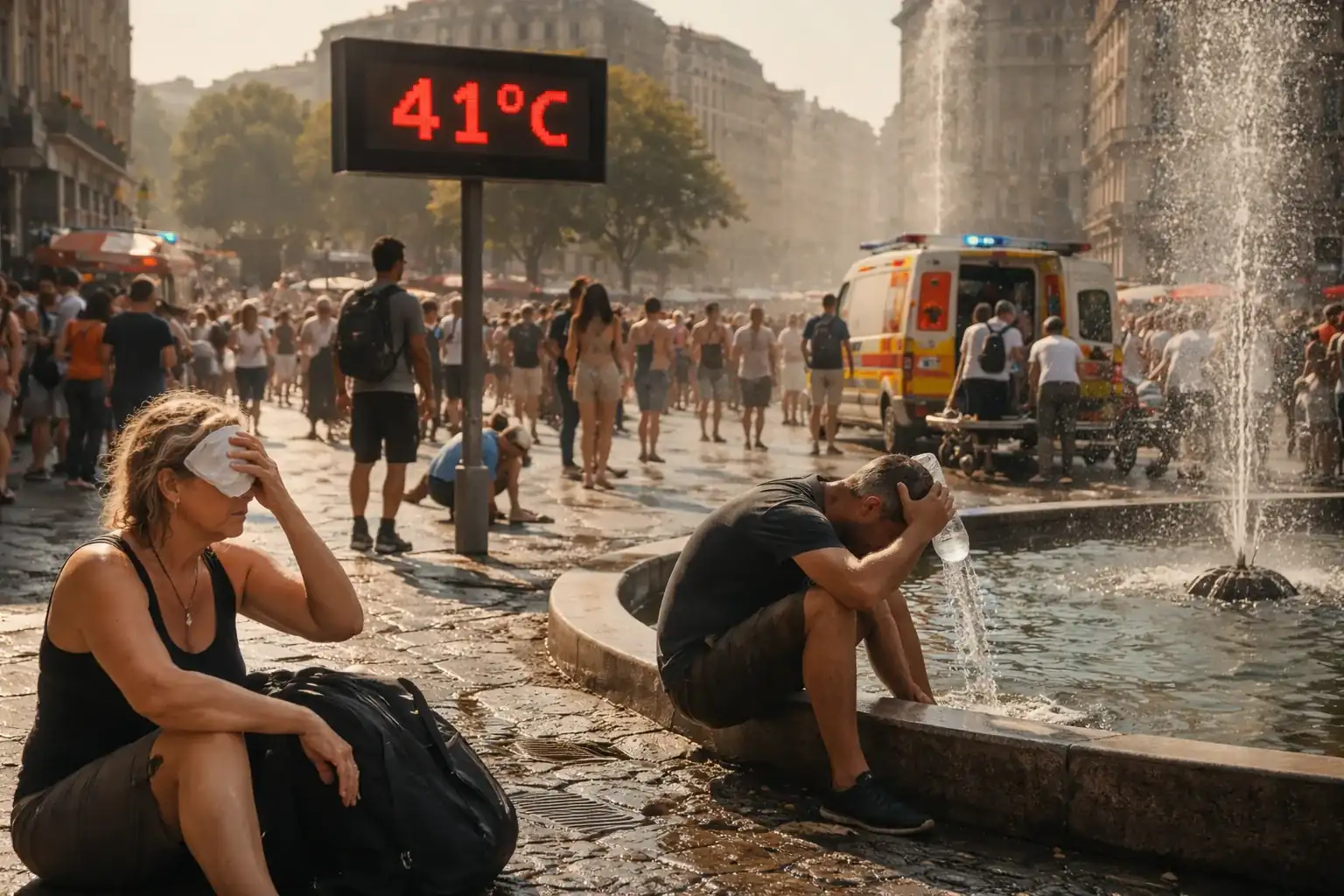
Temperatures across much of Europe reached unprecedented levels this week as a persistent heatwave shattered June records in multiple nations, including Germany, Belgium, and the Netherlands. The heat has already proven fatal, with death tolls rising in Spain and France. In response to the extreme conditions, authorities have begun cancelling major public events to mitigate health risks to the general population. Germany’s highest temperature was recorded in Saarbrücken at 41.3 degrees Celsius, just across the border from France. The World Meteorological Organization has issued stark warnings regarding the major impacts this weather will have on ecosystems, agriculture, and human labor. With temperatures often exceeding seasonal averages by up to 12 degrees Celsius, the heat is straining emergency services and local infrastructure across the continent.
What's new in this update
The latest updates from the region indicate that the heat is moving steadily north and east. In Belgium, forecasters reported an unofficial high of 40 degrees Celsius in Kleine Brogel, while the Netherlands saw temperatures climb to 39.4 degrees Celsius in the southern province of Limburg. In the United Kingdom, a provisional June record of 37.1 degrees Celsius was set in Suffolk. These extreme conditions have led to the cancellation of the Paris Pride march and the Solidays music festival, which usually attracts over 250,000 visitors. Local officials in Paris noted that the hospital system was already saturated, necessitating a shift in resources toward protecting the most vulnerable citizens. Furthermore, a Eurostar train traveling from Cologne to Paris broke down near Brussels, leaving 400 passengers trapped in sweltering conditions until medical assistance arrived.
Key details
Scientific analysis from the World Weather Attribution group suggests that this particular June heatwave is the most severe ever recorded for the region. The group highlighted that June is currently warming faster than any other month of the year. Approximately 150 million people are currently facing temperatures higher than 35 degrees Celsius. The impact extends beyond human health to critical energy infrastructure. In Switzerland, the Beznau nuclear power plant was forced to take its reactors off-grid as the temperature of the River Aare reached 25 degrees Celsius. Operators explained that using the warm river water to cool the reactors would return it to the ecosystem at even higher temperatures, potentially causing catastrophic harm to local aquatic life. This proactive measure reflects the widespread operational challenges posed by the extreme climate conditions.
Background and context
Europe is currently the fastest-warming continent on the planet, heating up at twice the global average rate according to the Copernicus climate service. This rapid warming is driven by persistent high-pressure systems that trap heat over the continent. While record-breaking heat is becoming more frequent, the current event is notable for its early timing in the summer season. Historical records from 2012 in the Czech Republic and national records in Austria are expected to be challenged or broken in the coming days. Meteorologists emphasize that this trend is consistent with long-term climate change models. As Clare Nullis of the World Meteorological Organization remarked, societies must begin to normalize these extreme events as they become a more regular feature of the European summer landscape, impacting everything from transport to public safety.
What to watch next
Looking ahead, the heat is expected to intensify in Eastern Europe and the Balkans over the weekend. Forecasters in Serbia anticipate temperatures reaching 39 degrees Celsius, while meteorologists in the Czech Republic and Austria predict national records may fall as the heatwave peaks on Saturday and Sunday. In Paris, despite the cancellation of major festivals, the Diamond League athletics meeting is scheduled to proceed with significant safety adaptations. Public health officials remain on high alert for deaths at home, a specific concern raised by the French health minister as the heat continues to affect those without access to climate-controlled environments. Long-term, the focus will likely shift to infrastructure resilience, as seen with the Eurostar failures and nuclear plant shutdowns, to prevent future system-wide collapses during extreme weather.
Why it matters
The intensity and frequency of these heatwaves underscore that Europe is warming twice as fast as the global average, posing systemic risks to public health, energy stability, and essential infrastructure.
Read next
Follow this story through the topic hub, more world coverage, and the latest updates.
Weekly briefing
Get the week's key developments in one concise email.
Get a fast catch-up on the biggest stories, the context behind them, and the links worth your time.
Cadence
Weekly, for a quick catch-up
Coverage
AI, business, world, security, sports
Format
Clear takeaways and useful context
Request the briefing
Leave your email to open a prepared request and get on the list for the weekly briefing.
About the byline
World correspondent
Leila Haddad covers world affairs, diplomacy, and humanitarian crises, with a focus on how fast-moving international developments affect public policy, conflict response, and cross-border institutions.
Sources and methodology