New Long-Necked Dinosaur Species Discovered in Thailand
Researchers in Thailand identify Uragasaurus kalasinensis, a 20-meter dinosaur from the Late Jurassic period with unique skeletal features.

World correspondent
Reports on international affairs, diplomacy, and humanitarian developments with an emphasis on official statements, multilateral institutions, and regional context.
Editorial responsibility: Lead reviewer for geopolitics, international institutions, and crisis coverage
Primary source: BBC World News. Full source links and update notes are below.
Fast summary
Start here
- Scientists have identified Uragasaurus kalasinensis, a new species of long-necked sauropod from the Late Jurassic period.
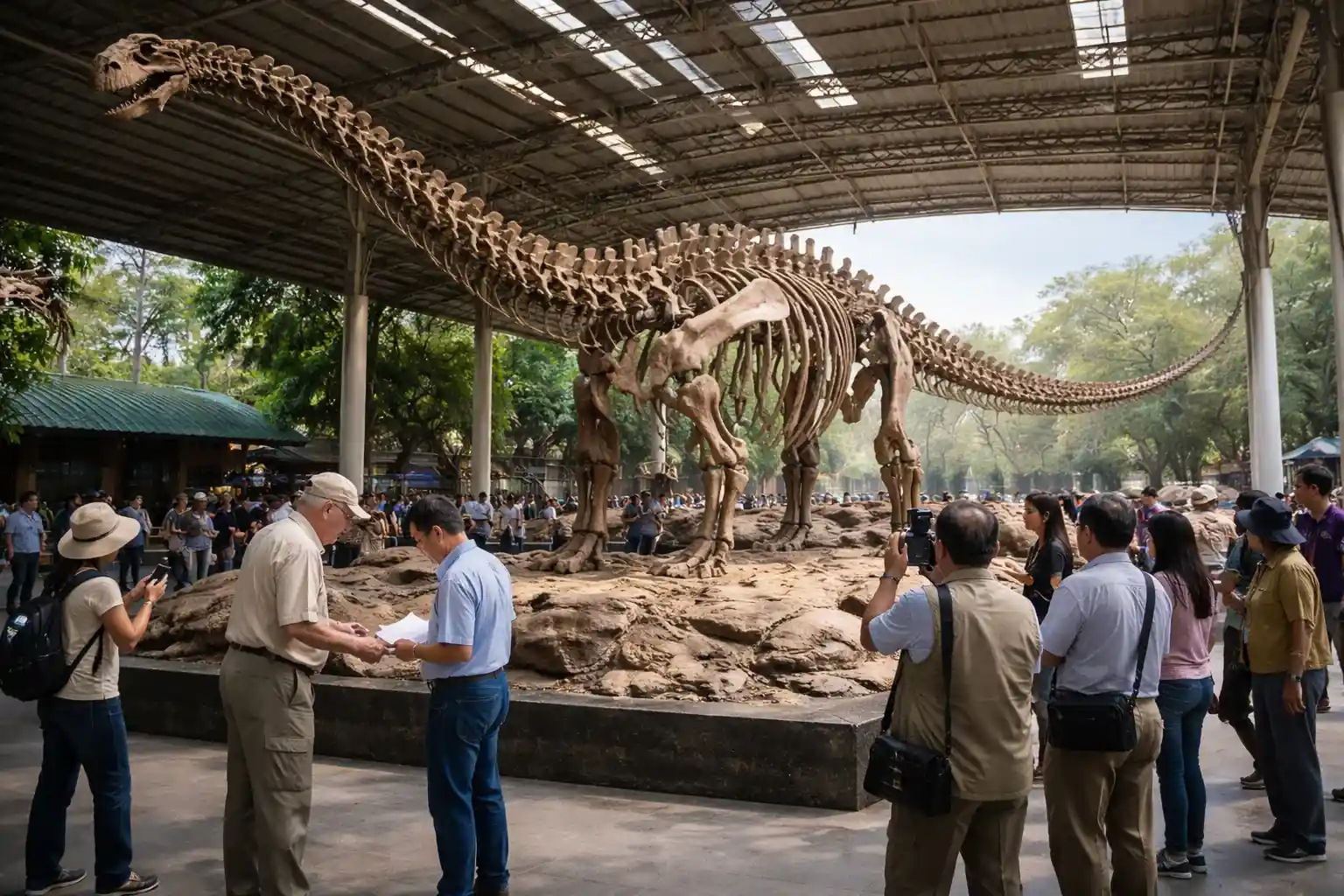
- The dinosaur reached lengths of 20 meters and featured unique skeletal structures, including specialized air cavities in its vertebrae.
- This discovery in Kalasin Province marks the first time a member of the Mamenchisauridae family has been found in Thailand.
What happened
Palaeontologists in northeast Thailand’s Kalasin Province have officially identified a previously unknown species of herbivorous dinosaur, Uragasaurus kalasinensis. This ancient creature, which roamed the Earth approximately 150 million years ago during the Late Jurassic period, is distinguished by its remarkably long neck, stretching the total length of the animal to roughly 20 meters. This measurement is famously comparable to the length of a standard cricket pitch, emphasizing the massive scale of the specimen. The discovery was formalized following a rigorous study published in the prestigious scientific journal Nature earlier this week. Lead researcher Dr. Apirat Nilphanaphan, from Mahasarakham University, spearheaded the analysis of the specimen, which was extracted from the Phu Noi site. This location has become a focal point for Thai paleontology, yielding a significant volume of prehistoric remains that continue to reshape our understanding of dinosaur diversity and evolution across Southeast Asia.
What's new in this update
The identification of Uragasaurus kalasinensis as a distinct species relied heavily on advanced medical imaging techniques, specifically CT scans. These scans allowed researchers to examine the intricate internal structure of a recovered dorsal vertebra, which is a bone situated in the dinosaur's mid-to-upper back. The analysis revealed a specific Y-shaped arrangement of supporting bones known as laminae, which provided structural integrity for the animal's massive frame. Dr. Nilphanaphan highlighted a unique air-cavity structure within the bone that has not been observed in any other dinosaur species globally. This specific anatomical deviation provided the definitive evidence needed to classify the find as an entirely new species. Furthermore, the scan confirmed that the dinosaur belongs to the Mamenchisauridae family of sauropods. While this family is well-documented in fossil records from China, this find represents the first recorded instance of a Mamenchisauridae species being discovered within the borders of Thailand, suggesting a wider geographic distribution than previously thought.
Key details
The history of this significant discovery dates back to 2008, when a local resident in the Phu Noi area uncovered bone fragments that he initially believed resembled the scales of a mythical serpent. This accidental find prompted a professional survey team to investigate the site, leading to the excavation of a massive collection of fossils that had remained hidden for millions of years. The Phu Noi site has since proven to be exceptionally fertile ground for paleontological research, with over 90% of the material recovered consisting of dinosaur fragments. Beyond the specific vertebrae that defined the Uragasaurus, the site has yielded various teeth and bone fragments from the Late Jurassic period. The sheer density of fossils at Phu Noi suggests a rich and thriving prehistoric ecosystem that supported a wide variety of life. The site serves as a crucial repository for Late Jurassic biodiversity, providing a rare window into the environmental conditions of the region during a time when giant sauropods dominated the landscape.
Background and context
Thailand is increasingly becoming a critical hub for dinosaur research in Southeast Asia, with several major finds reported in recent years. This latest discovery of Uragasaurus kalasinensis follows the May identification of the nagatitan, another long-necked herbivore found in the country. The nagatitan holds the current record as the largest dinosaur ever discovered in the region, weighing an estimated 27 tonnes—the equivalent of nine adult Asian elephants—and reaching lengths of 27 meters. The discovery of Uragasaurus complements these findings by illustrating the diversity of sauropods that inhabited the area. The Mamenchisauridae family, to which the new species belongs, is renowned in the scientific community for having some of the longest necks relative to body size in the animal kingdom. This evolutionary trait likely allowed them to graze on high-canopy vegetation that other herbivores could not reach, suggesting a complex and competitive prehistoric habitat where different species evolved specialized niches to survive.
What to watch next
Following the successful publication of their findings in the journal Nature, the research team at Mahasarakham University intends to continue their exploration and excavation of the Phu Noi site. Given the high concentration of fossils already recovered, there is a strong possibility that further new species may yet be identified from the existing collection or through new digs in the surrounding area. Scientists are particularly interested in how these Thai sauropods relate to their counterparts in China and other parts of Asia, which could provide insights into prehistoric migration patterns and the existence of ancient land bridges. Additionally, the unique air-cavity structures found in Uragasaurus may prompt a re-examination of other sauropod fossils in the region to see if similar evolutionary traits were previously overlooked. The continued development of the Phu Noi site as a premier paleontological location is expected to draw more international collaboration, funding, and scientific interest to Thailand's burgeoning research community, potentially leading to more groundbreaking discoveries in the near future.
Why it matters
The discovery of Uragasaurus kalasinensis expands the known range of Mamenchisauridae dinosaurs into Southeast Asia and highlights Thailand’s growing importance in global paleontological research.
Read next
Follow this story through the topic hub, more world coverage, and the latest updates.
Weekly briefing
Get the week's key developments in one concise email.
Get a fast catch-up on the biggest stories, the context behind them, and the links worth your time.
Cadence
Weekly, for a quick catch-up
Coverage
AI, business, world, security, sports
Format
Clear takeaways and useful context
Request the briefing
Leave your email to open a prepared request and get on the list for the weekly briefing.
About the byline
World correspondent
Leila Haddad covers world affairs, diplomacy, and humanitarian crises, with a focus on how fast-moving international developments affect public policy, conflict response, and cross-border institutions.
Sources and methodology