South Africa Deports Over 53,000 Foreigners in Migration Crackdown
South African officials report tens of thousands of deportations following weeks of violent anti-immigration protests and increased border enforcement.

World correspondent
Reports on international affairs, diplomacy, and humanitarian developments with an emphasis on official statements, multilateral institutions, and regional context.
Editorial responsibility: Lead reviewer for geopolitics, international institutions, and crisis coverage
Primary source: BBC World News. Full source links and update notes are below.
Fast summary
Start here
- Over 53,000 foreign nationals were deported or repatriated within a five-week migration management campaign.
- The majority of individuals processed for deportation are citizens of Malawi, Zimbabwe, and Mozambique.
- The crackdown follows weeks of violent anti-immigrant protests, looting, and intimidation targeting foreign nationals.
What happened
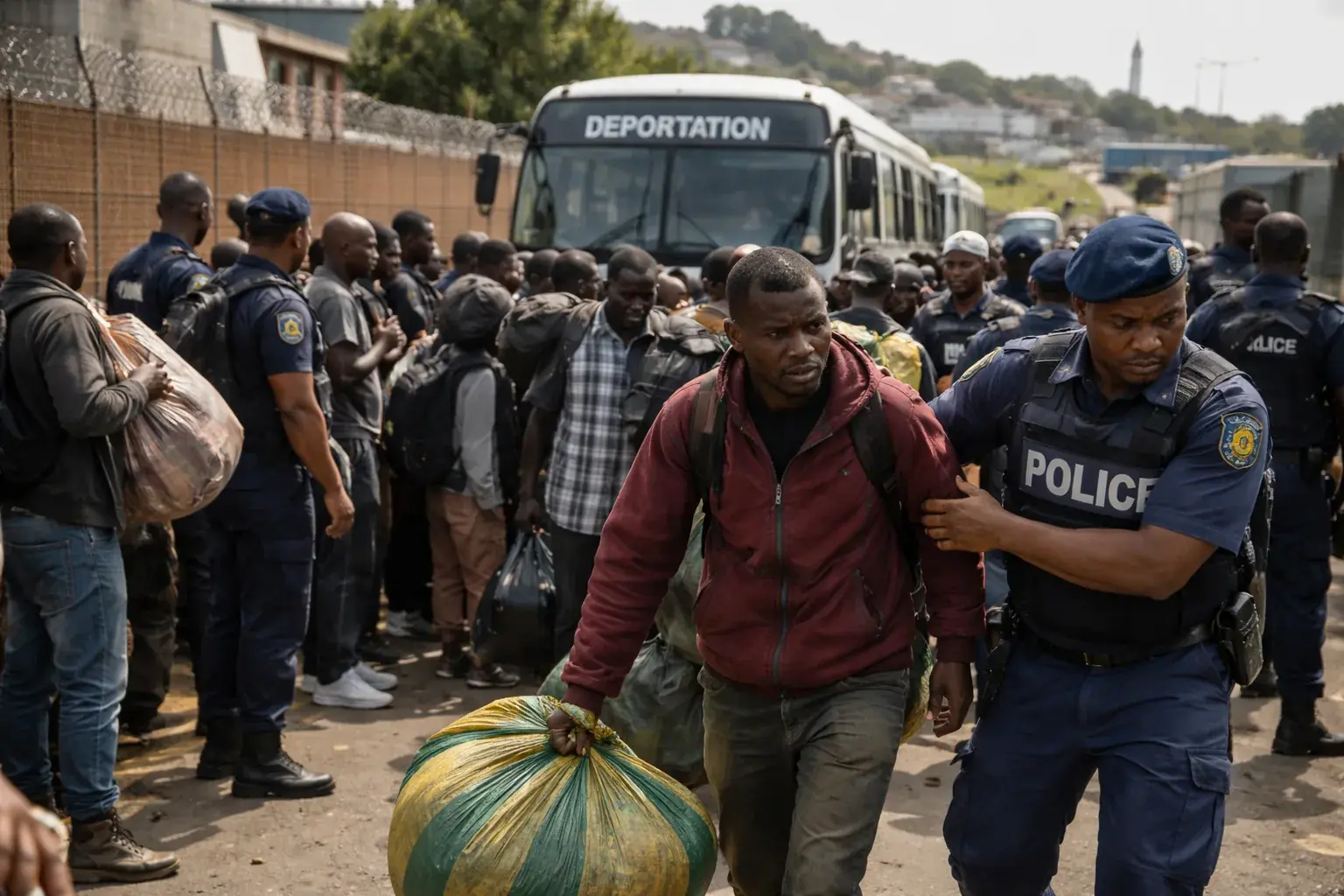
The South African government has intensified its enforcement of immigration laws, resulting in the deportation or repatriation of more than 53,000 foreign nationals in just over a month. This "migration management" campaign was launched in direct response to escalating domestic pressure and widespread public demonstrations across the country. Justice and Constitutional Development Minister Mmamoloko Kubayi confirmed the figures during a press conference in Pretoria, noting that the operation is part of a broader strategy to address public concerns regarding undocumented residents. The surge in deportations marks one of the most significant crackdowns on migration in South Africa’s recent history, highlighting a definitive shift in the government's approach to border security and internal residency verification.
What's new in this update
The latest data reveals that 53,499 individuals have been processed during the five-week window, with a significant concentration of those affected originating from neighboring Southern African Development Community (SADC) countries. Minister Kubayi specifically identified Malawians as the largest group being repatriated, followed closely by citizens of Zimbabwe and Mozambique. Additionally, the government used this period to execute warrants for individuals wanted for various criminal activities, effectively integrating broader law enforcement objectives into the migration sweep. While officials claim to be pursuing an "orderly and regular migration" process, they have also issued stern warnings to local vigilante groups. The government is attempting to balance the enforcement of legal mandates with the protection of human rights, urging citizens not to conduct unauthorized searches.
Key details
The catalyst for this intensive campaign was a series of anti-immigration protests that frequently devolved into violence, intimidation, and the looting of foreign-owned businesses. Demonstrators have voiced frustrations over South Africa's high unemployment rate, which they often attribute to the presence of undocumented migrants. These protesters, some of whom set an "unofficial deadline" of June 30 for migrants to leave, argue that foreign nationals strain the country’s public services and contribute to rising crime levels. In response to the hostile environment, several African nations—including Ghana, Nigeria, Uganda, and Kenya—have organized repatriation flights to bring their citizens home safely. This proactive evacuation by foreign governments underscores the perceived severity of the threat facing migrants within South African borders.
Background and context
South Africa has long been a primary destination for migrants across the continent due to its status as Africa's most industrialized economy. The promise of better economic opportunities attracts millions of people, both documented and undocumented, seeking a higher standard of living than available in their home countries. However, this influx has historically coincided with periods of xenophobic tension, particularly when the local economy faces stagnation or high inflation. The United Nations has previously intervened, warning the South African government and public against using migrants as scapegoats for complex socioeconomic challenges such as structural inequality and infrastructure deficits. Despite these warnings, the current political climate has shifted toward more stringent enforcement, as the ruling administration faces increasing pressure to demonstrate control over the nation's borders.
What to watch next
The number of deportations is expected to rise as the government continues its multi-agency operations across various provinces. Anti-migrant activists have threatened to maintain pressure on the authorities by staging weekly protests until all their demands for mass removals are met, raising the risk of further civil unrest. Observers are closely monitoring the rhetoric of President Cyril Ramaphosa, who has condemned vigilante violence while acknowledging the public’s concerns regarding immigration. The international community is also watching for potential human rights violations during the mass processing of individuals. Future diplomatic relations between South Africa and its neighbors—particularly Malawi, Zimbabwe, and Mozambique—may be tested if the repatriation process is perceived as heavy-handed or if the safety of their citizens cannot be guaranteed by local police.
Why it matters
This massive repatriation effort reflects growing social tension and economic pressure within Africa's wealthiest nation, risking regional diplomatic relations and humanitarian stability.
Read next
Follow this story through the topic hub, more world coverage, and the latest updates.
Weekly briefing
Get the week's key developments in one concise email.
Get a fast catch-up on the biggest stories, the context behind them, and the links worth your time.
Cadence
Weekly, for a quick catch-up
Coverage
AI, business, world, security, sports
Format
Clear takeaways and useful context
Request the briefing
Leave your email to open a prepared request and get on the list for the weekly briefing.
About the byline
World correspondent
Leila Haddad covers world affairs, diplomacy, and humanitarian crises, with a focus on how fast-moving international developments affect public policy, conflict response, and cross-border institutions.
Sources and methodology