Thousands of Protesters March in South Africa Demanding Mass
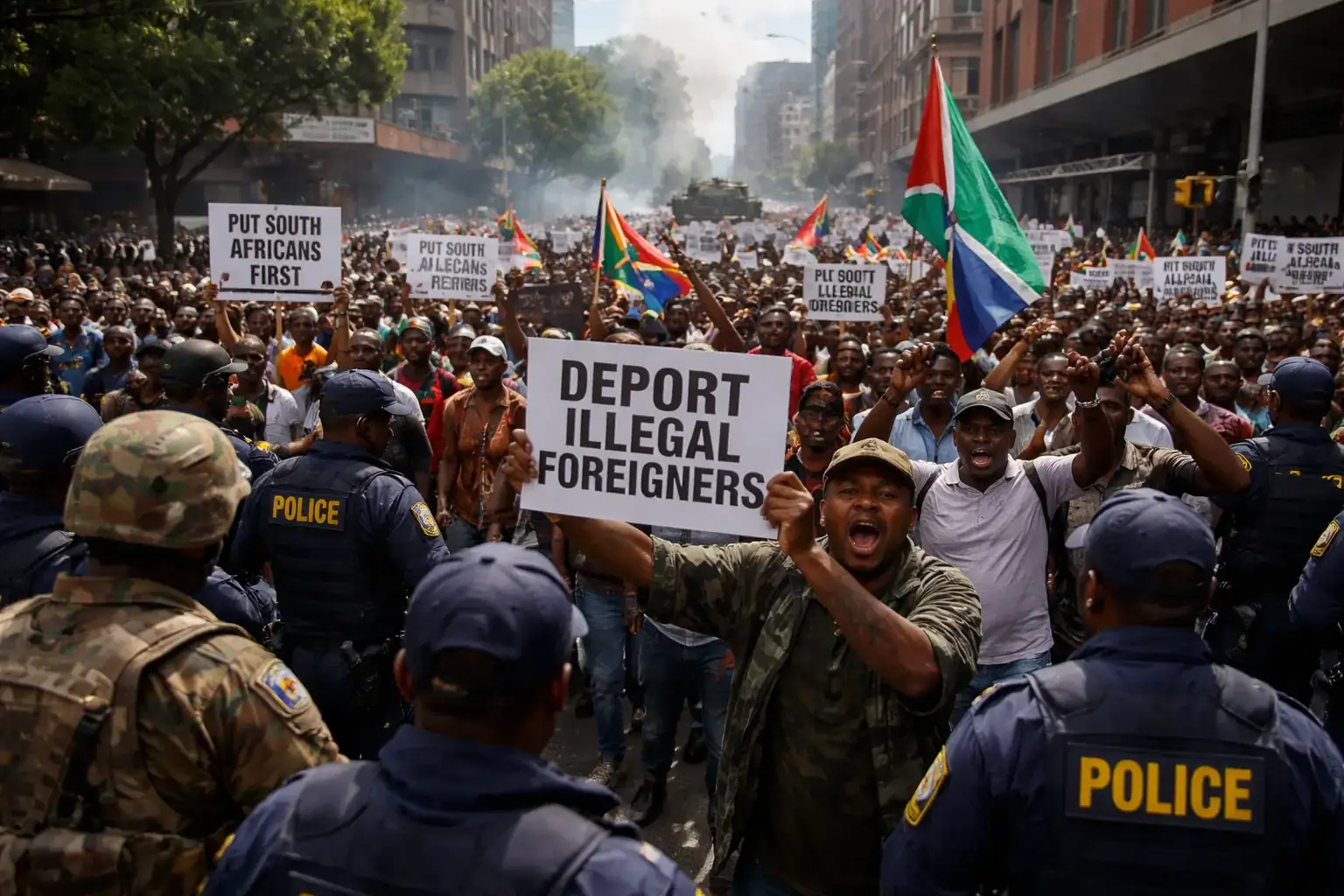
Large-scale demonstrations have erupted across South Africa's major urban centers as anti-migrant groups demand the immediate departure of undocumented

World correspondent
Reports on international affairs, diplomacy, and humanitarian developments with an emphasis on official statements, multilateral institutions, and regional context.
Editorial responsibility: Lead reviewer for geopolitics, international institutions, and crisis coverage
Primary source: BBC World News. Full source links and update notes are below.
Fast summary
Start here
- Thousands of demonstrators marched through Johannesburg and Durban following a set deadline for undocumented migrants to leave the country.
- The South African military has been deployed to the Johannesburg suburb of Hillbrow following reports of violence, including a shooting and arson.
- Police officials confirmed that 25,000 migrants have already been repatriated as the government faces pressure to implement stricter immigration reforms.
What happened
Thousands of protesters took to the streets of South Africa's major financial and urban hubs, including Johannesburg and Durban, to demand the mass deportation of undocumented foreign nationals. The demonstrations were organized by prominent anti-migrant groups such as March and March and Operation Dudula, who had previously issued a deadline for migrants without legal status to exit the country. While authorities reported that the marches were largely peaceful, the presence of security forces was significant, with police and private security guards stationed throughout city centers. In Johannesburg, shops were shuttered as a precaution, and visibility of law enforcement remained high on major thoroughfares. The scale of the movement reflects growing domestic tensions over migration, economic stability, and the legal status of millions of people living within the borders of South Africa.
What's new in this update
The most recent escalation involved the deployment of the South African military to Hillbrow, a suburb in Johannesburg known for its high population of African migrants. This tactical shift followed reports of localized violence, including the shooting of a teenager and the torching of a vehicle by unidentified individuals. Police officials also provided an update on the scale of departures, confirming that at least 25,000 undocumented migrants have been repatriated to their home countries so far, with many more expected to follow. Isolated incidents of looting and physical intimidation were reported in Soweto and KwaZulu-Natal, leading to several arrests. In Germiston, some demonstrators reportedly entered private homes to identify individuals they suspected were foreign nationals, subsequently handing them over to police for documentation checks, marking a significant and controversial shift in grassroots tactics.
Key details
Jacinta Ngobese-Zuma, the leader of the 'March and March' organization, has declared that protests will continue every Thursday for the next six months until the government successfully removes all undocumented individuals from the country. The group formally handed over memorandums listing their specific demands to government officials in both Durban and Johannesburg. Meanwhile, the South African police force has arrested at least 15 individuals for various offenses, including the looting of foreign-owned shops and the assault of a police officer. In Soweto, five people were taken into custody specifically for targeting businesses owned by non-nationals, while in KwaZulu-Natal, ten additional arrests were made. Despite these flare-ups, the Ministry of Police maintains that the majority of the protesters have adhered to peaceful conduct, though the atmosphere remains highly volatile in residential areas like Yeoville, where residents reported protesters throwing bricks at homes.
Background and context
Tensions regarding migration in South Africa have been simmering for several years, frequently boiling over into periods of xenophobic violence. Official figures suggest there are more than three million documented foreign nationals currently in the country, but the number of undocumented migrants is believed to be significantly higher, though it remains unconfirmed. Protesters argue that the presence of these individuals places an undue burden on public services, housing, and the local labor market. President Cyril Ramaphosa met with protest leaders shortly before the Tuesday deadline in an attempt to de-escalate the situation. In a public newsletter, the President acknowledged the necessity of immigration reform but reminded the public that many foreign nationals contribute positively to the economy. He emphasized that the South African Constitution protects all residents and that the right to protest does not grant permission to use violence or intimidation against others.
What to watch next
The immediate focus for authorities is maintaining order during the recurring weekly protests promised by groups like March and March. The South African government is under intense pressure to demonstrate tangible progress on immigration reform without appearing to yield to mob rule or xenophobic sentiment. Observers are watching the repatriation process closely to see if the current figure of 25,000 will rise rapidly as the police continue their crackdown on undocumented residency status. International human rights organizations are also monitoring the situation, expressing concern about the potential for further violence against African migrants. For many foreigners living in South Africa, the situation has already reached a breaking point; many families have already begun fleeing the country to escape the looming threat of violence and forced evictions, highlighting a deepening humanitarian concern within the region.
Why it matters
The escalation of anti-migrant sentiment in Africa's most industrialized economy threatens regional stability and tests the government's ability to balance domestic pressure with constitutional human rights protections.
Read next
Follow this story through the topic hub, more world coverage, and the latest updates.
Weekly briefing
Get the week's key developments in one concise email.
Get a fast catch-up on the biggest stories, the context behind them, and the links worth your time.
Cadence
Weekly, for a quick catch-up
Coverage
AI, business, world, security, sports
Format
Clear takeaways and useful context
Request the briefing
Leave your email to open a prepared request and get on the list for the weekly briefing.
About the byline
World correspondent
Leila Haddad covers world affairs, diplomacy, and humanitarian crises, with a focus on how fast-moving international developments affect public policy, conflict response, and cross-border institutions.
Sources and methodology