Massive Security Deployment Underway Across South Africa Amid
Authorities have flooded major cities with security personnel to prevent violence as an unofficial deadline for undocumented foreigners to leave the

World correspondent
Reports on international affairs, diplomacy, and humanitarian developments with an emphasis on official statements, multilateral institutions, and regional context.
Editorial responsibility: Lead reviewer for geopolitics, international institutions, and crisis coverage
Primary source: BBC World News. Full source links and update notes are below.
Fast summary
Start here
- Over 25,000 migrants have been repatriated so far as many flee transit camps due to fears of targeted xenophobic attacks.
- President Cyril Ramaphosa has officially called for peace, warning that the right to protest does not allow for intimidation or acts of vandalism.
- At least ten people have been arrested in Soweto and KwaZulu-Natal for looting and breaking into foreign-owned businesses ahead of planned marches.
What happened
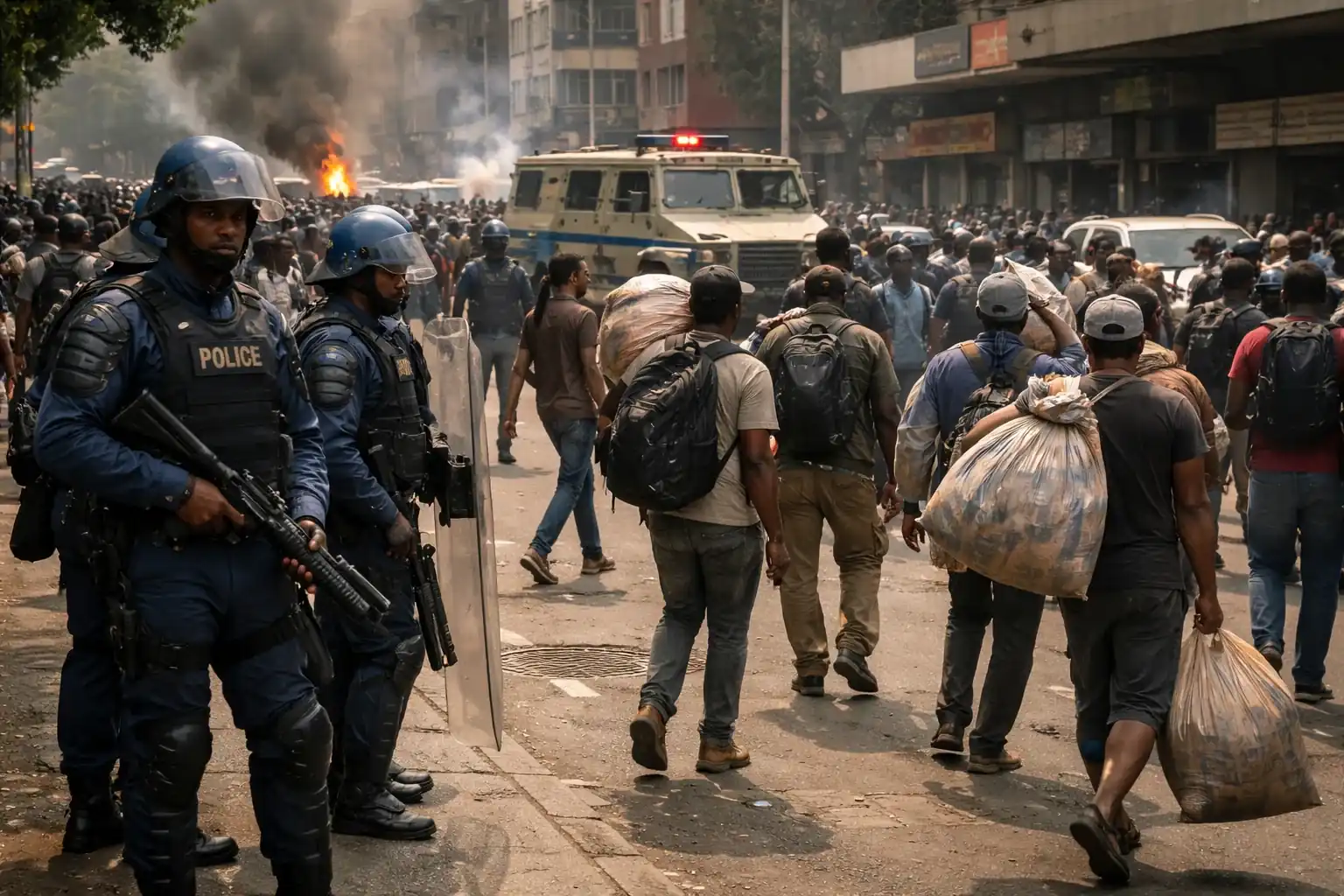
South African authorities have launched a comprehensive security operation, mobilizing thousands of police personnel to major urban centers including Johannesburg and Durban. This deployment is a direct response to rising fears that planned anti-immigration protests could escalate into widespread civil unrest. The tension centers on an unofficial deadline set by local pressure groups and campaigners, demanding that all undocumented foreign nationals vacate South Africa by the end of June. In response to these threats, large commercial districts have effectively shut down, with shop owners boarding up windows and streets appearing unusually quiet as the country braces for the impact of authorized marches. President Cyril Ramaphosa has intervened through public statements, urging protesters to act within the law and avoid the use of threats or ultimatums against foreign residents.
What's new in this update
In the latest developments, police have confirmed several arrests related to preemptive strikes against foreign-owned properties. In Soweto, Johannesburg's most populous township, five individuals were detained following the looting of a shop owned by a foreign national. A separate incident in Hammarsdale, located in the KwaZulu-Natal province, resulted in five more arrests after suspects allegedly broke into a local tuck shop. These incidents have heightened the state of alert, leading to increased police visibility on major arterial roads and within residential areas known for high migrant populations. Authorities in Durban, a focal point for the demonstrations, have been dismantling transit camps where migrants had gathered for safety, as officials work to process and repatriate those who have chosen or been forced to leave.
Key details
The scale of the current migration crisis is reflected in the official figures released by the South African police, which state that 25,000 individuals have been repatriated so far. Most of these individuals are citizens of other African nations, particularly Malawi. In Durban, the transit camps have been filled with families waiting in lines to board buses that will take them back to their home countries. Many of these migrants, such as Nelson Mbewe, expressed that they are leaving unwillingly after being targeted by xenophobic slurs and threats. The human impact is profound, with many undocumented workers being forced to leave behind children and established lives to escape the threat of machete-wielding mobs and organized intimidation tactics that have characterized previous waves of xenophobic sentiment in the region.
Background and context
South Africa remains home to more than three million documented foreign nationals, making it one of the primary hubs for migration on the continent. However, economic pressures and high unemployment rates have frequently led to friction between local South Africans and migrant communities. This current wave of protests is driven by organized groups who claim that undocumented foreigners are straining public resources and taking jobs. President Ramaphosa has attempted to navigate this volatility by acknowledging the valid concerns of citizens regarding immigration reform while simultaneously defending the constitutional protections afforded to all people living within South Africa's borders. In his weekly newsletter, he reminded the public that many foreign nationals contribute significantly to the economy through investment and labor, and that the rule of law must prevail over vigilante-style ultimatums.
What to watch next
The immediate concern for security forces is the management of authorized anti-migrant marches scheduled for Tuesday in several major cities. Organizers have been warned that they will be held strictly liable for any violence or damage to property that occurs during these events. Analysts are closely monitoring whether the police presence will be sufficient to prevent the looting and physical attacks that have historically accompanied such demonstrations. Beyond the immediate security threat, the South African government is under pressure to accelerate immigration policy reforms to address the root causes of the friction. The international community, particularly the African Union and neighboring nations like Malawi, will be watching the government's handling of the repatriation process to ensure it remains humane and does not violate international refugee and human rights standards.
Why it matters
The escalating tension between local demonstrators and migrant populations threatens South Africa's regional diplomatic standing and its internal stability, testing the state's ability to maintain order while upholding constitutional human rights.
Read next
Follow this story through the topic hub, more world coverage, and the latest updates.
Weekly briefing
Get the week's key developments in one concise email.
Get a fast catch-up on the biggest stories, the context behind them, and the links worth your time.
Cadence
Weekly, for a quick catch-up
Coverage
AI, business, world, security, sports
Format
Clear takeaways and useful context
Request the briefing
Leave your email to open a prepared request and get on the list for the weekly briefing.
About the byline
World correspondent
Leila Haddad covers world affairs, diplomacy, and humanitarian crises, with a focus on how fast-moving international developments affect public policy, conflict response, and cross-border institutions.
Sources and methodology