Poland Pledges Memorial for WW2 Victims of Ukrainian Nationalists
Prime Minister Donald Tusk calls for a national memorial for Volhynia massacre victims, conditioning Ukraine's EU path on historical reconciliation.

World correspondent
Reports on international affairs, diplomacy, and humanitarian developments with an emphasis on official statements, multilateral institutions, and regional context.
Editorial responsibility: Lead reviewer for geopolitics, international institutions, and crisis coverage
Primary source: BBC World News. Full source links and update notes are below.
Fast summary
Start here
- PM Tusk announced a national memorial for the estimated 100,000 Poles killed by the UPA during World War Two.
- The Polish government linked Ukraine's future European Union membership to its willingness to acknowledge historical truths about the massacre.
- Despite the diplomatic friction over historical narratives, both nations reaffirmed their shared stance against the ongoing Russian invasion.
What happened
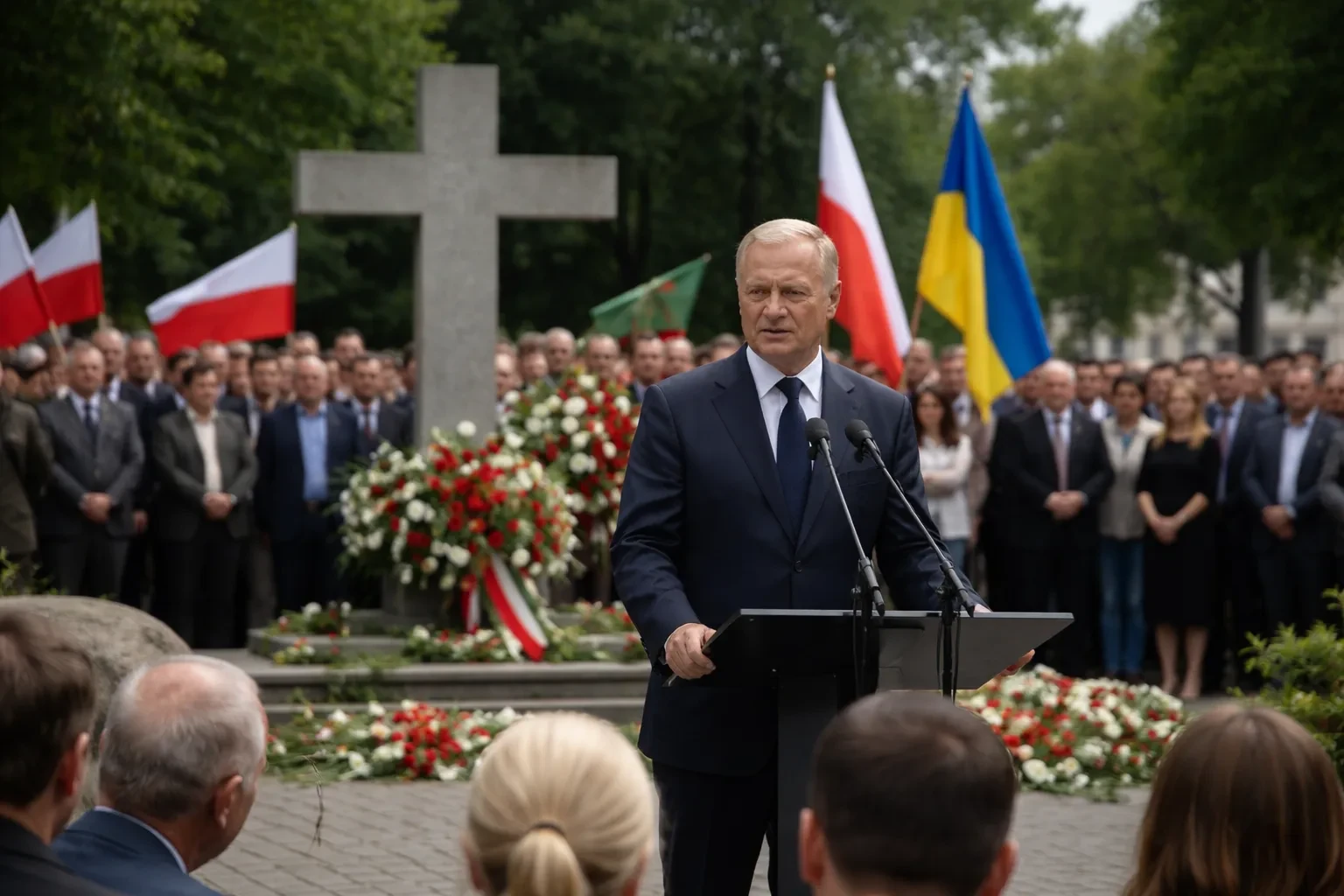
Polish Prime Minister Donald Tusk officially announced the establishment of a national memorial dedicated to the victims of what Poland identifies as a genocide committed by Ukrainian nationalists during World War Two. The announcement took place on the anniversary of the massacres in Volhynia, a region in German-occupied Poland that is now part of modern-day Ukraine. According to Polish historical records, the Ukrainian Insurgent Army (UPA) was responsible for the deaths of approximately 100,000 ethnic Poles between 1943 and 1945. During a commemorative ceremony held in Warsaw, Tusk emphasized that establishing the truth about these events is a moral duty to the victims and a necessary step for building a stable future between the two neighboring nations.
What's new in this update
This latest development marks a significant sharpening of Poland's diplomatic stance, as Tusk explicitly connected historical reconciliation with Ukraine's aspirations to join the European Union. He urged Kyiv to "embrace this truth" about the UPA's actions, suggesting that failure to resolve these historical grievances could impede Ukraine's integration into European institutions. In response, Ukrainian President Volodymyr Zelensky acknowledged the anniversary by noting that representatives from both states participated in joint prayers. While Zelensky maintained that Ukraine is working to honestly establish historical facts, he pivoted the conversation toward the immediate existential threat posed by Russia, characterizing the Kremlin as a "mortal threat" that necessitates unity between Warsaw and Kyiv despite their unresolved past.
Key details
The core of the dispute lies in the divergent perceptions of the Ukrainian Insurgent Army. While Poland views the UPA's actions in Volhynia as a systematic ethnic cleansing and genocide, many in Ukraine revere the group as national heroes who fought for independence against the Soviet Union, Nazi Germany, and Polish authorities. The massacres occurred during a period of extreme chaos under German occupation, where it is estimated that in addition to the 100,000 Poles killed, up to 10,000 Ukrainian civilians also lost their lives in retaliatory actions. This complex historical knot has led to decades of tension, with Poland demanding official recognition and exhumations, while Ukraine remains cautious about discrediting figures central to its national liberation narrative.
Background and context
Tensions recently escalated when Polish authorities stripped President Zelensky of Poland's highest state honor, the Order of the White Eagle. This move followed Zelensky's decision to name a Ukrainian military unit after a UPA commander, a gesture that caused deep offense in Poland. Polish President Karol Nawrocki clarified that while the diplomatic row over history is serious, it does not diminish Poland's commitment to supporting Ukraine against the 2022 Russian invasion. In a show of solidarity with Zelensky, three former Ukrainian presidents returned their own Polish awards. This backdrop illustrates the precarious nature of the current alliance, where strategic military cooperation coexist with a deep-seated and emotionally charged historical conflict.
What to watch next
Moving forward, the development of the national memorial in Poland will serve as a permanent reminder of the Volhynia events, potentially keeping the issue at the forefront of bilateral relations. Observers will be watching for whether Kyiv allows more extensive exhumations of victims' remains, a long-standing demand from Warsaw. The most critical factor will be how these historical debates influence the timeline and conditions for Ukraine's EU accession negotiations. If Poland continues to frame historical "truth" as a prerequisite for membership, it could create a significant hurdle. However, the shared "mortal threat" from Russia remains a powerful unifying force that may prevent the historical row from leading to a total breakdown in security cooperation.
Why it matters
This dispute tests the resilience of the Polish-Ukrainian alliance during the Russian invasion, highlighting how historical grievances can complicate modern security cooperation and EU expansion.
Read next
Follow this story through the topic hub, more world coverage, and the latest updates.
Weekly briefing
Get the week's key developments in one concise email.
Get a fast catch-up on the biggest stories, the context behind them, and the links worth your time.
Cadence
Weekly, for a quick catch-up
Coverage
AI, business, world, security, sports
Format
Clear takeaways and useful context
Request the briefing
Leave your email to open a prepared request and get on the list for the weekly briefing.
About the byline
World correspondent
Leila Haddad covers world affairs, diplomacy, and humanitarian crises, with a focus on how fast-moving international developments affect public policy, conflict response, and cross-border institutions.
Sources and methodology