Poland Revokes Zelensky’s Highest State Honor Over Historical
The decision follows Kyiv’s move to name a military unit after the Ukrainian Insurgent Army, a group Poland associates with wartime genocide.

World correspondent
Reports on international affairs, diplomacy, and humanitarian developments with an emphasis on official statements, multilateral institutions, and regional context.
Editorial responsibility: Lead reviewer for geopolitics, international institutions, and crisis coverage
Primary source: BBC World News. Full source links and update notes are below.
Fast summary
Start here
- Polish President Karol Nawrocki revoked the Order of the White Eagle, Poland's highest state honor, from Volodymyr Zelensky.
- The diplomatic rift stems from Ukraine's decision to name a military unit after the Ukrainian Insurgent Army (UPA).
- Ukraine's Foreign Minister Andrii Sybiha condemned the move as a strategic mistake that serves Russian interests.
What happened
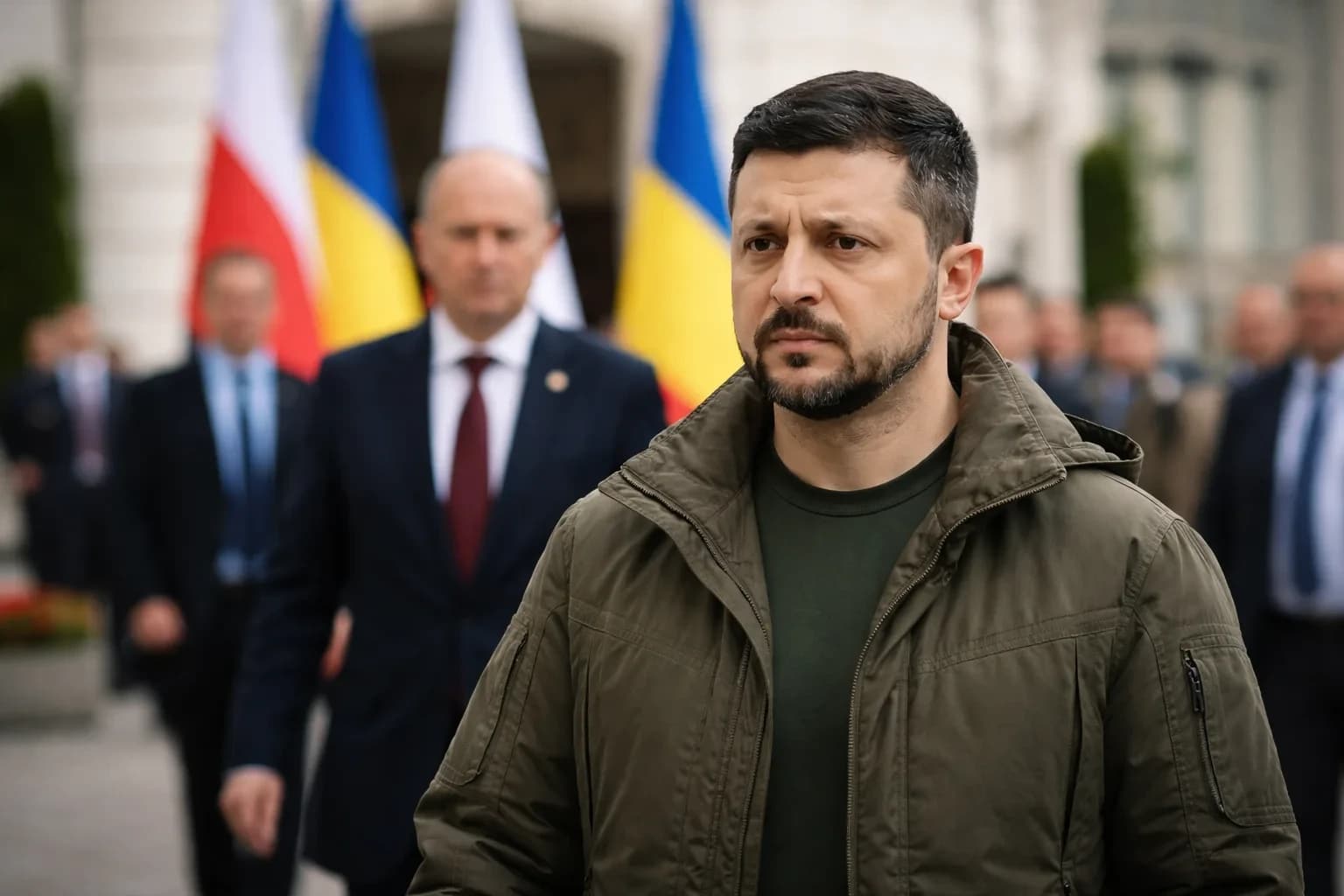
Polish President Karol Nawrocki has revoked the Order of the White Eagle, Poland's highest state honour, from Ukrainian President Volodymyr Zelensky after Kyiv moved to name a military unit in reference to the Ukrainian Insurgent Army, or UPA. The decision marks one of the sharpest symbolic breaks yet between Poland and Ukraine since Russia's full-scale invasion and exposes how unresolved historical memory can still disrupt a strategically vital alliance.
What's new in this update
The dispute escalated quickly once Poland treated the issue not as a narrow historical disagreement but as an insult serious enough to justify withdrawing a state distinction previously granted to Zelensky in 2023. Nawrocki argued that honoring a UPA-linked military identity was unacceptable because Poland associates that movement with the mass killing of ethnic Poles during World War II.
Ukraine responded angrily. Foreign Minister Andrii Sybiha condemned the move and indicated he would return a Polish award of his own. Polish Prime Minister Donald Tusk then tried to cool the rhetoric, warning that a feud between Warsaw and Kyiv would benefit Vladimir Putin. That intervention suggests even Polish leaders who understand the historical grievance are uneasy about allowing the row to spiral into a broader strategic rupture.
Key details
The UPA remains one of the most divisive historical subjects in Polish-Ukrainian relations. In Ukraine, some view the group as nationalist resistance fighters who battled for independence against both Soviet and Nazi domination. In Poland, the dominant memory is much darker: the UPA is associated with the Volhynia massacres, in which tens of thousands of ethnic Poles were killed between 1943 and 1945.
That difference in national memory is not academic. It affects public opinion, political rhetoric, and the limits of symbolic diplomacy. Zelensky had previously presented the unit naming as part of restoring national military traditions. For many Poles, however, such language crosses a red line because it appears to legitimize a movement tied in Poland's memory to atrocity and ethnic cleansing.
By revoking the Order of the White Eagle, Nawrocki chose one of the strongest symbolic tools available to express that outrage. State honours are not operational assets, but they carry diplomatic meaning. Removing one signals that a partner's behavior is no longer seen as compatible with the trust that originally justified the award.
Background and context
The dispute is especially striking because Poland has been one of Ukraine's most important allies since 2022. Warsaw has hosted millions of Ukrainian refugees, served as a key logistics corridor for Western military assistance, and consistently supported Ukraine in European and transatlantic forums. Zelensky's 2023 award reflected that unusually close relationship and Poland's recognition of Ukraine's wartime struggle.
Yet the alliance has always contained historical tension beneath the surface. The Volhynia massacre and competing national narratives about World War II have repeatedly strained relations even during periods of close cooperation. Russia's invasion pushed those tensions into the background, but it did not erase them. The current dispute shows how quickly they can return when symbols, memory, and national dignity collide.
The row also comes at a delicate moment for Ukraine's European ambitions. Polish support matters not only militarily but politically, especially as Ukraine continues its long path toward deeper European integration.
What to watch next
The immediate question is whether the symbolic clash stays contained or spills into policy. If the dispute remains mostly rhetorical, both governments may be able to compartmentalize it. If it begins to affect EU coordination, bilateral defense cooperation, or public willingness in Poland to back Ukraine unconditionally, the consequences could become much more serious.
A second issue is whether Zelensky addresses the matter directly or leaves it to diplomats. Any move toward clarification, historical dialogue, or quiet compromise could help de-escalate the tension. For now, though, the episode illustrates a hard truth about wartime alliances: shared opposition to Russia does not automatically erase older wounds, and history can still fracture even the closest partnerships when political symbolism cuts too deeply.
Why it matters
This dispute reveals a significant historical fracture between two of the closest allies against Russian aggression, potentially complicating Ukraine's integration into European structures.
Read next
Follow this story through the topic hub, more world coverage, and the latest updates.
Weekly briefing
Get the week's key developments in one concise email.
Get a fast catch-up on the biggest stories, the context behind them, and the links worth your time.
Cadence
Weekly, for a quick catch-up
Coverage
AI, business, world, security, sports
Format
Clear takeaways and useful context
Request the briefing
Leave your email to open a prepared request and get on the list for the weekly briefing.
About the byline
World correspondent
Leila Haddad covers world affairs, diplomacy, and humanitarian crises, with a focus on how fast-moving international developments affect public policy, conflict response, and cross-border institutions.
Sources and methodology