Poland PM Pledges Memorial for WWII Volhynia Massacre Victims
Prime Minister Donald Tusk announced a national memorial for the 100,000 Poles killed by Ukrainian nationalists during World War Two.

World correspondent
Reports on international affairs, diplomacy, and humanitarian developments with an emphasis on official statements, multilateral institutions, and regional context.
Editorial responsibility: Lead reviewer for geopolitics, international institutions, and crisis coverage
Primary source: BBC World News. Full source links and update notes are below.
Fast summary
Start here
- Prime Minister Donald Tusk pledged a national memorial to the victims of the Volhynia massacre, which Poland formally classifies as genocide.
- Tusk warned that Ukraine must embrace the historical truth about the UPA's role to facilitate its future path into the European Union.
- President Zelensky emphasized shared history and the common modern threat from Russia while participating in joint memorial prayers.
What happened
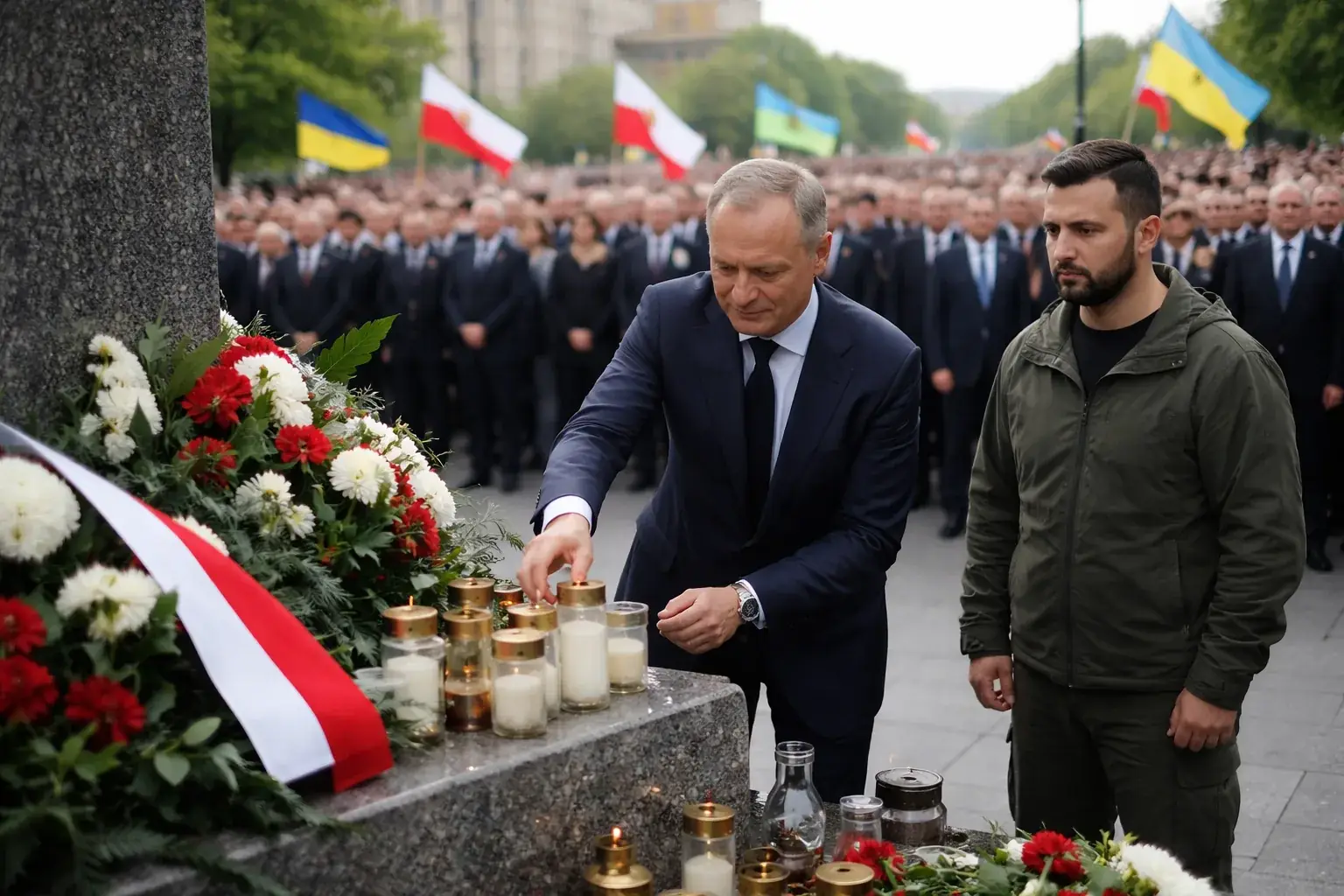
Polish Prime Minister Donald Tusk has formally committed to the establishment of a national memorial honoring the victims of the Volhynia massacre, a series of killings during World War Two that Warsaw describes as a genocide committed by Ukrainian nationalists. Speaking on the anniversary of the tragic events, Tusk emphasized that establishing the historical truth is a necessary step toward building a stable future between the two neighboring nations. The massacre, which occurred between 1943 and 1945 in Nazi-occupied territory that is now part of modern-day Ukraine, remains a deeply sensitive issue in bilateral relations. Warsaw estimates that approximately 100,000 ethnic Poles were killed by the Ukrainian Insurgent Army (UPA) during this period. The memorial is intended to serve as a permanent site of remembrance and a symbol of Poland's commitment to documenting the atrocities.
What's new in this update
The announcement comes at a time of heightened diplomatic friction between Warsaw and Kyiv regarding historical memory. Prime Minister Tusk used the occasion to issue a direct message to Ukrainian leadership, suggesting that a candid acknowledgment of the Volhynia events is a prerequisite for Ukraine’s eventual integration into the European Union. He argued that the truth is our duty and that the memory of the past should not be used as a servant of hatred. This follows a series of recent diplomatic incidents, including the decision by Polish President Karol Nawrocki to strip Ukrainian President Volodymyr Zelensky of Poland's highest state honor. That move was prompted by Zelensky's decision to name a Ukrainian military unit after the UPA, an organization many Poles associate with the wartime massacres rather than the struggle for independence.
Key details
While the historical dispute remains intense, both nations are making efforts to balance these grievances with the practical needs of their current security partnership. During his address on Saturday evening, President Zelensky noted that representatives from both the Polish and Ukrainian states participated in joint prayers to commemorate the victims of the Volhynia killings. Zelensky stated that Ukraine is actively working to honestly establish the facts regarding those who lost their lives. However, the internal political reaction in Ukraine has been sharp; three former Ukrainian presidents recently returned their White Eagle awards to Warsaw as a gesture of solidarity with Zelensky following his recent censure. These conflicting signals underscore the difficulty of reconciling historical narratives when both nations are currently fighting for survival against Russian forces.
Background and context
The Volhynia massacre has been a point of contention for decades, as the two nations view the Ukrainian Insurgent Army (UPA) through vastly different lenses. In Poland, the UPA is largely remembered for the ethnic cleansing of Poles in the Volhynia and Eastern Galicia regions during the chaotic final years of World War Two. In contrast, many Ukrainians revere the UPA as heroic freedom fighters who resisted both Nazi Germany and Soviet occupation in their quest for national sovereignty. This divergence in historical perspective has led to repeated diplomatic clashes, even as Poland has become one of Ukraine's most vocal and significant military supporters since the full-scale Russian invasion began in February 2022. Polish officials have repeatedly stressed that while they support Ukraine's defense, they cannot ignore the trauma of the 1943-45 genocide.
What to watch next
The development of the memorial and the ongoing dialogue regarding the UPA’s legacy will likely remain a central pillar of Polish-Ukrainian diplomacy in the coming months. Observers are watching to see if the Tusk administration will link further European Union accession support to specific historical concessions from Kyiv. President Zelensky has attempted to shift the focus toward the common threat of Russia, which he described as a mortal threat to our independence and every city within both nations. However, the domestic political pressure on both leaders remains significant. In Poland, the demand for historical justice for the Volhynia victims is a potent political force, while in Ukraine, the UPA remains a symbol of national identity during an existential war. The ability of these two neighbors to de-escalate this row will be critical for maintaining a unified front against Moscow.
Why it matters
Historical grievances between Poland and Ukraine threaten to strain the modern alliance essential for resisting Russian military aggression.
Read next
Follow this story through the topic hub, more world coverage, and the latest updates.
Weekly briefing
Get the week's key developments in one concise email.
Get a fast catch-up on the biggest stories, the context behind them, and the links worth your time.
Cadence
Weekly, for a quick catch-up
Coverage
AI, business, world, security, sports
Format
Clear takeaways and useful context
Request the briefing
Leave your email to open a prepared request and get on the list for the weekly briefing.
About the byline
World correspondent
Leila Haddad covers world affairs, diplomacy, and humanitarian crises, with a focus on how fast-moving international developments affect public policy, conflict response, and cross-border institutions.
Sources and methodology