Netanyahu Orders 'Crushing Blow' as Israel Escalates Hezbollah Campaign
Strikes expanded into eastern Lebanon's Bekaa Valley as the Prime Minister warned that the military intensity against the group will increase.
Primary source: BBC World News. Full source links, newsroom standards, and correction details are below.
Fast summary
Start here
- Prime Minister Benjamin Netanyahu announced Israel is increasing the intensity of its offensive to deal Hezbollah a crushing blow.
- The IDF expanded its campaign to the Bekaa Valley in eastern Lebanon, moving beyond previous operations concentrated in the south.
- More than 400 people in Lebanon and 10 Israeli soldiers have been killed since a 45-day ceasefire extension was recently agreed upon.
What happened
Prime Minister Benjamin Netanyahu announced on Monday that Israel will significantly increase the intensity of its military strikes against Hezbollah. Following the Prime Minister's video statement declaring that Israel is at war with the group, the Israel Defense Forces (IDF) launched a new wave of strikes. These operations targeted Hezbollah infrastructure in the Bekaa Valley in eastern Lebanon as well as other areas across the country.
What's new in this update
The latest operations represent a geographical expansion of the conflict. While Israeli strikes since the April 16 ceasefire agreement had been largely confined to southern Lebanon, the new strikes hit the Bekaa Valley near the Syrian border. Netanyahu characterized the move as a necessary escalation, stating that while Israel has already eliminated over 600 combatants, current conditions require a crushing blow to the organization.
Key details
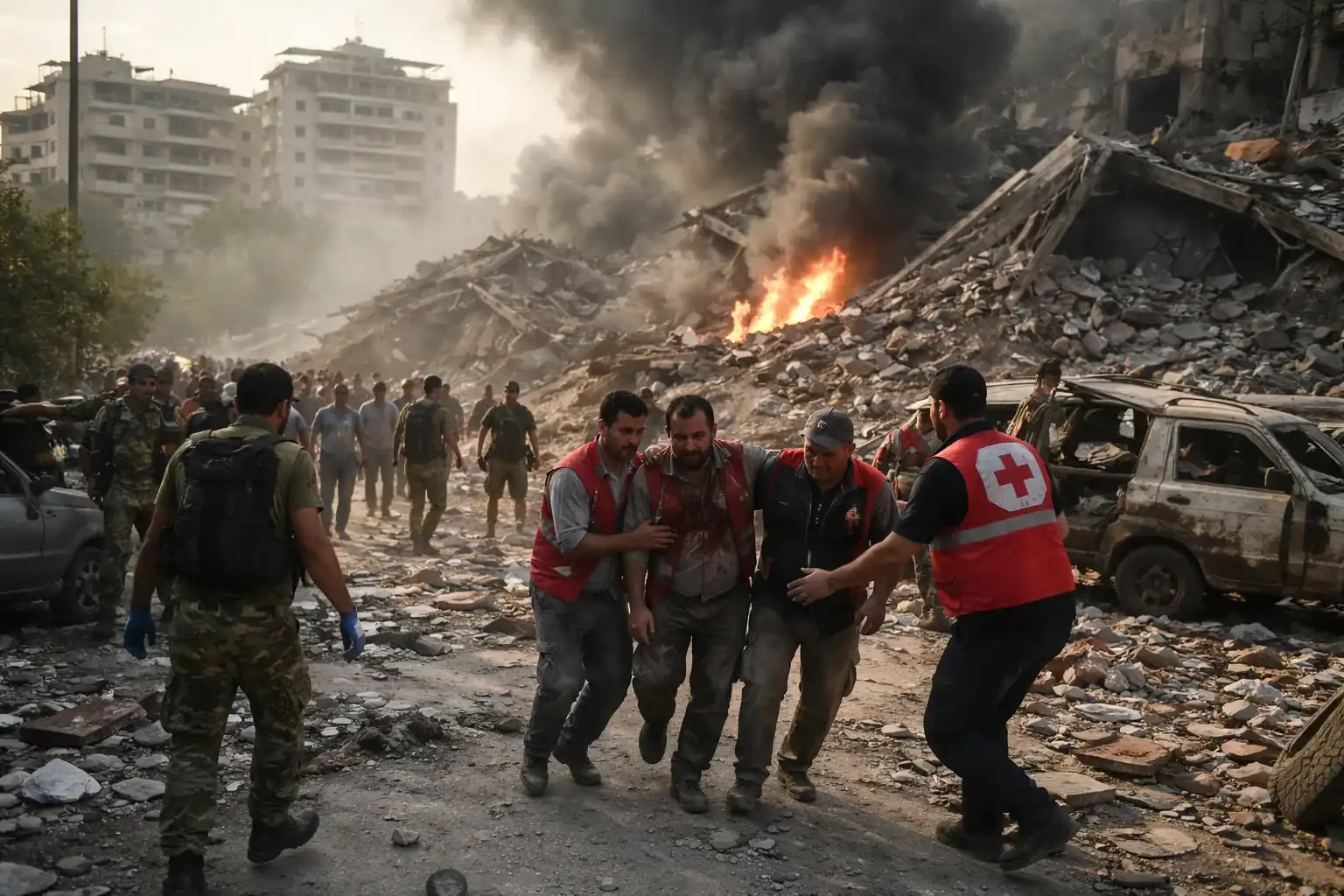
The human cost of the conflict continues to rise despite diplomatic efforts. Since the initial ceasefire was agreed upon, Israeli bombardment has killed more than 400 people in Lebanon, including numerous paramedics and emergency workers. On the Israeli side, 10 soldiers have been killed in the same period. Additionally, over one million Lebanese citizens remain displaced as the IDF issues near-daily evacuation orders for new areas in the south.
Background and context
Lebanon was pulled into the current conflict following a war launched by the U.S. and Israel against Iran on February 28. Hezbollah initiated rocket fire into Israel in retaliation for an Israeli strike that killed Iranian Supreme Leader Ayatollah Ali Khamenei. Since then, Israeli air campaigns and a ground invasion have resulted in more than 3,000 deaths in Lebanon, according to the Lebanese Ministry of Health.
What to watch next
Fears are mounting in Beirut that the intensified campaign could eventually target Lebanon's capital. Diplomatically, the Iranian government is insisting that any peace deal with the U.S. must include a complete ceasefire on all regional fronts. However, the Israeli government remains opposed to ending the fight against Hezbollah at this stage, while Lebanon's government maintains that a ceasefire is essential to its goal of disarming the group.
Why this matters
The shift toward intensified strikes and the expansion into the Bekaa Valley threatens to collapse a fragile ceasefire and escalate the conflict into a broader regional war.
Reader context
This story belongs to Northstar Herald's International Relations and Middle East Conflict coverage, with related entities including Israel, Hezbollah, Lebanon, Benjamin Netanyahu. The report is based on BBC World News source material.
Related coverage
Why it matters
The shift toward intensified strikes and the expansion into the Bekaa Valley threatens to collapse a fragile ceasefire and escalate the conflict into a broader regional war.
Read next
Follow this story through the topic hub, more world coverage, and the latest updates.
Weekly briefing
Get the week's key developments in one concise email.
Get a fast catch-up on the biggest stories, the context behind them, and the links worth your time.
Cadence
Weekly, for a quick catch-up
Coverage
AI, business, world, security, sports
Format
Clear takeaways and useful context
Request the briefing
Leave your email to open a prepared request and get on the list for the weekly briefing.
Author

The world desk follows geopolitics, humanitarian crises, diplomacy, and major international developments with an emphasis on fast updates and public-interest context.
Sources and methodology