Over 1.5 Million Foreign Pilgrims Arrive for Hajj Amid Escalated Regional Tensions
Despite recent conflict between Iran and Western allies, Saudi Arabia sees an increase in foreign pilgrims facing record heat and heightened security measures.
Primary source: BBC World News. Full source links and update notes are below.
Fast summary
Start here
- 1.51 million foreign pilgrims have arrived in Saudi Arabia, an increase of 11,000 over the previous year.
- Pilgrims are navigating the annual ritual during temperatures reaching 45°C (113°F) on the first day.
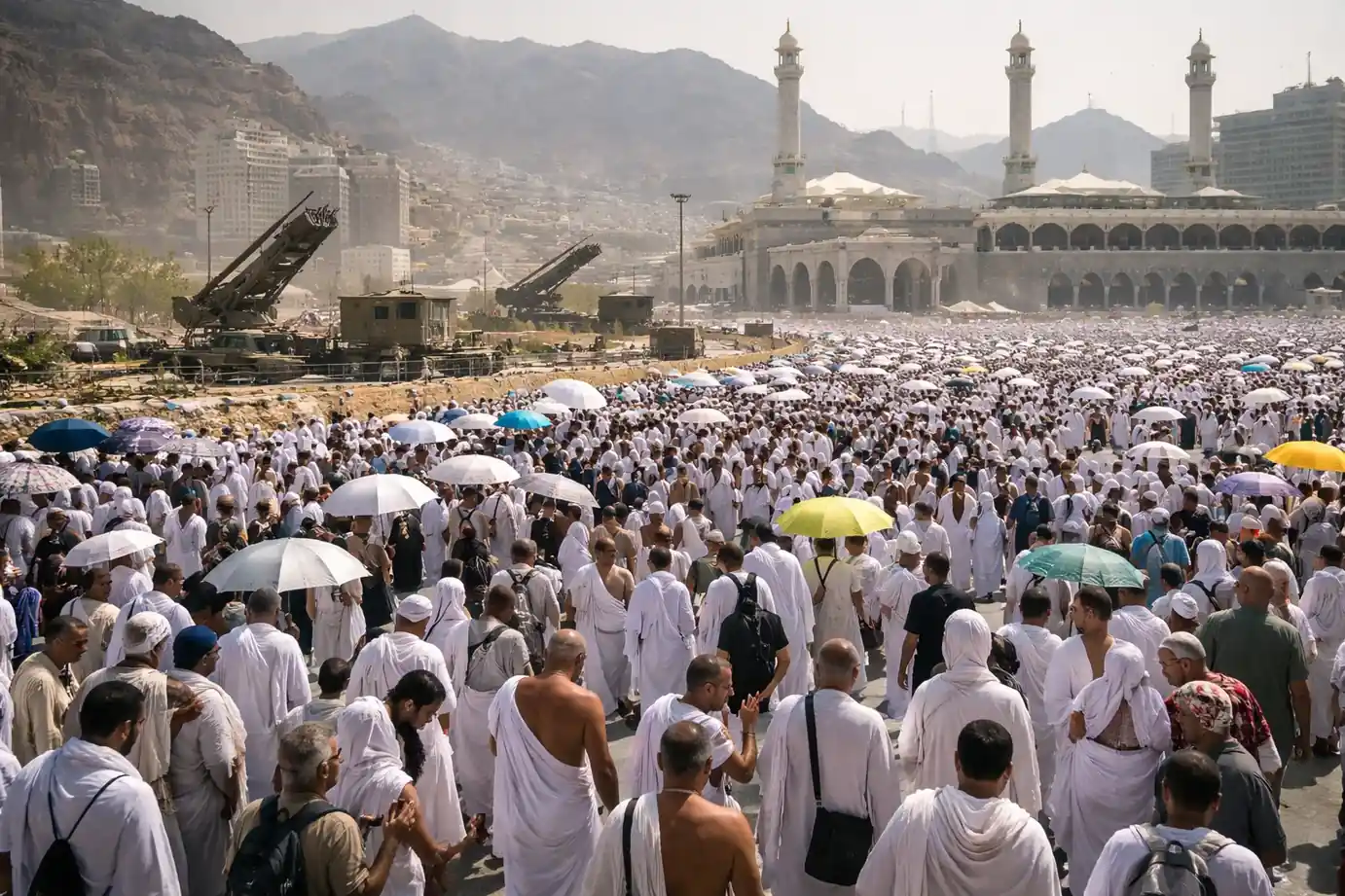
- Saudi authorities have deployed air defense batteries near Mecca following recent missile and drone exchanges in the region.
What happened
The annual Hajj pilgrimage has commenced in Saudi Arabia, with over 1.5 million foreign participants gathering in Mecca for rituals including the tawaf around the Kaaba. This year's event is taking place against a backdrop of regional instability and extreme summer heat, as pilgrims move from the Grand Mosque toward the tent city of Mina.
What's new in this update
Despite concerns that regional conflict between the US, Israel, and Iran would deter travel, participation numbers have exceeded last year's figures by 11,000. However, the security environment remains tense; the Saudi defense ministry recently released footage showing air defense batteries positioned on the outskirts of the holy city of Mecca to protect against potential aerial threats.
Key details
Pilgrims are contending with extreme weather, with temperatures hitting 45°C (113°F) on the first day of rituals. Logistics have also been impacted by the regional security situation, with some pilgrims reporting months of uncertainty and surging travel costs due to air traffic disruptions prior to the start of the event.
Background and context
The pilgrimage occurs following a volatile period where Iran launched retaliatory strikes against Saudi Arabia and its neighbors in response to US and Israeli air strikes. While a fragile ceasefire took effect last month, the memory of an March 8 attack that killed two civilians in al-Kharj remains a point of concern for regional authorities.
What to watch next
The pilgrimage will reach its climax as worshippers head to Mount Arafat, where the Prophet Muhammad is said to have delivered his final sermon. Authorities are particularly focused on preventing heat-related deaths, a recurring issue that has claimed lives in previous years during periods of extreme temperature.
Why this matters
The Hajj is a major global religious event that tests Saudi Arabia's logistical capacity and serves as a barometer for regional stability amidst ongoing geopolitical friction.
Reader context
This story belongs to Northstar Herald's International Relations and Middle East Conflict coverage, with related entities including Hajj, Saudi Arabia, Iran, Mecca. The report is based on BBC World News source material.
Related coverage
Why it matters
The Hajj is a major global religious event that tests Saudi Arabia's logistical capacity and serves as a barometer for regional stability amidst ongoing geopolitical friction.
Read next
Follow this story through the topic hub, more world coverage, and the latest updates.
Weekly briefing
Get the week's key developments in one concise email.
Get a fast catch-up on the biggest stories, the context behind them, and the links worth your time.
Cadence
Weekly, for a quick catch-up
Coverage
AI, business, world, security, sports
Format
Clear takeaways and useful context
Request the briefing
Leave your email to open a prepared request and get on the list for the weekly briefing.
Author
See who assembled this story and follow more of their work.
Sources and methodology