Israel Seizes Strategic Beaufort Castle as Ground Offensive Expands in Lebanon
The IDF has moved deeper into Lebanese territory, capturing a 900-year-old Crusader fortress and ordering new evacuations south of the Zahrani river.
Primary source: BBC World News. Full source links, newsroom standards, and correction details are below.
Fast summary
Start here
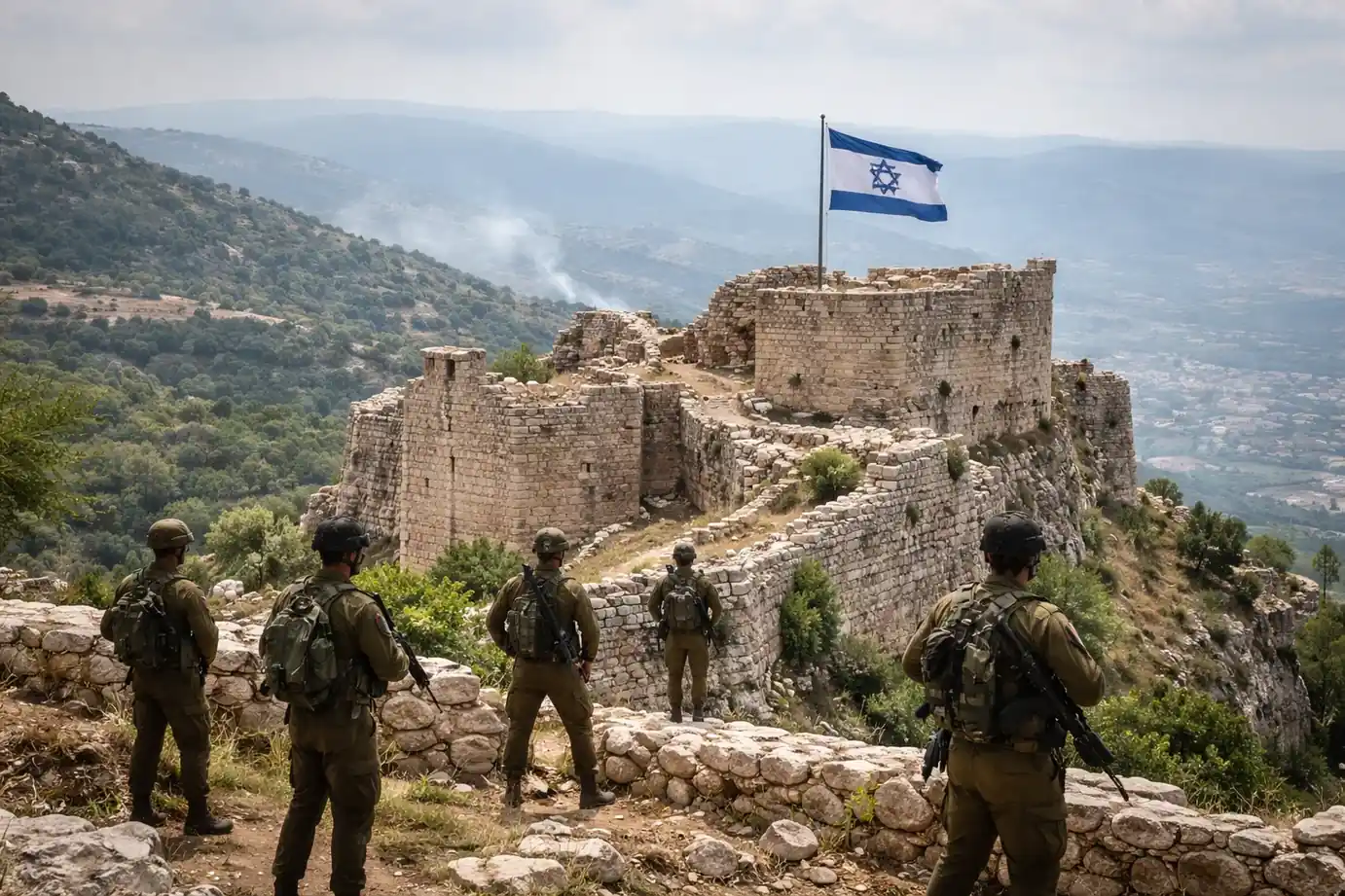
- The IDF confirmed the capture of Beaufort Castle, a strategic fortress on a high ridge overlooking the Litani river.
- Evacuation warnings have been expanded to include all areas south of the Zahrani river, signaling a deeper push into Lebanon.
- France has requested an urgent UN Security Council meeting, describing the escalating military operation as a major mistake.
What happened
The Israel Defense Forces (IDF) confirmed they have captured Beaufort Castle, a significant strategic site in southern Lebanon. This development coincides with a major expansion of ground operations against Hezbollah. Concurrently, the Israeli military issued new evacuation orders for all residents south of the Zahrani river, warning that presence near Hezbollah facilities endangers civilian lives.
What's new in this update
The seizure of the castle marks a clear advancement of Israeli ground forces deeper into Lebanese territory. Prime Minister Benjamin Netanyahu characterized the capture as a 'dramatic stage' in Israeli policy, stating the military is now operating aggressively on multiple fronts, including Syria, Gaza, and Lebanon. In response to the escalating ground war, France has requested a meeting of the United Nations Security Council to discuss the operations.
Key details
Beaufort Castle is a 900-year-old Crusader fortress commanding high-ground views above the Litani river. Defense Minister Israel Katz noted that the Golani Brigade, which previously captured the fort 44 years ago, returned to raise the Israeli flag over the site. On the humanitarian front, Lebanon's Health Ministry reported that 13 hospital staff were injured in an airstrike near Hiram hospital in Tyre, while the IDF confirmed the death of another soldier in the ongoing conflict.
Background and context
Israel has intensified its campaign in southern Lebanon following a surge in explosive drone and missile attacks from Hezbollah. The Litani river has historically served as a significant demarcation line in regional conflicts; however, recent IDF movements indicate a shift toward targets further north, such as the city of Nabatieh. France, which maintains deep historical ties to Lebanon, has condemned the 'increasingly deep occupation' of Lebanese territory.
What to watch next
Attention shifts to the United Nations Security Council as diplomatic pressure from France mounts. Observers are also monitoring whether the IDF will push toward Nabatieh or other northern hubs as the zone of operations continues to expand beyond the initial border areas. Meanwhile, Hezbollah's tactical response via drone strikes remains a primary concern for Israeli security officials and northern border communities.
Why this matters
The capture of Beaufort Castle is both a symbolic and tactical victory that indicates Israeli ground forces are operating well beyond the Litani river line.
Reader context
This story belongs to Northstar Herald's International Relations and Middle East Conflict coverage, with related entities including Israel Defense Forces, Hezbollah, Lebanon, Beaufort Castle. The report is based on BBC World News source material.
Related coverage
Why it matters
The capture of Beaufort Castle is both a symbolic and tactical victory that indicates Israeli ground forces are operating well beyond the Litani river line.
Read next
Follow this story through the topic hub, more world coverage, and the latest updates.
Weekly briefing
Get the week's key developments in one concise email.
Get a fast catch-up on the biggest stories, the context behind them, and the links worth your time.
Cadence
Weekly, for a quick catch-up
Coverage
AI, business, world, security, sports
Format
Clear takeaways and useful context
Request the briefing
Leave your email to open a prepared request and get on the list for the weekly briefing.
Author

The world desk follows geopolitics, humanitarian crises, diplomacy, and major international developments with an emphasis on fast updates and public-interest context.
Sources and methodology