Iran's New Supreme Leader Vows Revenge for Father's Killing
In a written statement, Mojtaba Khamenei called vengeance the "will of the nation" following the death of his father in a US-led air strike.

World correspondent
Reports on international affairs, diplomacy, and humanitarian developments with an emphasis on official statements, multilateral institutions, and regional context.
Editorial responsibility: Lead reviewer for geopolitics, international institutions, and crisis coverage
Primary source: BBC World News. Full source links and update notes are below.
Fast summary
Start here
- Mojtaba Khamenei's first public statement since his father's death explicitly calls for revenge against those he labeled disgraced killers.
- The US-Iran ceasefire has effectively collapsed following recent tanker attacks in the Gulf and subsequent retaliatory American strikes.
- President Donald Trump has warned that any assassination attempts against him would result in the decimation of Iranian territory.
What happened
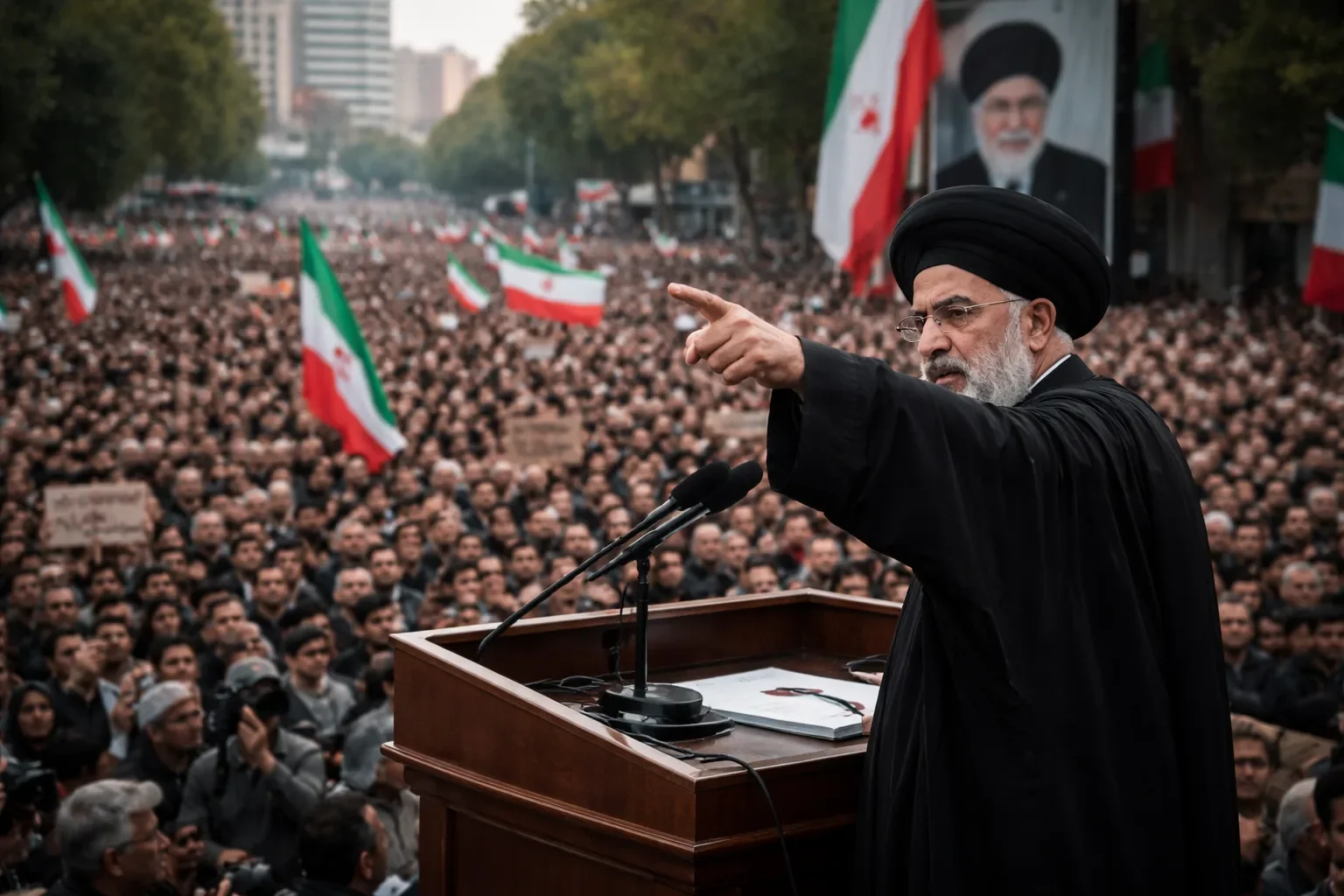
Mojtaba Khamenei, the newly elevated Iranian Supreme Leader, has issued a formal call for revenge following the assassination of his father, Ayatollah Ali Khamenei. In a written statement broadcast on state media during the late leader’s funeral ceremonies in Mashhad, Mojtaba characterized vengeance as a "will of the nation" that transcends individual leadership. This message represents his first direct communication with the Iranian public and the international community since his father was killed in a joint US-Israeli air strike on February 28. The timing of the announcement is particularly significant, occurring as the country observes a week of mourning that has seen massive crowds calling for the assassination of US President Donald Trump. This rhetorical shift suggests that the new regime in Tehran is doubling down on a confrontational stance despite recent attempts by international mediators to stabilize the region through a tenuous ceasefire.
What's new in this update
The statement from Mojtaba Khamenei serves as a definitive rejection of the de-escalation path that some diplomats had hoped for following the June ceasefire. While the new leader has not yet appeared in person—fueling rumors that he may have been injured or disfigured in the same strike that killed his father—his written words were described by state media as uncompromising. He asserted that the quest for revenge depends neither on his personal existence nor on that of other officials, implying that the Iranian state’s military and intelligence apparatus is already operationalizing these threats. This update coincides with a collapse in the ceasefire agreement after a series of commercial tanker attacks in the Gulf. President Trump has responded to these renewed threats by declaring the ceasefire over, warning that any plots against his life or US interests would lead to the total destruction of Iranian infrastructure.
Key details
The funeral of Ali Khamenei, which concluded in his home city of Mashhad, became a focal point for anti-American sentiment. Thousands of mourners carried placards and chanted slogans specifically targeting President Trump. Recent intelligence reports, allegedly shared by Israel with Washington, suggest that Tehran has actively devised plans to assassinate the US president in retaliation for the February strike. While Trump initially played down the novelty of these threats—stating he has been the primary target on Iran’s list for a significant period—the rhetoric from Tehran suggests a new level of state-sanctioned urgency. Furthermore, the maritime situation remains critical. Iran has asserted that the only safe route for oil tankers is through its own territorial waters, a claim that contradicts US-recommended shipping lanes in the Gulf of Oman. This dispute has already led to violent exchanges, including US strikes that killed 17 people and injured over 100 others.
Background and context
The current conflict traces back to February 28, when the United States and Israel launched coordinated attacks on Iranian soil, resulting in the death of Ali Khamenei. This initiated a brief but intense period of conventional warfare, which transitioned into a fragile ceasefire in June. The transition of power to Mojtaba Khamenei marks a significant shift in Iranian internal politics, as the new leader is perceived as more ideologically rigid than his predecessor. During the brief period of the June ceasefire, mediators from various nations attempted to facilitate talks to end the broader war, but these efforts were hampered by persistent mistrust and rogue actions within the Iranian military. The recent tanker attacks, which Iran blamed on internal rogue groups but the US attributed to state policy, served as the catalyst for the current breakdown in diplomacy and the end of the cooling-off period.
What to watch next
Observers are now looking for physical proof of Mojtaba Khamenei’s condition, as his continued absence from public view remains a source of intense speculation. Politically, the focus shifts to the Strait of Hormuz, a vital international shipping artery. US officials have demanded that Iran publicly declare the strait open and cease all attacks on commercial vessels as a prerequisite for any further negotiations. If Tehran continues to enforce its own safe routes while threatening US leadership, the likelihood of a major US military response increases. International mediators are still attempting to revive the ceasefire process, but the rhetoric of revenge from the Supreme Leader suggests that the hardline elements in Tehran currently hold the upper hand. The global oil market is also expected to react to the increased volatility in the Gulf, as shipping routes become increasingly contested and dangerous for international trade vessels.
Why it matters
This escalation signals the potential end of diplomatic efforts to revive the ceasefire and significantly increases the risk of direct military conflict.
Read next
Follow this story through the topic hub, more world coverage, and the latest updates.
Weekly briefing
Get the week's key developments in one concise email.
Get a fast catch-up on the biggest stories, the context behind them, and the links worth your time.
Cadence
Weekly, for a quick catch-up
Coverage
AI, business, world, security, sports
Format
Clear takeaways and useful context
Request the briefing
Leave your email to open a prepared request and get on the list for the weekly briefing.
About the byline
World correspondent
Leila Haddad covers world affairs, diplomacy, and humanitarian crises, with a focus on how fast-moving international developments affect public policy, conflict response, and cross-border institutions.
Sources and methodology