US Demands Iran Pledge to End Ship Attacks in Strait of Hormuz
Ahead of Oman talks, the US insists Iran publicly guarantee safe passage in the Strait of Hormuz after recent maritime strikes violated a ceasefire.

World correspondent
Reports on international affairs, diplomacy, and humanitarian developments with an emphasis on official statements, multilateral institutions, and regional context.
Editorial responsibility: Lead reviewer for geopolitics, international institutions, and crisis coverage
Primary source: BBC World News. Full source links and update notes are below.
Fast summary
Start here
- US officials are demanding a public statement from Tehran declaring the Strait of Hormuz open to commercial shipping.
- President Trump confirmed talks will proceed in Oman despite declaring the previous June ceasefire agreement officially over.
- Iran reportedly blamed a rogue internal sect for recent ship attacks while privately admitting to US advisors that the strikes were a mistake.
What happened
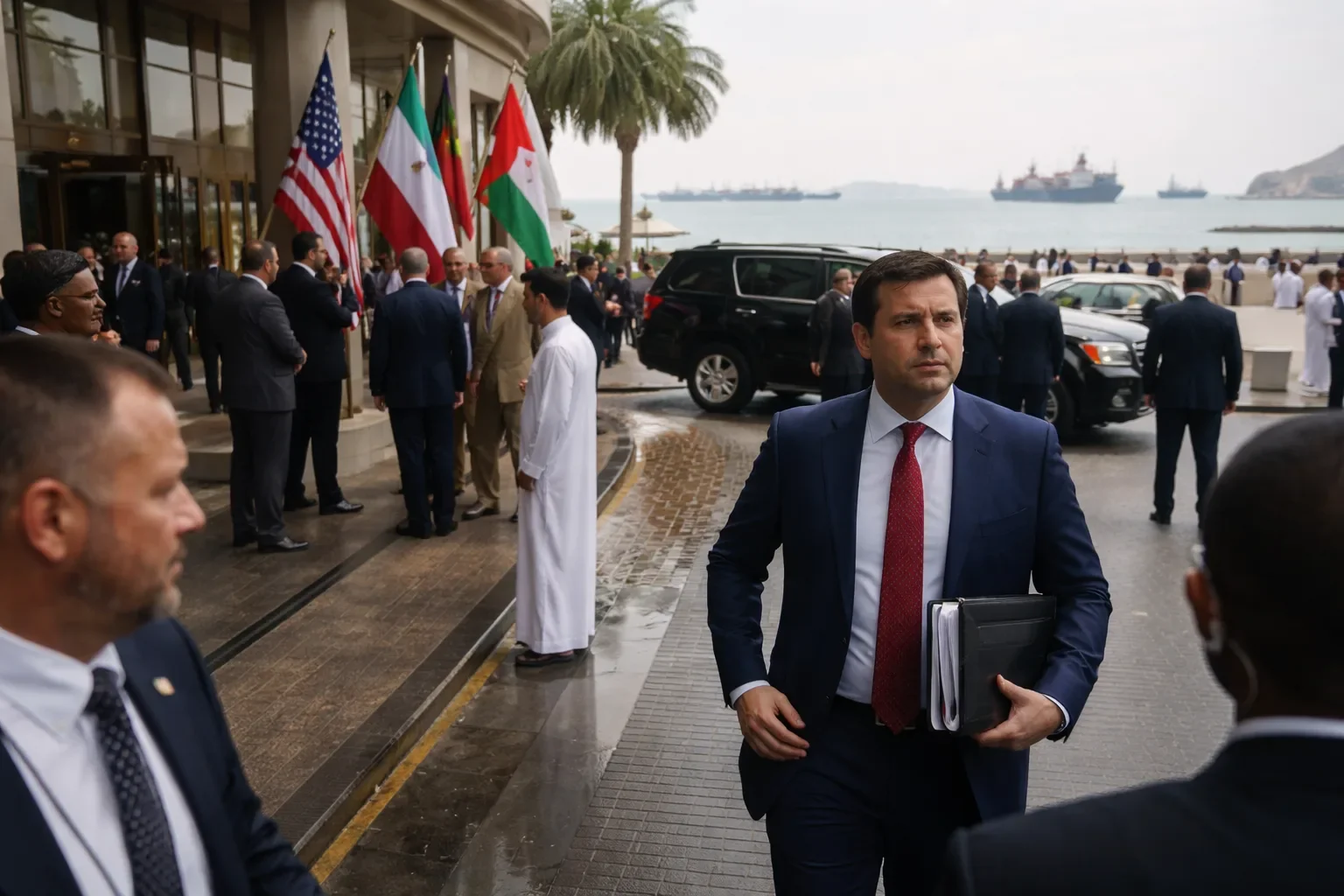
The United States government has issued a stern ultimatum to the Iranian leadership, demanding a public commitment to cease all military actions against commercial shipping within the strategic Strait of Hormuz. This development comes as both nations prepare for a critical round of negotiations scheduled for Saturday in Oman. US officials, speaking on condition of anonymity, indicated that Washington requires a formal declaration from Tehran stating that the waterway is open and that the safety of merchant vessels will be guaranteed moving forward. This push for transparency follows a series of recent attacks on commercial ships that have severely strained the fragile relations between the two countries. The US position is clear: without a public pledge from Iran to de-escalate maritime tensions, the diplomatic outcome for Tehran will be unfavorable. This demand serves as a prerequisite for meaningful progress in the ongoing discussions.
What's new in this update
In a significant disclosure, US media reports indicate that Iranian officials have privately acknowledged to President Donald Trump's advisors that recent attacks on commercial vessels were a mistake. According to senior officials, Tehran has attempted to distance its central leadership from the hostilities, attributing the strikes to an errant sect of hardliners intent on sabotaging the diplomatic process. Despite these private admissions, President Trump has taken a firm stance, posting on social media that while the United States has agreed to continue talks at Iran's request, the ceasefire established in June is officially over. This declaration follows the worst exchange of fire between the two nations since the interim deal was signed, highlighting the precarious nature of the current diplomatic environment as both sides head to the negotiating table in Oman to find a path toward stability.
Key details
The upcoming negotiations in Oman will be led by a high-level American delegation, including Vice President JD Vance and Secretary of State Marco Rubio. They will be joined by special envoy Steve Witkoff and Jared Kushner, both of whom have been heavily involved in Middle East diplomacy. On the other side of the Gulf, a delegation from Qatar has already traveled to Iran to facilitate talks aimed at defusing regional tensions and ensuring the security of navigation through the strait. Recent reports from Iran's Fars news agency suggest that a potential new deal could involve a joint management structure for the strait between Iran and Oman, which might include the implementation of service fees for transiting vessels. This proposed administrative shift would replace the current volatile status quo where Iran has attempted to assert unilateral sovereignty through its Persian Gulf Strait Authority, which it claimed would manage safe passage permits.
Background and context
The current crisis is rooted in the breakdown of a June ceasefire agreement that was intended to provide safe passage for commercial ships. Under that deal, the US and Iran had reached a 14-point memorandum of understanding aimed at extending a cessation of hostilities and ending conflict on all fronts. However, the situation deteriorated rapidly this week when three ships were struck while navigating a US-recommended route through Omani waters. Iran has consistently argued that the only truly safe passage is through its own territorial waters, a claim that the US and its allies view as an attempt to control one of the world's most vital maritime corridors. The Strait of Hormuz is a narrow passage through which approximately one-fifth of the world's oil consumption passes, making any disruption a matter of global economic security. The recent strikes mark a significant escalation in a region already on edge from months of intermittent maritime conflict.
What to watch next
All eyes are now on the scheduled talks in Oman this Saturday. The immediate focus will be on whether Iran complies with the US demand for a public statement regarding the openness of the Strait of Hormuz and a pledge to end hostilities. Observers are also monitoring the internal dynamics within the Iranian government to see if the leadership can effectively restrain the hardline elements it blames for the recent attacks. If the negotiations fail to produce a concrete guarantee of maritime safety, there is a high probability of further military escalation or increased naval presence in the Gulf region. Furthermore, the involvement of Qatar as a mediator and the proposed joint administration of the strait with Oman represent potential paths toward a more stable long-term framework. However, the potential implementation of service fees or other Iranian-imposed controls remains a contentious point that could hinder a final agreement between the negotiating parties.
Why it matters
The Strait of Hormuz is a critical global chokepoint for oil and trade; renewed conflict there threatens global energy prices and regional stability.
Read next
Follow this story through the topic hub, more world coverage, and the latest updates.
Weekly briefing
Get the week's key developments in one concise email.
Get a fast catch-up on the biggest stories, the context behind them, and the links worth your time.
Cadence
Weekly, for a quick catch-up
Coverage
AI, business, world, security, sports
Format
Clear takeaways and useful context
Request the briefing
Leave your email to open a prepared request and get on the list for the weekly briefing.
About the byline
World correspondent
Leila Haddad covers world affairs, diplomacy, and humanitarian crises, with a focus on how fast-moving international developments affect public policy, conflict response, and cross-border institutions.
Sources and methodology