Former Qatar Emir Sheikh Hamad bin Khalifa Al Thani Dies at 74
The former leader, who transformed Qatar into a global energy powerhouse and launched Al Jazeera, passed away on Sunday following a historic reign.

World correspondent
Reports on international affairs, diplomacy, and humanitarian developments with an emphasis on official statements, multilateral institutions, and regional context.
Editorial responsibility: Lead reviewer for geopolitics, international institutions, and crisis coverage
Primary source: BBC World News. Full source links and update notes are below.
Fast summary
Start here
- Sheikh Hamad bin Khalifa Al Thani, who ruled Qatar from 1995 to 2013, has passed away at age 74.
- He is credited with turning Qatar into the world's leading exporter of liquefied natural gas and a global investment force.
- International leaders, including King Charles III and PM Narendra Modi, have paid tribute to his vision and diplomatic legacy.
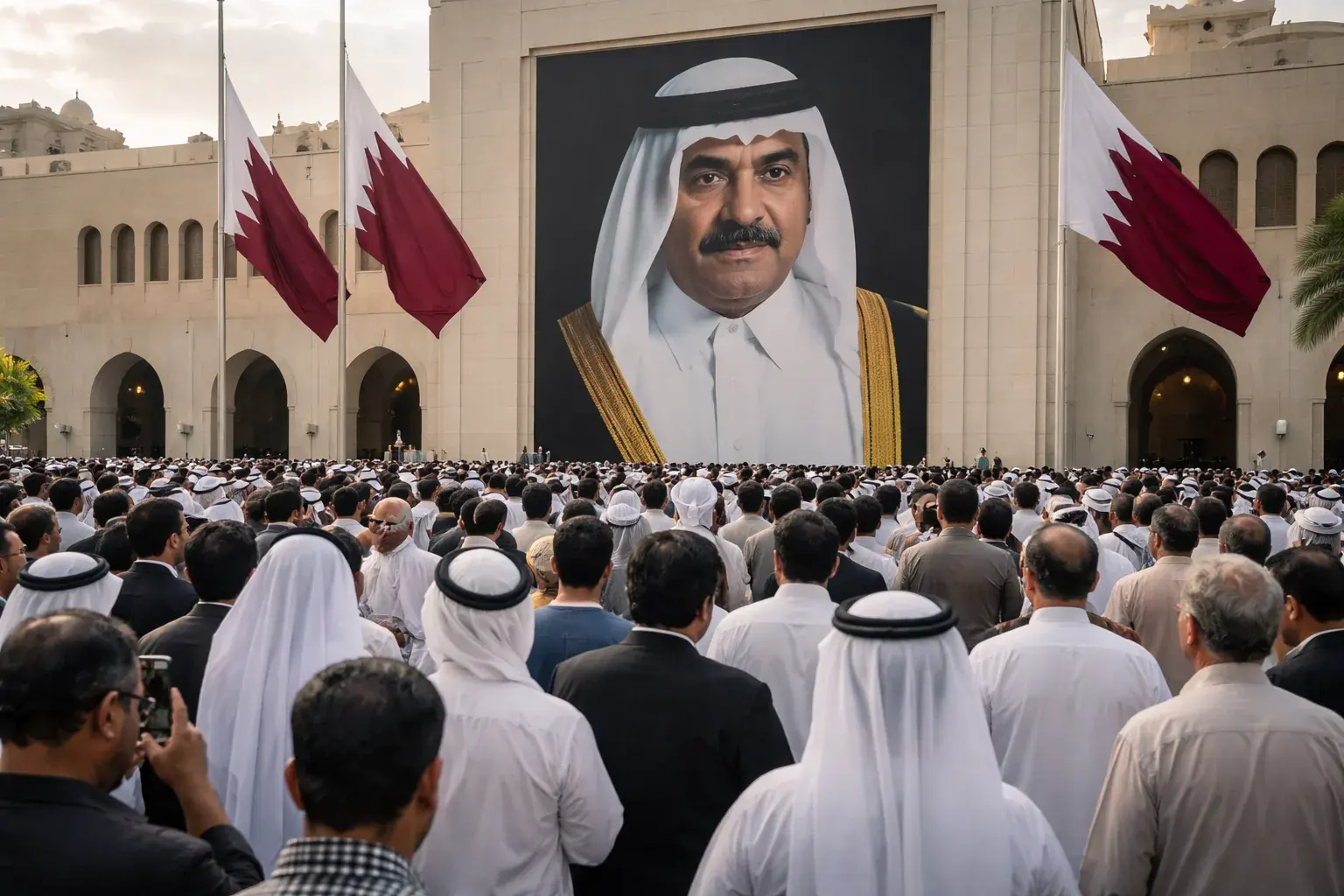
What happened
Sheikh Hamad bin Khalifa Al Thani, the former Emir of Qatar known as the Father Emir, has died at the age of 74. The announcement was made by the Bureau of the Emir on Sunday, July 12, 2026, marking a somber moment for the Gulf nation he spent decades shaping. Government officials confirmed that the country will enter a period of public mourning to honor the late leader, who was instrumental in the state's rapid modernization. Flags across Doha and other major cities are being lowered to half-mast, and public institutions will remain closed as a sign of respect. Funeral prayers are scheduled for Sunday evening, drawing dignitaries and citizens alike to commemorate a figure who redefined Qatar's place on the world stage.
What's new in this update
The news of Sheikh Hamad’s passing has triggered a wave of high-level diplomatic tributes from across the globe. King Charles III and Queen Camilla expressed their condolences, highlighting the Sheikh’s long years of distinguished service and his commitment to the welfare of his people. In Asia, Indian Prime Minister Narendra Modi hailed the late Emir as a visionary leader and a true friend, leading India to declare a formal day of national mourning. This international response underscores the deep ties Sheikh Hamad cultivated during his reign, moving Qatar from a relatively isolated protectorate legacy into a central player in global diplomacy and finance. The cancellation of entertainment events in India further illustrates the significant regional impact of his leadership and personal relationships.
Key details
During his 18-year reign, Sheikh Hamad leveraged Qatar’s massive natural gas reserves to build an economic powerhouse. After taking power in 1995, he pivoted the nation's strategy toward liquefied natural gas (LNG), establishing international partnerships that made Qatar one of the wealthiest countries per capita. Beyond energy, he founded the Qatar Investment Authority (QIA), which acquired high-profile global assets including Harrods department store and the Paris Saint-Germain football club. Perhaps his most enduring cultural legacy was the 1996 launch of Al Jazeera, which became a dominant force in international broadcasting. His era was defined by this soft power strategy, using media, sports, and finance to ensure that Qatar’s influence far exceeded its small geographical size and population through strategic global investments.
Background and context
Sheikh Hamad’s rise to power began with a bloodless coup in June 1995, while his father, Sheikh Khalifa, was traveling abroad. At the time, the country faced dwindling oil reserves and financial uncertainty. Under his guidance, Qatar transformed from a British protectorate into a modern sovereign state with a monarchical tradition dating back to 1851. His tenure was not without significant friction, particularly regarding the 2022 FIFA World Cup bid. While Qatar was ultimately cleared of corruption allegations, the lead-up to the tournament was marred by intense international scrutiny over human rights and the treatment of migrant workers. Reports suggested thousands of workers died during the construction boom, though the Qatari government maintained that many deaths were not directly linked to World Cup projects, sparking ongoing debates over labor conditions.
What to watch next
Following the official mourning period, the focus will shift to how his son, the current Emir Sheikh Tamim bin Hamad Al Thani, continues the legacy of the Father Emir. Sheikh Hamad’s voluntary abdication in 2013 was a rare move in the region, designed to ensure a smooth transition of power to a younger generation. Observers will be looking for signs of continued economic diversification as Qatar navigates a global energy transition away from fossil fuels. Furthermore, the diplomatic community will watch for any shifts in Qatar’s role as a mediator in Middle East conflicts, a position Sheikh Hamad championed during his time in power. The coming days will see a convergence of world leaders in Doha, potentially serving as a forum for informal diplomatic discussions alongside the state funeral.
Why it matters
His leadership fundamentally altered the economic and geopolitical map of the Middle East, turning a small peninsula into a critical global energy hub.
Read next
Follow this story through the topic hub, more world coverage, and the latest updates.
Weekly briefing
Get the week's key developments in one concise email.
Get a fast catch-up on the biggest stories, the context behind them, and the links worth your time.
Cadence
Weekly, for a quick catch-up
Coverage
AI, business, world, security, sports
Format
Clear takeaways and useful context
Request the briefing
Leave your email to open a prepared request and get on the list for the weekly briefing.
About the byline
World correspondent
Leila Haddad covers world affairs, diplomacy, and humanitarian crises, with a focus on how fast-moving international developments affect public policy, conflict response, and cross-border institutions.
Sources and methodology