Former Emir of Qatar Sheikh Hamad bin Khalifa Al Thani Dies at 74
The 'Father Emir' who turned Qatar into a global energy superpower and media hub has passed away, sparking international tributes.

World correspondent
Reports on international affairs, diplomacy, and humanitarian developments with an emphasis on official statements, multilateral institutions, and regional context.
Editorial responsibility: Lead reviewer for geopolitics, international institutions, and crisis coverage
Primary source: BBC World News. Full source links and update notes are below.
Fast summary
Start here
- Sheikh Hamad bin Khalifa Al Thani died at age 74, prompting a period of national mourning and the closure of public institutions in Qatar.
- He is credited with transforming Qatar from a struggling oil state into a top exporter of liquefied natural gas during his 18-year reign.
- His legacy includes the founding of Al Jazeera and securing the 2022 World Cup bid, though his tenure faced human rights scrutiny.
What happened
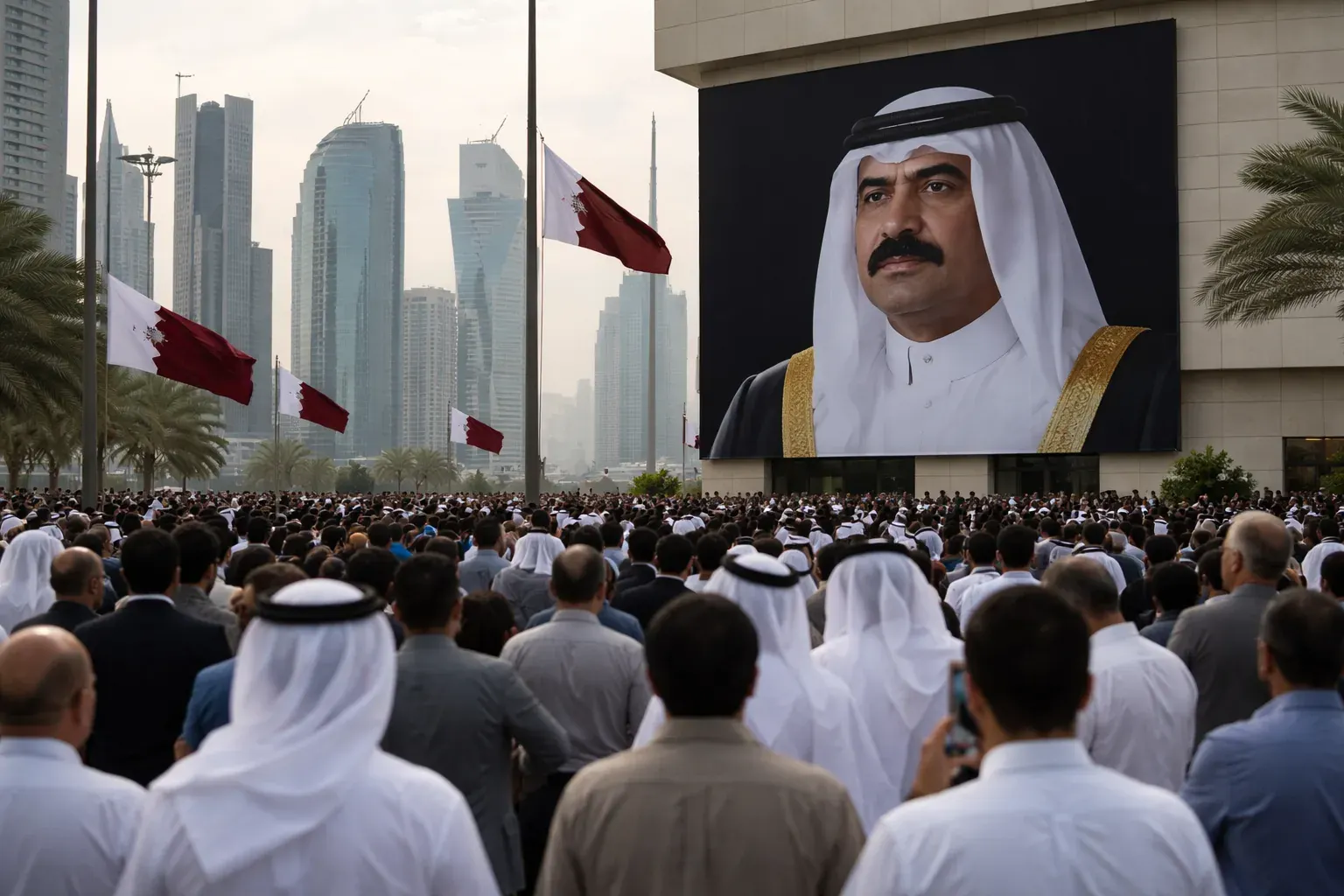
The government of Qatar officially announced the death of former Emir Sheikh Hamad bin Khalifa Al Thani on Sunday at the age of 74. A statement released by the Bureau of the Emir expressed deep mourning for the leader often referred to as the 'Father Emir,' calling his passing a great loss to the nation. Sheikh Hamad, who led the country from 1995 until his abdication in 2013, was the primary figure responsible for elevating Qatar from a minor regional player to one of the world's wealthiest and most influential nations. Following the announcement, the state has entered an official period of mourning, which includes flying flags at half-mast and the temporary closure of government offices and public institutions as a mark of respect for his lifelong service.
What's new in this update
International reactions have poured in from across the globe, reflecting the significant diplomatic footprint Sheikh Hamad established during his reign. King Charles III and Queen Camilla of the United Kingdom were among the first to pay tribute, praising his many years of distinguished service and his commitment to the welfare of the Qatari people. In India, Prime Minister Narendra Modi declared a day of national mourning, cancelling all public entertainment events to honor the former leader. Modi recalled his meeting with Sheikh Hamad as recently as February 2024, describing him as a visionary leader and a true friend of India. These high-level acknowledgments underscore the late Emir's success in building strategic partnerships that spanned the continents of Europe and Asia.
Key details
Under Sheikh Hamad's leadership, Qatar utilized its massive North Field gas reserves to become a leading producer and exporter of liquefied natural gas (LNG). This economic pivot was supported by massive international investments and the creation of the Qatar Investment Authority, which acquired high-profile global assets such as Harrods and the Paris Saint-Germain football club. Beyond finance, Sheikh Hamad was a pioneer in media, founding the Al Jazeera network in 1996, which transformed how news was reported and consumed across the Middle East. Perhaps his most famous—and controversial—achievement was securing the rights to host the 2022 FIFA World Cup, a move that placed Qatar at the center of the global sporting world but also drew intense focus on the nation's domestic policies.
Background and context
Sheikh Hamad’s ascent to the throne began in June 1995 when he seized power from his father, Sheikh Khalifa, in a bloodless coup while his father was abroad. At the time, Qatar was struggling financially as its oil reserves began to dwindle. Sheikh Hamad recognized that the future lay in natural gas, and he moved quickly to modernize the state's infrastructure and legal framework to attract foreign investment. While his era brought unprecedented wealth, it was also marked by persistent criticism from human rights organizations. The construction of World Cup stadiums relied on a massive influx of foreign laborers, and reports of worker fatalities and poor living conditions became a central point of international debate. Despite these pressures, Sheikh Hamad maintained a stable domestic environment until he voluntarily handed power to his son, Tamim, in 2013.
What to watch next
The passing of the Father Emir is unlikely to cause immediate political instability, as the transition of power to his son, Emir Tamim bin Hamad Al Thani, was successfully managed over a decade ago. However, the world will be watching to see how Qatar continues to evolve its human rights reforms and labor laws in the post-World Cup era. The mourning period will see a gathering of regional and world leaders in Doha, which may serve as a forum for informal diplomatic discussions regarding current Middle East conflicts. Economically, Qatar remains committed to expanding its LNG production capacity, a strategy rooted in Sheikh Hamad's original vision. The endurance of his media and financial institutions will continue to serve as the benchmark for his legacy in the decades to come.
Why it matters
Sheikh Hamad was the architect of modern Qatar, shifting the geopolitical weight of the Gulf through massive energy wealth and global media influence.
Read next
Follow this story through the topic hub, more world coverage, and the latest updates.
Weekly briefing
Get the week's key developments in one concise email.
Get a fast catch-up on the biggest stories, the context behind them, and the links worth your time.
Cadence
Weekly, for a quick catch-up
Coverage
AI, business, world, security, sports
Format
Clear takeaways and useful context
Request the briefing
Leave your email to open a prepared request and get on the list for the weekly briefing.
About the byline
World correspondent
Leila Haddad covers world affairs, diplomacy, and humanitarian crises, with a focus on how fast-moving international developments affect public policy, conflict response, and cross-border institutions.
Sources and methodology