US Congressman Ro Khanna Detained by Armed Settlers in West Bank
Representative Ro Khanna reports being surrounded by armed settlers while visiting a destroyed West Bank village, leading to a 90-minute standoff.

World correspondent
Reports on international affairs, diplomacy, and humanitarian developments with an emphasis on official statements, multilateral institutions, and regional context.
Editorial responsibility: Lead reviewer for geopolitics, international institutions, and crisis coverage
Primary source: BBC World News. Full source links and update notes are below.
Fast summary
Start here
- US Representative Ro Khanna was detained for 90 minutes by armed Israeli settlers while visiting the ruins of Khirbet Zanuta in the West Bank.
- Khanna claims that responding IDF soldiers sided with the settlers and maintained the detention until Israeli police officers intervened.
- The incident occurred during a fact-finding mission to assess the impact of occupation and settlement expansion on Palestinian communities.
What happened
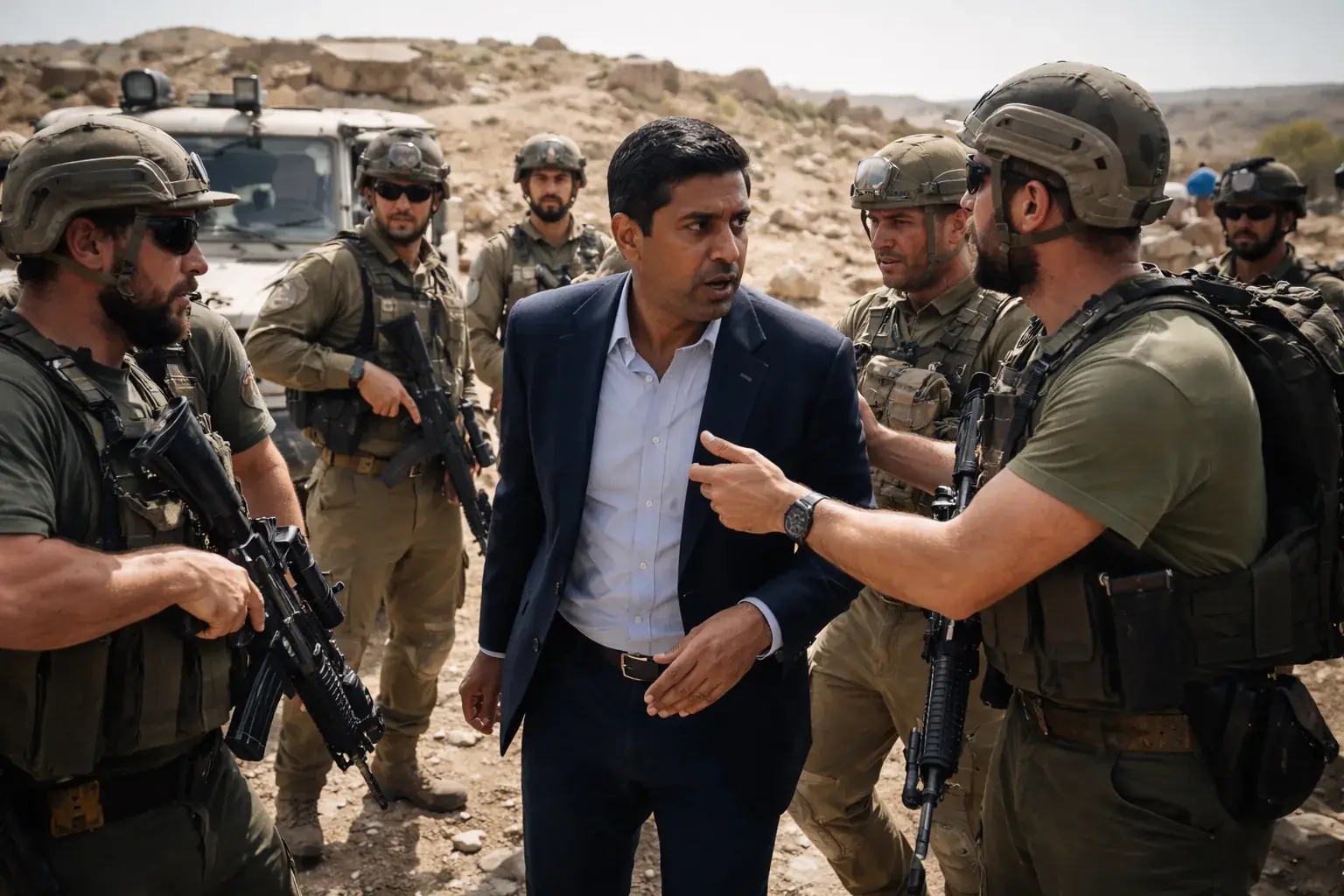
During a fact-finding visit to the occupied West Bank, US Representative Ro Khanna and his team were intercepted and detained by a group of armed Israeli settlers. The incident took place near the ruins of Khirbet Zanuta, a village that Khanna stated had been previously destroyed by settlers. According to the congressman, the settlers were armed with American-made M4 rifles and used their vehicles to block the road, preventing the US delegation from leaving the area. The confrontation lasted approximately 90 minutes, creating a high-stakes standoff between a sitting member of the United States Congress and local Israeli civilians. Khanna, a prominent Democrat from California, described the settlers as hoodlums who intentionally obstructed his group's movement while he was attempting to document the physical impact of the ongoing occupation and the destruction of local infrastructure, including a village school.
What's new in this update
Khanna’s public account of the incident highlights a troubling dynamic between the Israel Defense Forces (IDF) and the settlers. He alleged that when the military arrived on the scene, they did not immediately disperse the armed group or facilitate his passage. Instead, Khanna claims the IDF soldiers effectively sided with the settlers, prolonging the detention of the American diplomatic party. This version of events contrasts with the official statement released by the IDF, which claimed that troops and police officers acted swiftly upon receiving reports of a road blockade. The military stated that their arrival led to the dispersal of the Israeli civilians and allowed the congressman’s vehicles to proceed. However, Khanna maintains that it was only after an urgent appeal to the US Embassy in Jerusalem and subsequent police intervention that his team was finally allowed to leave the site.
Key details
The location of the detention, Khirbet Zanuta, has become a symbol of the friction in the region. Khanna noted that the village's school and primary infrastructure had been decimated, prompting his visit to investigate the humanitarian conditions. During the 90-minute ordeal, members of Khanna’s staff remained in contact with American diplomatic officials, seeking urgent assistance to resolve the blockade. The presence of high-powered, American-manufactured weaponry among the settlers was a specific point of contention for the congressman, who emphasized the irony of US-made equipment being used to detain a US official. This incident occurs at a sensitive political moment for Khanna, who has been increasingly vocal about US foreign policy in the Middle East and is currently being discussed as a potential candidate for the 2028 presidential race, making his firsthand experience with West Bank tensions particularly relevant to his political platform.
Background and context
The West Bank has seen a significant surge in settlement activity and settler-led violence following the start of the Israel-Gaza war. Currently, approximately 160 settlements house some 700,000 Jewish residents across the West Bank and East Jerusalem. These territories are viewed by Palestinians and much of the international community as the necessary foundation for a future independent state, alongside the Gaza Strip. However, under international law, these settlements are considered illegal, a stance maintained by the United Nations and numerous global human rights organizations. The presence of an estimated 3.3 million Palestinians living in close proximity to expanding settlements has created a volatile environment where clashes are frequent. These incidents often involve local military units tasked with security in the occupied regions, leading to frequent accusations that the military fails to protect Palestinian civilians from settler aggression.
What to watch next
The fallout from this detention is expected to resonate within the halls of Congress and may lead to formal inquiries regarding the safety of US officials traveling in the region. As the Biden administration continues to navigate its complex relationship with the Israeli government, incidents involving the harassment of American lawmakers could shift the internal debate over unconditional military aid and diplomatic support. Observers will be looking for a formal response from the US State Department and whether this event triggers more stringent oversight of how American-made weapons are distributed and used in the West Bank. Furthermore, Khanna’s outspoken criticism of the IDF’s conduct during this specific encounter may influence the broader Democratic party platform regarding Palestinian rights and settlement expansion as the 2028 election cycle approaches, potentially forcing a more critical look at the status of US-Israel security cooperation.
Why it matters
This incident underscores the escalating tensions between US lawmakers and Israeli security forces, potentially complicating diplomatic relations as settlement expansion continues.
Read next
Follow this story through the topic hub, more world coverage, and the latest updates.
Weekly briefing
Get the week's key developments in one concise email.
Get a fast catch-up on the biggest stories, the context behind them, and the links worth your time.
Cadence
Weekly, for a quick catch-up
Coverage
AI, business, world, security, sports
Format
Clear takeaways and useful context
Request the briefing
Leave your email to open a prepared request and get on the list for the weekly briefing.
About the byline
World correspondent
Leila Haddad covers world affairs, diplomacy, and humanitarian crises, with a focus on how fast-moving international developments affect public policy, conflict response, and cross-border institutions.
Sources and methodology