Beirut Spared in Partial Truce as Israeli Strikes Target Southern Lebanon
A new agreement brokered by U.S. President Donald Trump has halted strikes on Beirut, though combat continues in southern districts where a hospital was recently damaged.
Primary source: BBC World News. Full source links and update notes are below.
Fast summary
Start here
- A partial ceasefire agreement involves Israel halting strikes on Beirut while Hezbollah ceases attacks on Israel.
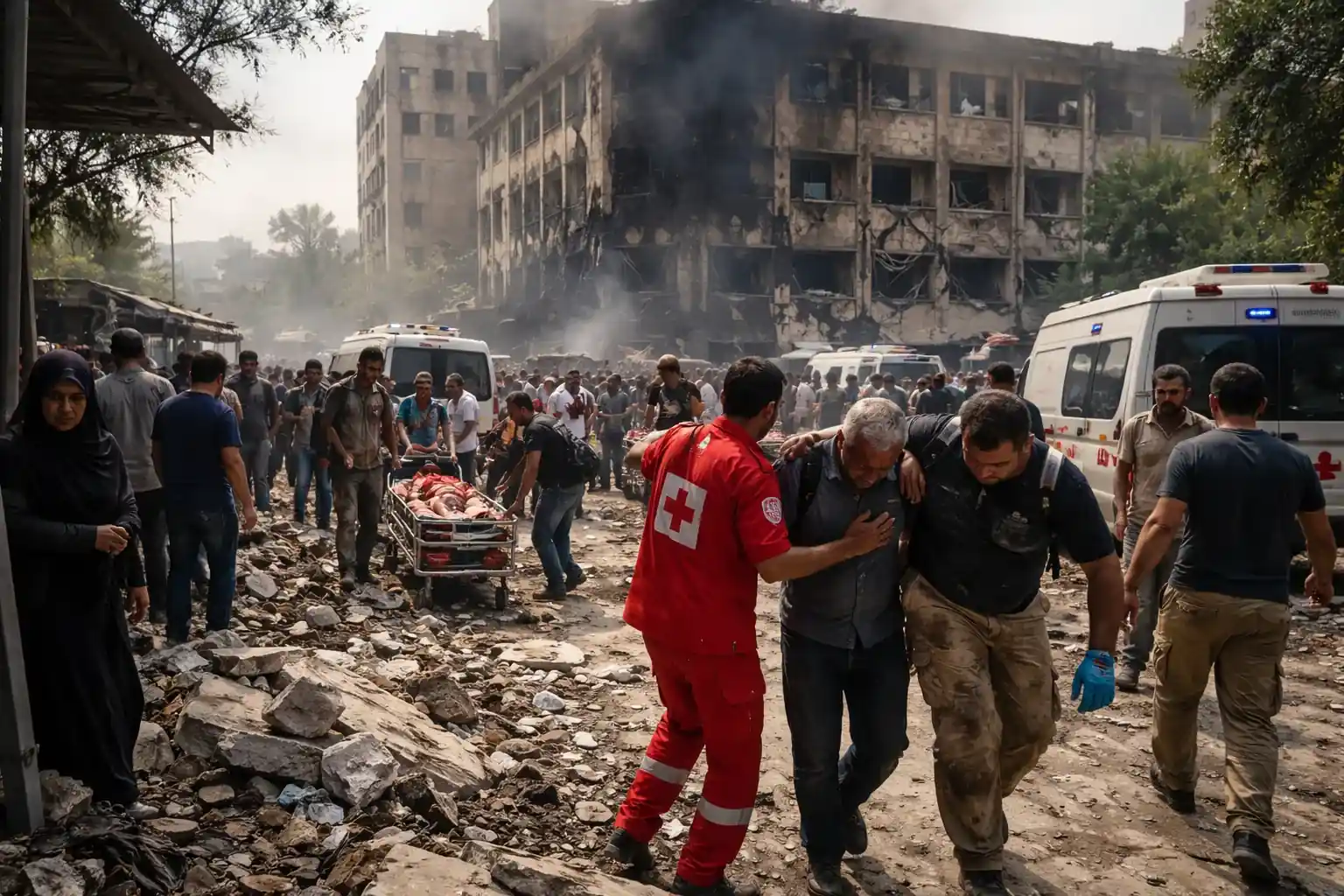
- An Israeli airstrike near Jabal Amel hospital in Tyre killed four people and injured 127 others, including medical staff.
- The Israeli military claims it is targeting Hezbollah infrastructure and that the hospital itself was not the intended target.
What happened
Israel maintained military operations in southern Lebanon on Tuesday, even as a partial ceasefire agreement appeared to prevent further strikes on the capital city of Beirut. The agreement, which was announced by U.S. President Donald Trump late Monday, established a condition where Israeli forces would avoid bombing the capital in exchange for Hezbollah halting attacks on Israel. While Beirut remained quiet, the Lebanese health ministry reported continued casualties and infrastructure damage in southern regions like Tyre and Nabatieh.
What's new in this update
The localized nature of the truce has been tested by immediate military friction. Following the announcement, the Israeli military reported intercepting two projectiles fired from Lebanon, while Hezbollah claimed it had engaged Israeli forces within southern Lebanese territory. Additionally, new details emerged regarding an Israeli strike near Jabal Amel hospital in Tyre on Monday afternoon, which resulted in four deaths and left 127 people injured, including 39 hospital staff members.
Key details
The damage at Jabal Amel hospital has left the facility in a state of 'utter devastation,' with collapsed ceilings and damaged medical equipment, including incubators in the maternity ward. Dr. Wael Mroueh, the hospital's director, denied the presence of any military targets in the immediate vicinity. In response, the Israel Defense Forces (IDF) stated they were striking 'Hezbollah terrorist infrastructure' and acknowledged the hospital was damaged but emphasized it was not the specific target of the operation.
Background and context
The conflict has exacted a heavy toll on Lebanon's healthcare infrastructure. According to the Lebanese health ministry, 128 paramedics and healthcare workers have been killed in 159 separate attacks on ambulances and medical facilities over the last three months. The recent diplomatic movement comes after Iran suggested that continued Israeli military action in Lebanon was jeopardizing broader negotiations intended to end the war with the United States.
What to watch next
The primary focus remains on whether the 'Beirut-for-Israel' non-aggression pact can be sustained. Observers are also watching for a response from the incoming Trump administration and whether this partial truce can serve as a foundation for a comprehensive ceasefire. Meanwhile, civil defense agencies in southern Lebanon continue to report strikes on their facilities, such as the recent damage to a center in Kfar Sir, indicating that the conflict remains intense outside the capital.
Why it matters
The partial truce represents a fragile diplomatic breakthrough that could protect major civilian centers, though persistent violence in the south highlights the difficulty of achieving a total cessation of hostilities.
Read next
Follow this story through the topic hub, more world coverage, and the latest updates.
Weekly briefing
Get the week's key developments in one concise email.
Get a fast catch-up on the biggest stories, the context behind them, and the links worth your time.
Cadence
Weekly, for a quick catch-up
Coverage
AI, business, world, security, sports
Format
Clear takeaways and useful context
Request the briefing
Leave your email to open a prepared request and get on the list for the weekly briefing.
Author
See who assembled this story and follow more of their work.
Sources and methodology