British Couple Return to Village at Heart of Deadly Spanish Wildfire
As the death toll rises to 13, evacuees returning to Bédar criticize the lack of official emergency alerts during the devastating Almería province blaze.

World correspondent
Reports on international affairs, diplomacy, and humanitarian developments with an emphasis on official statements, multilateral institutions, and regional context.
Editorial responsibility: Lead reviewer for geopolitics, international institutions, and crisis coverage
Primary source: BBC World News. Full source links and update notes are below.
Fast summary
Start here
- At least 13 people have died in Spain's Almería province wildfire, with five victims believed to be British nationals.
- Residents returning to the village of Bédar report a lack of emergency phone alerts despite receiving them for distant earthquakes.
- Spanish Prime Minister Pedro Sanchez is scheduled to visit the devastated Los Gallardos area to assess the damage on Monday.
What happened
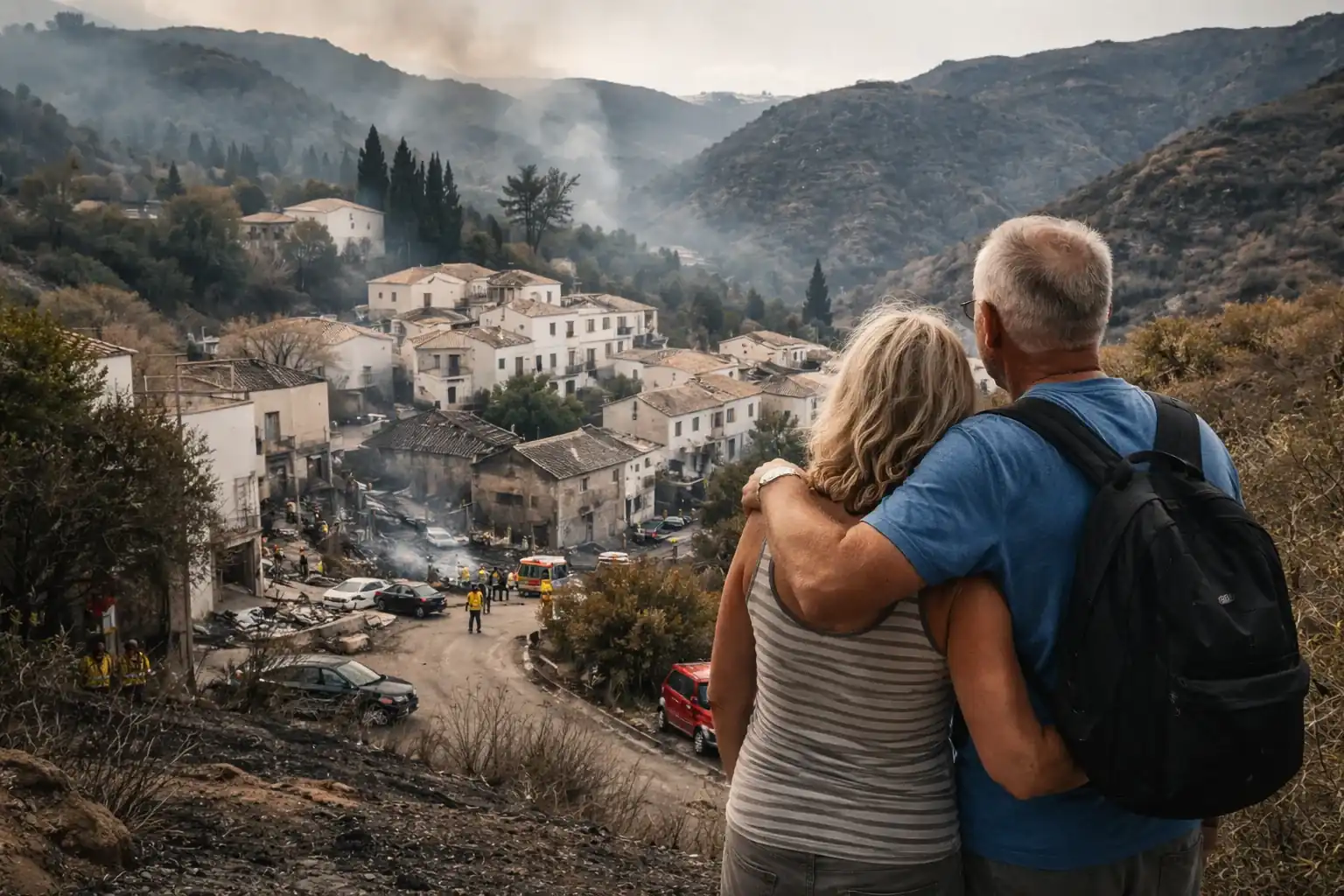
In the wake of one of the deadliest wildfires in Spanish history, residents of Almería province are beginning to return to charred landscapes and decimated hillsides. The blaze, which has now been contained by emergency services, tore through approximately 7,000 hectares (17,300 acres) of land in southeastern Spain. The fire's ferocity was fueled by wind gusts reaching 50 km/h, leaving a trail of destruction that includes molten car parts and blackened vegetation. In the village of Bédar, the contrast between survival and total loss is stark, with many traditional white Andalusian homes standing untouched while others nearby were completely leveled. This disaster has claimed at least 13 lives, with Spanish authorities indicating that five of the deceased are believed to be British citizens living in or visiting the region. The return to normalcy remains distant as the community grapples with the scale of the tragedy.
What's new in this update
The confirmed death toll rose on Sunday following the death of a 93-year-old woman in the hospital. She is also believed to be a British national who succumbed to injuries sustained during the height of the fire on Thursday. As the immediate danger from the flames recedes, local authorities have allowed approximately 600 of the 1,500 evacuated residents to return to their properties to assess the damage. Among those returning were British expats Emma and Simon Mitchell, who found their home and livestock miraculously spared despite the inferno surrounding their property. However, the return has been bittersweet, as the identities of those killed have not yet been officially confirmed by forensic teams. The Spanish Prime Minister, Pedro Sanchez, is slated to visit the hard-hit Los Gallardos area on Monday to meet with affected communities and local leaders to discuss disaster relief efforts and the recovery process.
Key details
Returning residents have expressed significant frustration and anger toward local officials regarding the lack of clear emergency instructions. Emma Mitchell highlighted a glaring discrepancy in the regional alert system, noting that while residents receive automated phone alerts for earthquakes occurring 50 miles away, no such notifications were sent for a wildfire burning just a quarter of a kilometer from their homes. Local officials defended the decision not to issue a broad emergency alert on Thursday night, arguing it could have reached people outside the immediate danger zone and complicated the evacuation process. Instead, they maintained that police conducted door-to-door visits and made individual phone calls to residents. Many survivors have pushed back against suggestions from some officials that those who died had failed to follow official instructions, calling such claims a form of victim-blaming that ignores the chaotic reality of the fast-moving disaster.
Background and context
Almería province, specifically areas like Bédar and Los Gallardos, is home to a substantial population of foreign residents, particularly from the United Kingdom. This demographic was heavily impacted by the fast-moving blaze, which caught many off guard during the peak of the heat. Among the injured were a British couple found by rescue teams down a ravine; they were discovered in a semi-conscious state with severe burns. It is believed they were hiking when the fire rapidly expanded on Thursday afternoon. The scale of the fire—consuming 17,300 acres—places it among the most destructive in Spanish history. The Andalusian regional government and the Spanish Civil Guard have faced increasing scrutiny over their disaster response protocols as the community begins the long process of recovery. The impact on local infrastructure and the natural environment is expected to take years to fully rehabilitate following the intensity of the heat.
What to watch next
The focus now shifts to the official identification of the 13 victims and the high-profile visit of Prime Minister Pedro Sanchez. His presence in Los Gallardos on Monday is expected to bring national attention to the needs of the displaced residents and the growing criticisms of the regional emergency response. Investigations into the exact cause of the fire and the effectiveness of the door-to-door evacuation strategy are likely to follow in the coming weeks. Furthermore, the outcry regarding the mobile alert system may prompt the Andalusian government to review its protocols for natural disasters to ensure better coordination in future events. For the residents of Bédar, the immediate priority remains restoring essential services like power and water, which survived in some pockets but were severed in others, while providing emotional and material support to neighbors who lost their homes and livelihoods.
Why it matters
The tragedy highlights critical failures in regional emergency communication systems and the vulnerability of foreign resident communities in rural Spain.
Read next
Follow this story through the topic hub, more world coverage, and the latest updates.
Weekly briefing
Get the week's key developments in one concise email.
Get a fast catch-up on the biggest stories, the context behind them, and the links worth your time.
Cadence
Weekly, for a quick catch-up
Coverage
AI, business, world, security, sports
Format
Clear takeaways and useful context
Request the briefing
Leave your email to open a prepared request and get on the list for the weekly briefing.
About the byline
World correspondent
Leila Haddad covers world affairs, diplomacy, and humanitarian crises, with a focus on how fast-moving international developments affect public policy, conflict response, and cross-border institutions.
Sources and methodology