Canada Halts Texas Livestock Imports Following Flesh-Eating Screwworm Outbreak
The Canadian Food Inspection Agency issued a temporary ban after a second case was confirmed in Texas and Governor Greg Abbott declared a state of disaster.
Primary source: BBC World News. Full source links, newsroom standards, and correction details are below.
Fast summary
Start here
- Canada's ban applies to cattle and horses that were in Texas anytime within 21 days before crossing the border.
- A second case of the New World Screwworm was detected in a one-month-old calf in Zavala County, Texas.
- The US Department of Agriculture has established a 20km-wide control zone and plans to release sterile flies to halt the spread.
What happened
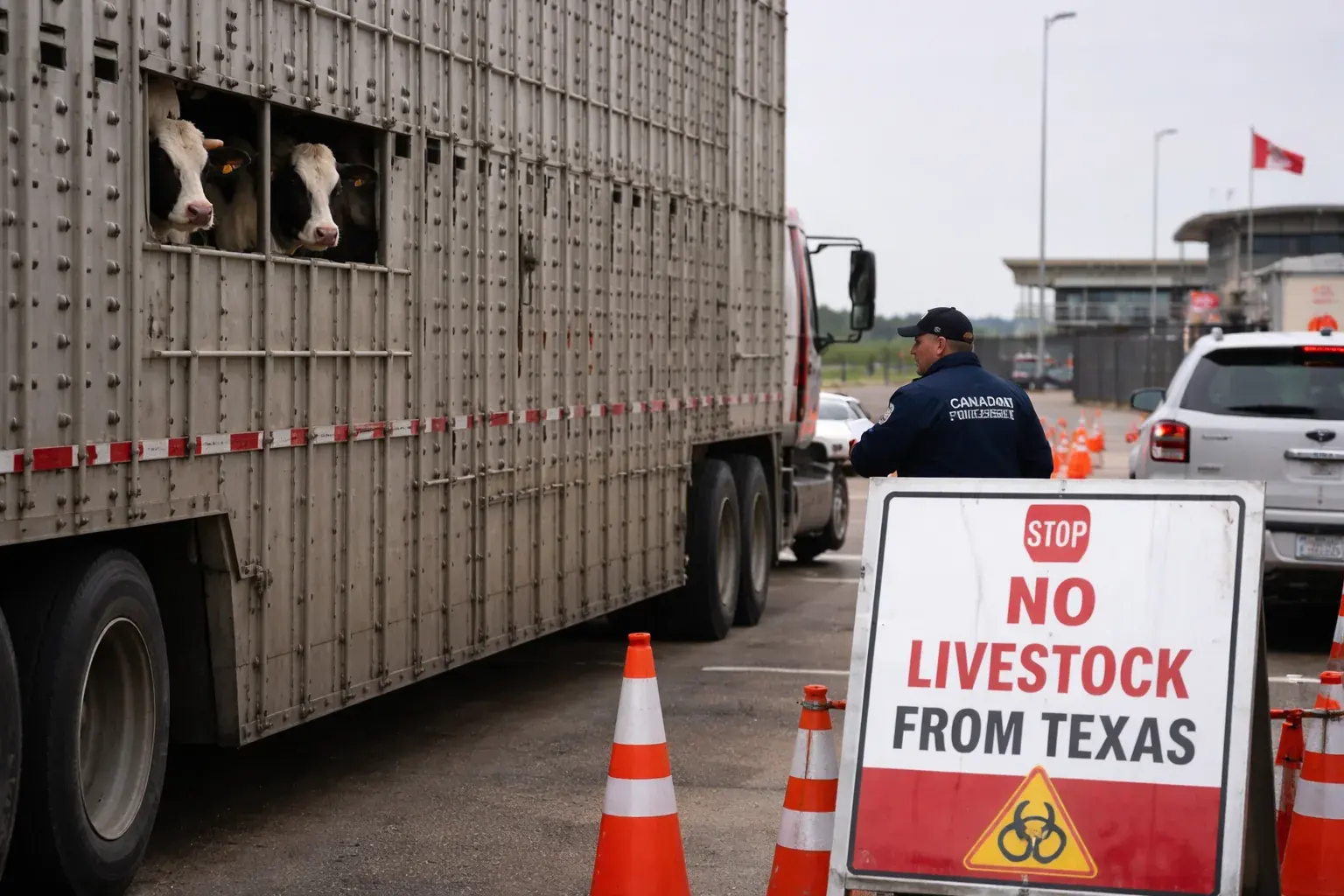
The Canadian Food Inspection Agency (CFIA) has announced a temporary ban on livestock originating from Texas. This decision follows the discovery of flesh-eating New World Screwworms in calves this week. Under the new directive, any cows or horses that were in Texas within 21 days of reaching the Canadian border will be refused entry to prevent the parasitic fly from establishing a foothold in Canada.
What's new in this update
Following the initial discovery of the parasite in a three-week-old calf in La Pryor, the US Department of Agriculture (USDA) confirmed a second case in a one-month-old calf in Zavala County. Texas Governor Greg Abbott has declared a state of disaster, warning that the outbreak poses an imminent threat to the agricultural industry. Abbott noted that the parasite is likely to continue spreading throughout the summer months.
Key details
The New World Screwworm is a parasitic fly that lays eggs in the open wounds or mucous membranes of warm-blooded animals. Upon hatching, the larvae burrow through living flesh, which can lead to the death of the host if left untreated. The current cases in Texas are part of a larger trend of the parasite moving through Central America and Mexico. In response, officials have enacted quarantines, movement controls, and intensive surveillance within a designated control zone.
Background and context
The New World Screwworm was considered eradicated in the United States in 1966, though occasional cases have appeared in the decades since. Texas is the largest cattle and beef producer in the US, making the state central to the two-way trade between the US and Canada. In 2025, Canada imported approximately 550,000 cattle from the US for purposes ranging from dairy and wool production to slaughter.
What to watch next
US agricultural and health officials are preparing a response that includes the release of hundreds of millions of genetically altered sterile flies to interrupt the parasite's breeding cycle. They will also deploy sniffer dogs to identify infected animals. While Canadian officials believe the parasite is unlikely to survive in Canada's colder climate, they have urged farmers and pet owners traveling to Texas to remain vigilant for signs of infection.
Why this matters
The outbreak threatens the multi-billion dollar North American cattle trade and marks a resurgence of a parasite that was largely eradicated in the US decades ago.
Reader context
This story belongs to Northstar Herald's International Relations coverage, with related entities including Texas, Agriculture, Livestock, Canada. The report is based on BBC World News source material.
Related coverage
Why it matters
The outbreak threatens the multi-billion dollar North American cattle trade and marks a resurgence of a parasite that was largely eradicated in the US decades ago.
Read next
Follow this story through the topic hub, more world coverage, and the latest updates.
Weekly briefing
Get the week's key developments in one concise email.
Get a fast catch-up on the biggest stories, the context behind them, and the links worth your time.
Cadence
Weekly, for a quick catch-up
Coverage
AI, business, world, security, sports
Format
Clear takeaways and useful context
Request the briefing
Leave your email to open a prepared request and get on the list for the weekly briefing.
Author

The world desk follows geopolitics, humanitarian crises, diplomacy, and major international developments with an emphasis on fast updates and public-interest context.
Sources and methodology