Three Lebanese Soldiers Killed in Israeli Strike on Vehicle in Southern Lebanon
The IDF has launched an investigation into the incident, claiming the car was moving suspiciously in an active combat zone.
Primary source: BBC World News. Full source links and update notes are below.
Fast summary
Start here
- Two Lebanese Army officers and one soldier were killed in a strike near the village of Kfar Tebnit, north of the Litani River.
- The IDF confirmed the strike and launched an investigation, stating the vehicle was in an evacuated combat zone and moving suspiciously.
- The incident occurred amid Hezbollah's rejection of a US-backed ceasefire deal that would have established pilot security zones.
What happened
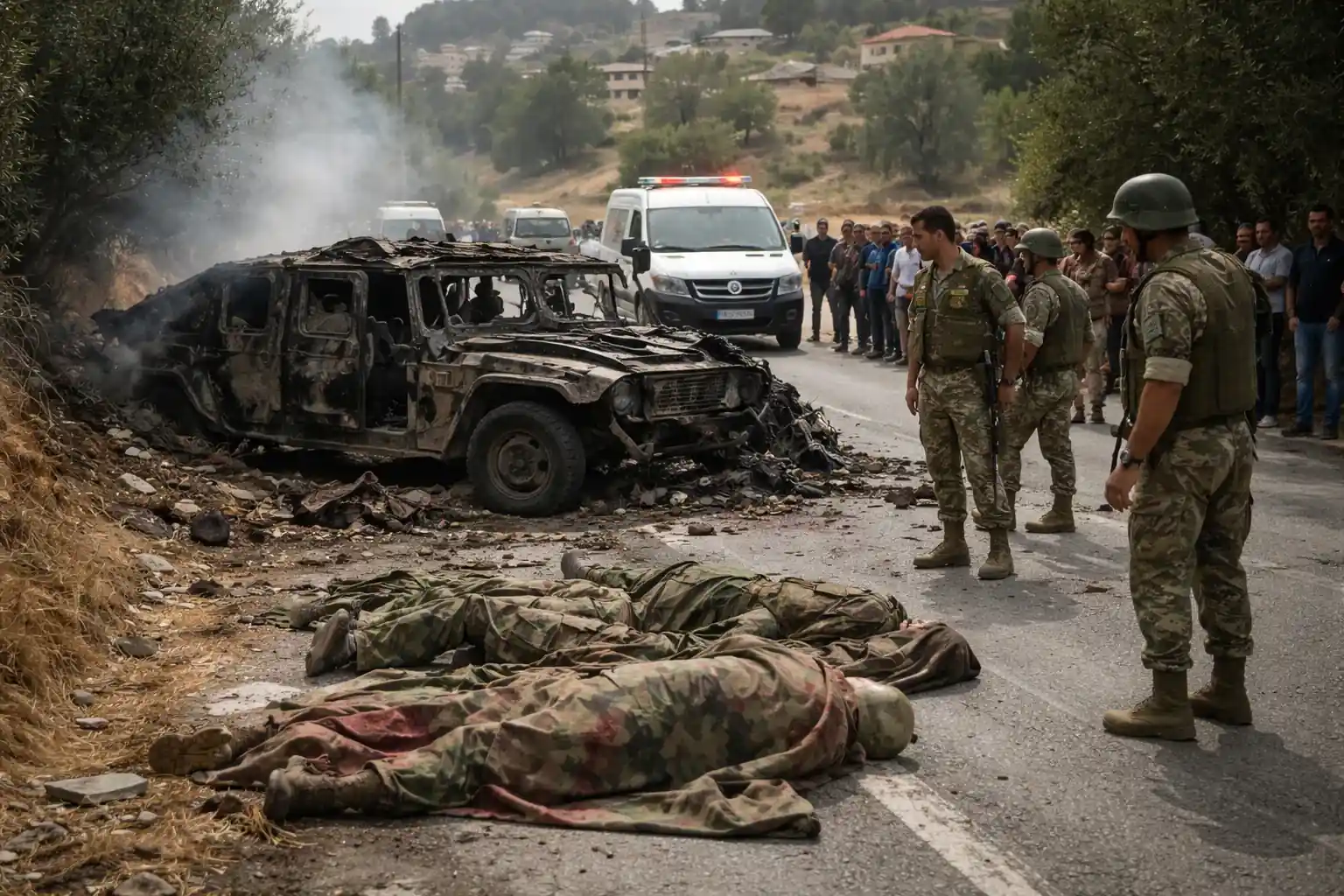
On Saturday morning, an Israeli strike hit a vehicle near the village of Kfar Tebnit in southern Lebanon, killing two officers and a soldier from the Lebanese Army. The Lebanese military characterized the attack as an aggressive and barbaric raid. The Israel Defense Forces (IDF) confirmed they targeted the vehicle, which was traveling near the city of Nabatieh, approximately four miles north of the Litani River.
What's new in this update
The IDF has formally launched an investigation into the strike. According to an initial statement, the military claimed the vehicle was moving suspiciously within an active and evacuated combat zone where troop movements require prior coordination with the IDF. The Israeli military reiterated that its operations are directed against Hezbollah forces and not the sovereign Lebanese Army.
Key details
The strike follows intense fighting in southern Lebanon, where Israel has issued sweeping evacuation orders. The Lebanese Army shared images of the burnt-out wreckage of the car on a road outside Kfar Tebnit. The IDF noted that gunfire had been reported in the area prior to the engagement. This specific region has seen some of the most concentrated air strikes and ground incursions since the campaign intensified in late May.
Background and context
Israel has been engaged in active combat against the Lebanon-based group Hezbollah since March. While the Lebanese government seeks a ceasefire and eventually intends for its own forces to disarm Hezbollah, it is not in direct conflict with Israel. Recent diplomatic efforts involving a US-backed ceasefire agreement were recently rejected by Hezbollah leader Naim Qassem, who described the negotiations as futile.
What to watch next
International observers are monitoring whether this fatal encounter will lead to direct friction between the IDF and the Lebanese Army. Tensions remain high as US President Donald Trump continues efforts to defuse the conflict as part of a broader strategy to reach an agreement with Iran, which has linked a regional cessation of hostilities to the halt of the campaign against Hezbollah.
Why this matters
The deaths of Lebanese soldiers, who are not party to the direct conflict between Israel and Hezbollah, complicate diplomatic efforts to secure a ceasefire and stabilize the region.
Reader context
This story belongs to Northstar Herald's International Relations and Middle East Conflict coverage, with related entities including Lebanon, IDF, Hezbollah, Lebanese Army. The report is based on BBC World News source material.
Related coverage
Why it matters
The deaths of Lebanese soldiers, who are not party to the direct conflict between Israel and Hezbollah, complicate diplomatic efforts to secure a ceasefire and stabilize the region.
Read next
Follow this story through the topic hub, more world coverage, and the latest updates.
Weekly briefing
Get the week's key developments in one concise email.
Get a fast catch-up on the biggest stories, the context behind them, and the links worth your time.
Cadence
Weekly, for a quick catch-up
Coverage
AI, business, world, security, sports
Format
Clear takeaways and useful context
Request the briefing
Leave your email to open a prepared request and get on the list for the weekly briefing.
Author
See who assembled this story and follow more of their work.
Sources and methodology