Police in Kenya Fire Tear Gas at Demonstrators Opposing US Ebola Quarantine Center
Protesters in Nanyuki voiced concerns over transparency and infection risks as the government faces a court order to halt construction.
Primary source: BBC World News. Full source links, newsroom standards, and correction details are below.
Fast summary
Start here
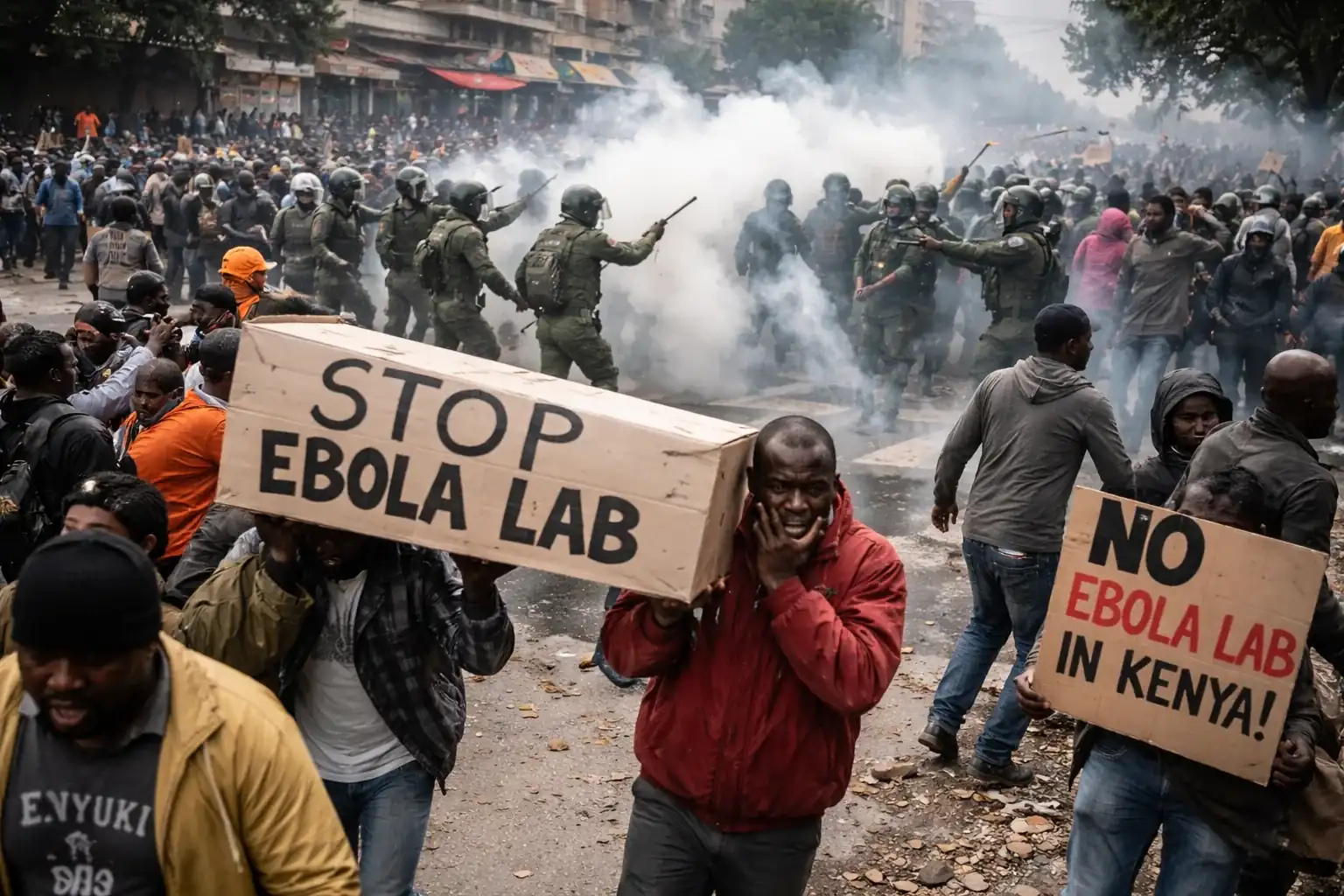
- Police broke up demonstrations in Nanyuki involving protesters carrying mock coffins and placards demanding the plan be reversed.
- A Kenyan High Court previously ordered a halt to the facility's opening, but satellite imagery suggests construction is continuing.
- President William Ruto has defended the 50-bed isolation center, arguing that refusing the U.S. request would be inhuman.
What happened
Police in the Kenyan town of Nanyuki utilized tear gas to disperse groups protesting the construction of an Ebola quarantine center intended for U.S. citizens. Demonstrators, some carrying symbolic coffins and waving national flags, demanded the project be scrapped, citing health risks to the local population and a lack of public consultation.
What's new in this update
The latest clash follows a series of escalating protests, including an incident last week where two individuals were fatally shot by police during a similar demonstration. While the Kenyan High Court ruled last month that the facility's opening should be halted due to public health risks, satellite imagery obtained by the BBC indicates that construction at the site has proceeded regardless of the stay.
Key details
The proposed 50-bed isolation unit is intended to treat Americans affected by the ongoing Ebola outbreak in the Democratic Republic of Congo (DRC). U.S. officials stated that Nanyuki was selected due to its proximity to the outbreak epicentre in Bunia and the capacity of local airports to facilitate timely treatment for U.S. personnel.
Background and context
The DRC has recorded approximately 600 confirmed Ebola cases and 100 deaths in the current outbreak, whereas Kenya has not yet recorded any cases. This disparity has fueled local anxiety that the facility could inadvertently introduce the virus to Laikipia county, which residents claim is being used as a "dumping site" for foreign health crises.
What to watch next
The U.S. administration remains optimistic that legal objections can be resolved, even as President Ruto urges Kenyans not to politicize the matter. The ongoing defiance of the court order to halt construction may lead to further legal challenges and continued civil unrest as local activists and residents maintain their opposition.
Why it matters
The conflict highlights the friction between international health cooperation and local sovereignty, exacerbated by a lack of transparency and a recent history of fatal police responses to demonstrations.
Read next
Follow this story through the topic hub, more world coverage, and the latest updates.
Weekly briefing
Get the week's key developments in one concise email.
Get a fast catch-up on the biggest stories, the context behind them, and the links worth your time.
Cadence
Weekly, for a quick catch-up
Coverage
AI, business, world, security, sports
Format
Clear takeaways and useful context
Request the briefing
Leave your email to open a prepared request and get on the list for the weekly briefing.
Author

The Northstar Herald editorial desk assembles wire-driven and source-linked coverage, verifies core facts against published materials, and updates stories as new reporting becomes available.
Sources and methodology