MSF Warns of 'Deeply Alarming' Ebola Spread in DR Congo as Cases Surge
Medical charity MSF reports that the current outbreak is spreading at an unprecedented rate, while WHO leadership visits the front lines in Ituri province.
Primary source: BBC World News. Full source links and update notes are below.
Fast summary
Start here
- MSF reports that the speed of the current Ebola outbreak in DR Congo is unprecedented compared to previous declarations.
- Over 1,000 suspected cases and at least 246 deaths have been recorded in the DRC, with cases also appearing in Uganda.
- WHO Director-General Dr. Tedros Adhanom Ghebreyesus visited the Ituri province to address containment challenges, including regional conflict and logistical delays.
What happened
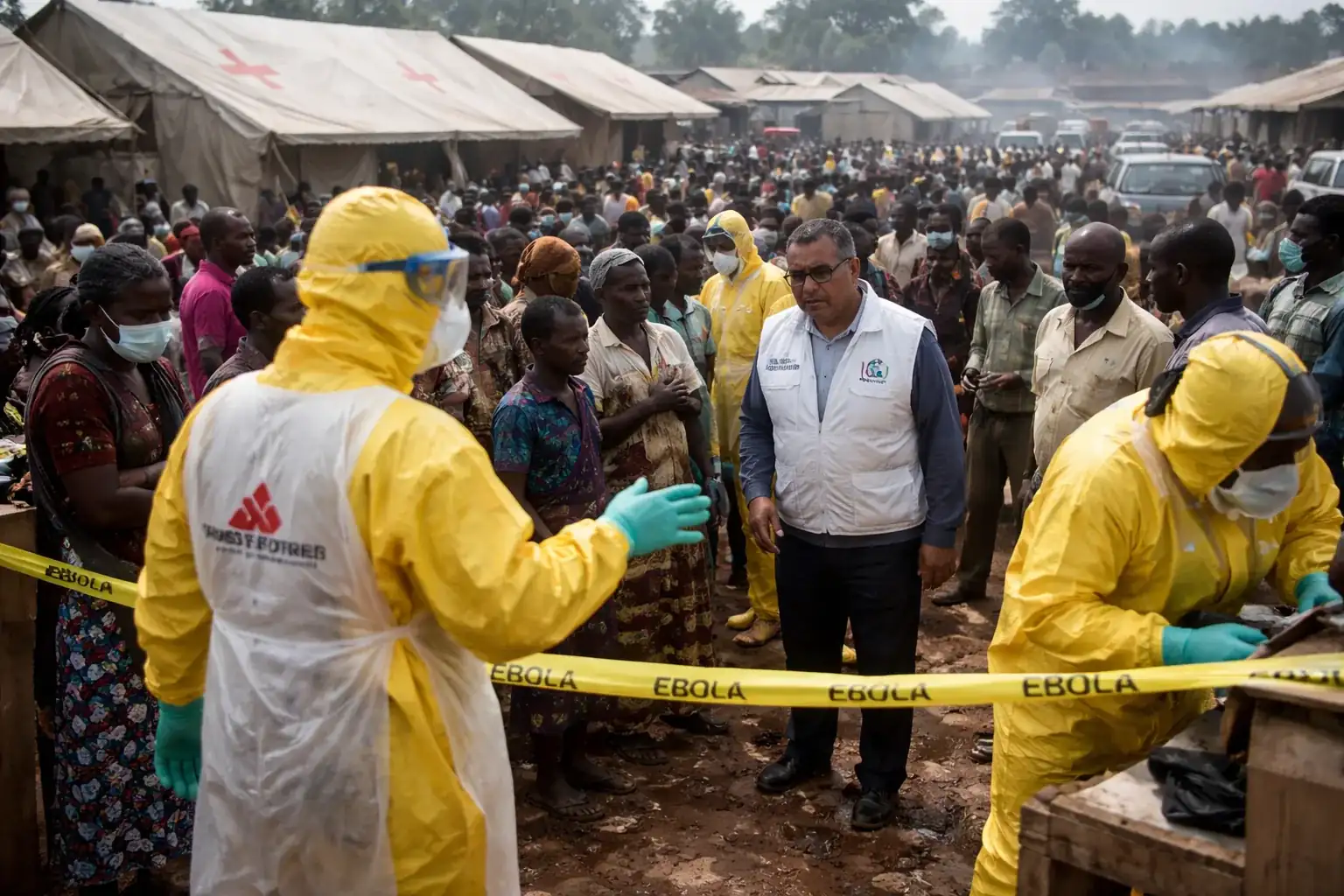
Medical charity Médecins Sans Frontières (MSF) has issued a "deeply alarming" warning regarding the rapid expansion of an Ebola outbreak in the Democratic Republic of Congo. Only two weeks since the official declaration of the outbreak in Ituri Province, MSF officials reported that the volume of cases is rising faster than any previously recorded outbreak in such a short timeframe.
What's new in this update
World Health Organization (WHO) Director-General Dr. Tedros Adhanom Ghebreyesus arrived in the provincial capital of Bunia to personally oversee containment efforts. While a new laboratory facility in Bunia has reduced testing turnaround time from days to 24 hours, officials warned that hundreds of samples remain untested and the true scale of the epidemic remains unknown.
Key details
There are now more than 1,000 suspected Ebola cases in the DR Congo, with at least 246 deaths confirmed. The virus has already crossed borders, with neighboring Uganda reporting nine confirmed cases and one fatality. Containment is currently hampered by "major constraints," including border closures, airport restrictions, and the ongoing armed conflict in the eastern regions of the DRC.
Background and context
The eastern DR Congo has long struggled with both viral outbreaks and civil instability. The WHO has noted that community practices, particularly traditional funeral rites involving the touching of the deceased, remain a high-risk factor for transmission. Current response strategies are focusing on community engagement and local language broadcasting to educate the public on safety protocols without disrupting essential trade and movement.
What to watch next
Health authorities are investigating a suspected case in Brazil involving a 37-year-old man who recently traveled from the DR Congo. Locally, the WHO and MSF are working to scale up humanitarian aid deliveries and stabilize the response in Ituri, which remains the epicenter of the current crisis.
Why it matters
The rapid transmission and high mortality rate of Ebola, combined with regional instability, threaten to create a cross-border humanitarian crisis if containment efforts do not catch up with the virus.
Read next
Follow this story through the topic hub, more world coverage, and the latest updates.
Weekly briefing
Get the week's key developments in one concise email.
Get a fast catch-up on the biggest stories, the context behind them, and the links worth your time.
Cadence
Weekly, for a quick catch-up
Coverage
AI, business, world, security, sports
Format
Clear takeaways and useful context
Request the briefing
Leave your email to open a prepared request and get on the list for the weekly briefing.
Author
See who assembled this story and follow more of their work.
Sources and methodology