WHO Warns of 'Catastrophic Collision' as Ebola Meets Conflict in DR Congo
Ongoing violence in the eastern Ituri province is blocking medical access to the rare Bundibugyo Ebola strain, prompting Uganda to close its borders.
Primary source: BBC World News. Full source links and update notes are below.
Fast summary
Start here
- WHO Director-General Tedros Adhanom Ghebreyesus warns that conflict is making it impossible to isolate the sick or build community trust.
- Uganda has immediately closed its border with DR Congo to all but essential personnel as suspected deaths reach 220.
- The outbreak involves the rare Bundibugyo strain, for which there are currently no approved vaccines or specific treatments.
What happened
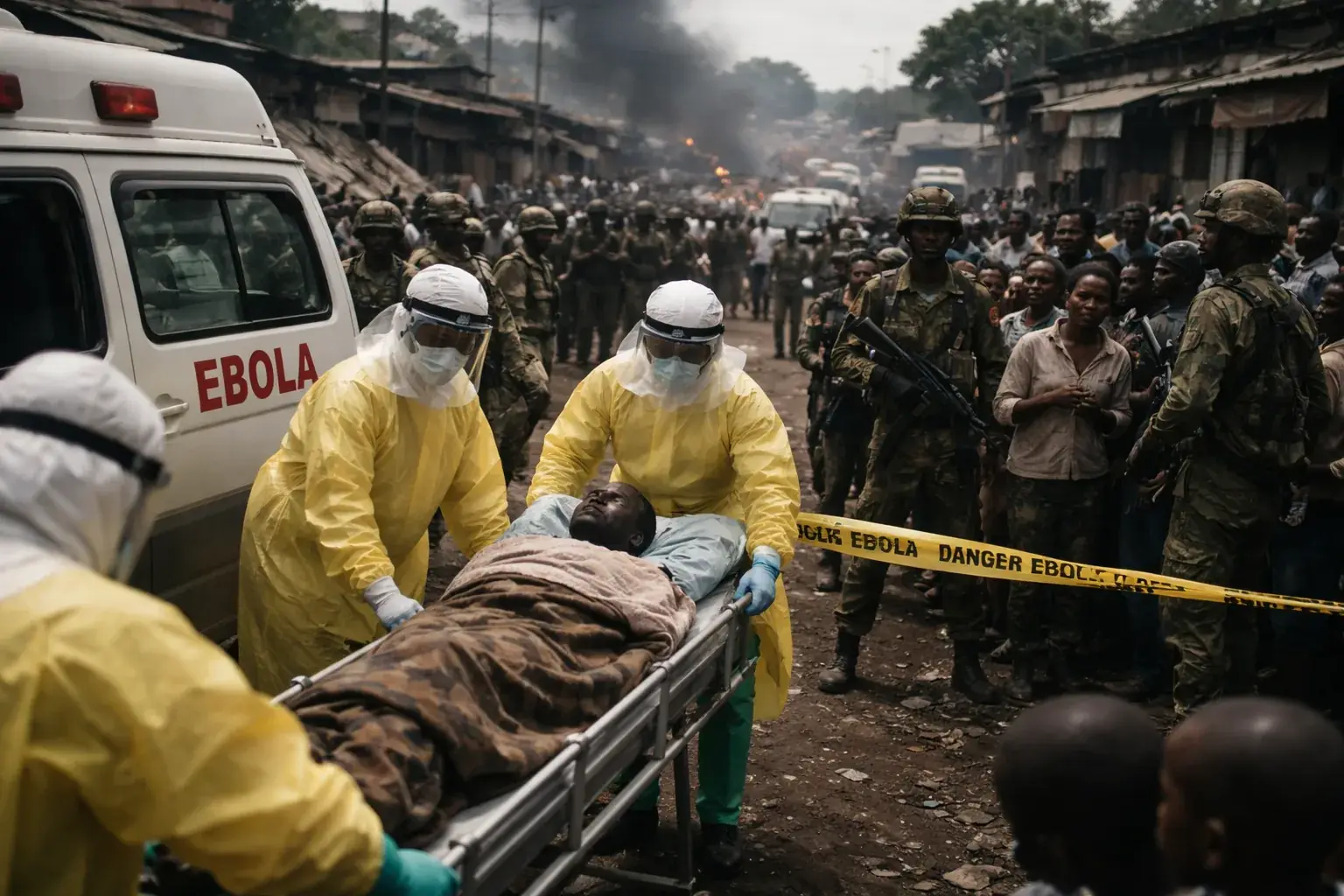
WHO chief Tedros Adhanom Ghebreyesus characterized the situation in the Democratic Republic of Congo's Ituri province as a "catastrophic collision of disease and conflict." In a statement, the Director-General emphasized that the ongoing violence prevents health workers from tracking contacts and isolating infected individuals effectively, stating that trust cannot be built while bombs are falling.
What's new in this update
Uganda has announced the immediate closure of its border with DR Congo to curb the spread of the virus. Only essential medical, security, and food transport workers are permitted to cross under strict conditions. Internationally, Canada has announced a 90-day entry ban for residents from DR Congo, Uganda, and South Sudan, following similar moves by the United States and the Bahamas.
Key details
There have been 220 suspected deaths, though only 17 have been laboratory-confirmed so far due to limited testing capacity and insecurity. Approximately 1,000 people are currently showing symptoms consistent with Ebola, and medical teams are attempting to trace 3,600 identified contacts. The outbreak is particularly concerning because it features the rare Bundibugyo strain, which lacks existing vaccines or specialized medicines.
Background and context
The epicentre of the crisis, Ituri province, has been under military rule since 2021 in an attempt to neutralize dozens of armed groups operating in the region. This persistent conflict, combined with poor road infrastructure and recent international aid cuts, has severely weakened the health system's capacity to manage infectious disease transmission.
What to watch next
Dr. Tedros is scheduled to travel to DR Congo this week to lead containment efforts and call for an immediate ceasefire to allow medical teams safe access. While MSF indicates it will take weeks to establish necessary infrastructure, experimental antibody treatments developed in the US could be introduced to the region in the near future.
Why it matters
The intersection of armed conflict and a rare disease strain threatens to turn a regional health crisis into a broader international emergency as containment efforts fail.
Read next
Follow this story through the topic hub, more world coverage, and the latest updates.
Weekly briefing
Get the week's key developments in one concise email.
Get a fast catch-up on the biggest stories, the context behind them, and the links worth your time.
Cadence
Weekly, for a quick catch-up
Coverage
AI, business, world, security, sports
Format
Clear takeaways and useful context
Request the briefing
Leave your email to open a prepared request and get on the list for the weekly briefing.
Author
See who assembled this story and follow more of their work.
Sources and methodology