SpaceX Lists Water Access as Critical Risk in Amended IPO Filing
The aerospace company, which now includes Musk's xAI, warns that data center cooling needs make water availability as vital as power and processors.
Primary source: TechCrunch AI. Full source links and update notes are below.
Fast summary
Start here
- SpaceX updated its IPO filing to categorize water access as a critical resource for cooling large-scale AI data centers.
- The company warned that water scarcity, drought, or regulatory restrictions could limit expansion and increase operational costs.
- The amended filing also reserved 5% of IPO stock for employees and warned of potential future share dilution.
What happened
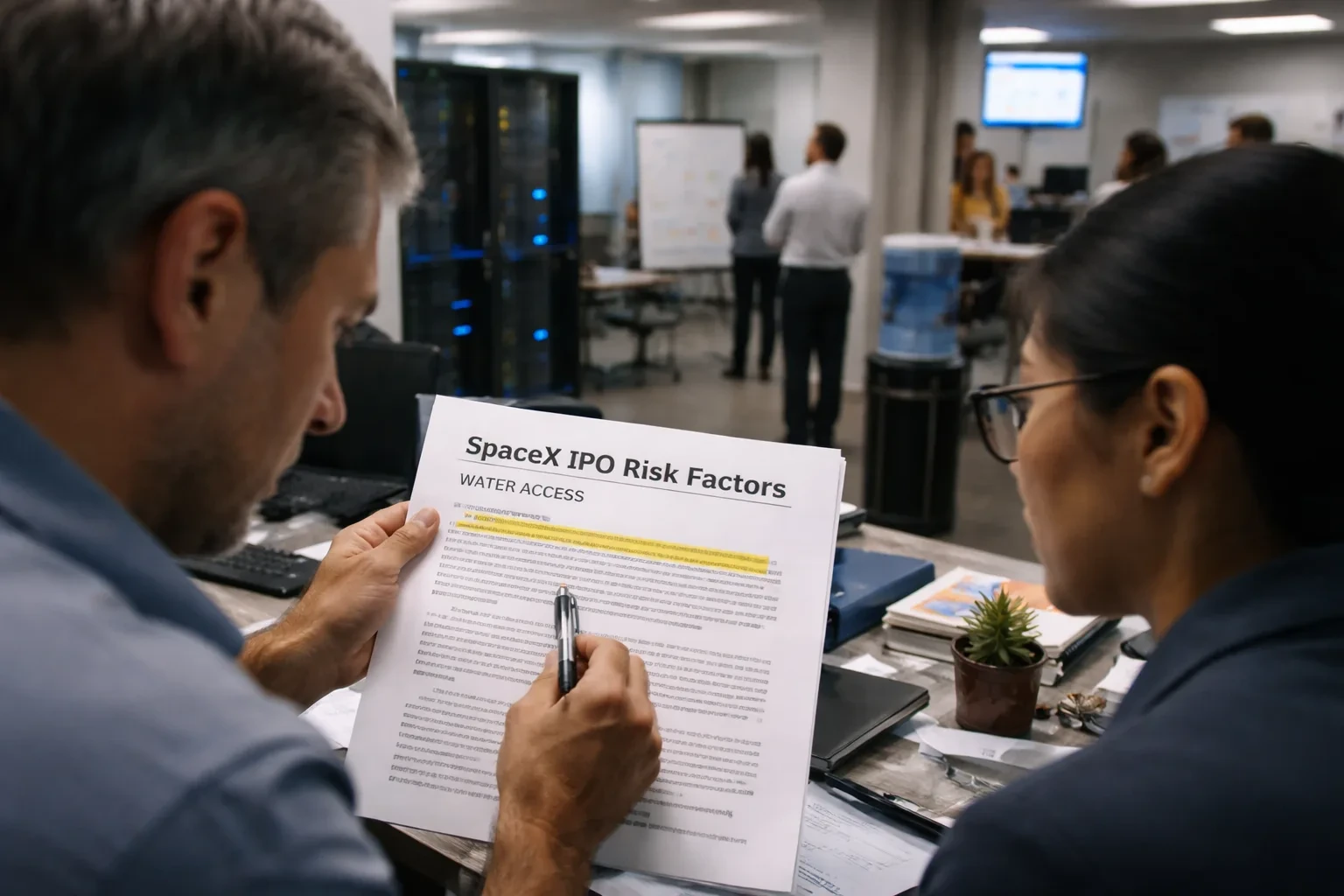
SpaceX has amended its initial public offering (IPO) paperwork to include specific warnings regarding water access. The company now explicitly lists the availability of water as a primary constraint on its data center buildouts, placing it on the same level of importance as power costs and hardware availability. This disclosure highlights the physical resource demands of the company's growing AI operations.
What's new in this update
In an amended version of its filing released Monday, SpaceX added language stating that 'significant water resources may be required for cooling large-scale data center operations.' Previously, the company focused its risk disclosures on power prices, construction timelines, and material shortages. The update marks the first time SpaceX has characterized water availability as a 'critical consideration' in its site selection and operational strategy.
Key details
The filing notes that water scarcity, competition for local resources, or new regulatory restrictions could constrain cooling capacity or force the company to implement more expensive alternative cooling techniques. Beyond environmental risks, the amended filing revealed that SpaceX is setting aside up to 5% of IPO stock for employees and executive associates. It also cautioned that the company may issue a 'significant' number of shares in future transactions, which could dilute existing shareholders.
Background and context
The increased focus on water is tied to SpaceX's integration of xAI, Elon Musk’s artificial intelligence venture. AI data centers generate immense heat, requiring vast amounts of water for cooling. This comes amid a broader industry debate regarding the sustainability of data centers as climate change exacerbates localized droughts. The SEC often sends 'comment letters' to companies in the pre-IPO phase, which may have prompted SpaceX to provide these more granular details.
What to watch next
The specific SEC comment letters that triggered these changes will likely be made public in the weeks following the IPO. Investors are also closely watching the language regarding future share issuances, as the mention of significant future transactions is viewed by some analysts as a potential signal for a merger with Tesla.
Why it matters
As AI infrastructure scales, the physical requirements for cooling are becoming major financial and environmental hurdles for technology companies.
Read next
Follow this story through the topic hub, more ai coverage, and the latest updates.
Weekly briefing
Get the week's key developments in one concise email.
Get a fast catch-up on the biggest stories, the context behind them, and the links worth your time.
Cadence
Weekly, for a quick catch-up
Coverage
AI, business, world, security, sports
Format
Clear takeaways and useful context
Request the briefing
Leave your email to open a prepared request and get on the list for the weekly briefing.
Author
See who assembled this story and follow more of their work.
Sources and methodology