Trump Revises AI Oversight Order, Shortening Review Window Following Industry Objections
The final executive order requests a 30-day voluntary evaluation period for new AI models, a significant reduction from the 90-day window originally proposed.
Primary source: TechCrunch AI. Full source links and update notes are below.
Fast summary
Start here
- Certain AI companies are asked to voluntarily submit new models for government testing 30 days before public release.
- The order explicitly prohibits the creation of mandatory licensing, preclearance, or permitting requirements for AI distribution.
- The Department of Justice is directed to prioritize enforcement against AI-assisted hacking and unauthorized access.
What happened
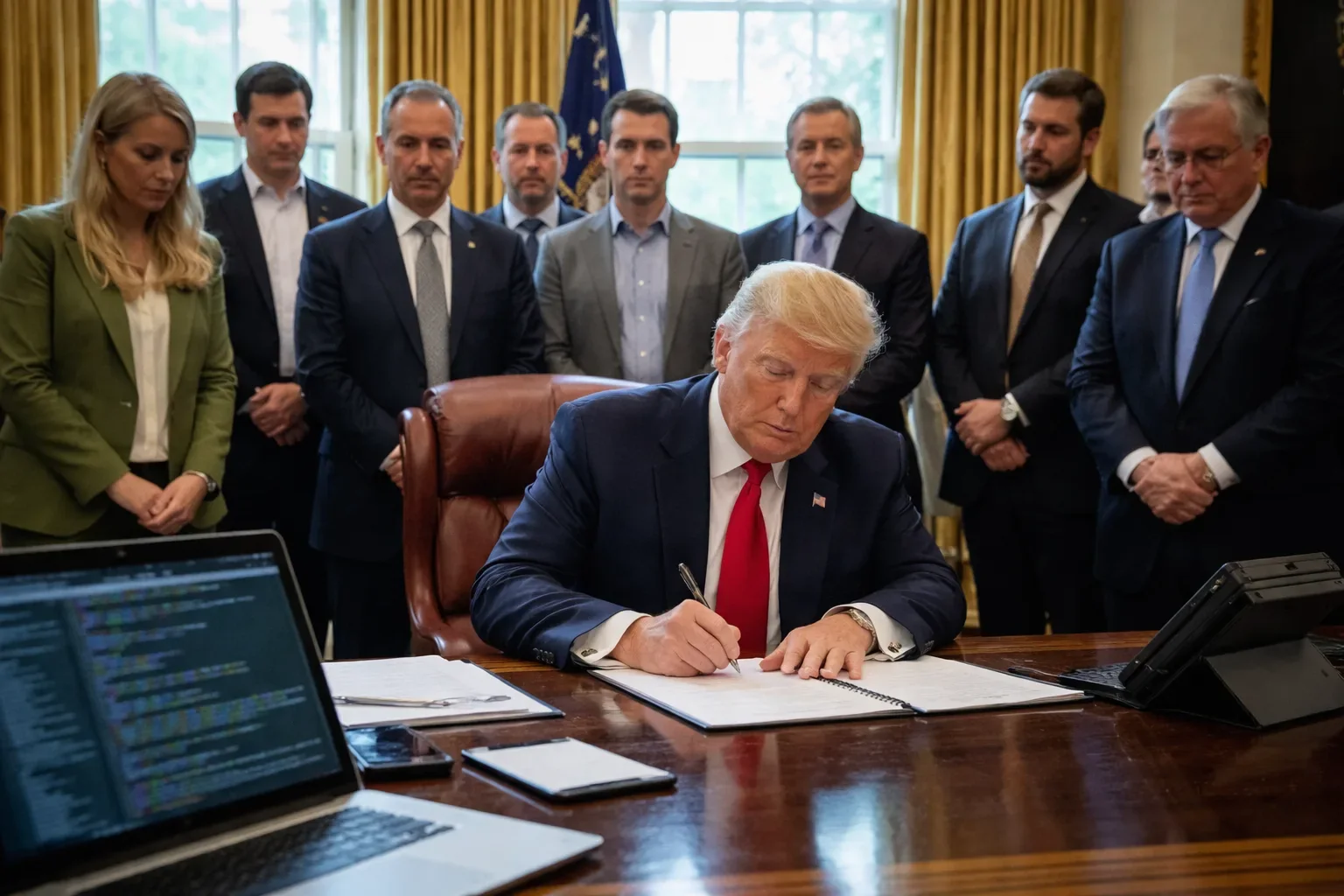
President Donald Trump signed a revised executive order on Tuesday aimed at establishing a government review process for powerful AI models before they reach the public. The order creates a voluntary framework for evaluation rather than a mandatory regulatory regime, emphasizing a light-touch approach to oversight for the domestic artificial intelligence sector.
What's new in this update
The final version of the order is significantly narrower than previous drafts. While an earlier version had called for a 90-day voluntary review period, the signed version reduces that window to 30 days. This change follows substantial pushback from venture capitalists and industry insiders who argued that a three-month delay would stifle innovation and hinder the United States' ability to lead in the global AI race.
Key details
A critical clause in the text specifies that the order shall not be construed to authorize mandatory governmental licensing or preclearance for the development or distribution of new AI models. Beyond oversight, the order expands the remit of the Department of Justice, directing it to treat AI-assisted hacking and unauthorized access as high-priority enforcement areas.
Background and context
The signing of the order was delayed from late May after industry figures, including former White House AI czar David Sacks, raised concerns about regulatory friction. This latest directive builds on an executive order from December, which sought to establish a national AI policy framework intended to preempt various state-level AI laws.
What to watch next
The effectiveness of the 30-day review period will depend on the voluntary participation of frontier AI firms. Observers will also look for how the Department of Justice reallocates resources to meet the new prioritization of AI-related cybercrimes and how this voluntary model affects ongoing state-level efforts to regulate the technology.
Why it matters
The revision signals the administration's preference for industry self-regulation over mandatory federal controls to maintain a competitive lead against China.
Read next
Follow this story through the topic hub, more ai coverage, and the latest updates.
Weekly briefing
Get the week's key developments in one concise email.
Get a fast catch-up on the biggest stories, the context behind them, and the links worth your time.
Cadence
Weekly, for a quick catch-up
Coverage
AI, business, world, security, sports
Format
Clear takeaways and useful context
Request the briefing
Leave your email to open a prepared request and get on the list for the weekly briefing.
Author
See who assembled this story and follow more of their work.
Sources and methodology